Crossroads field guides · Spring & autumn
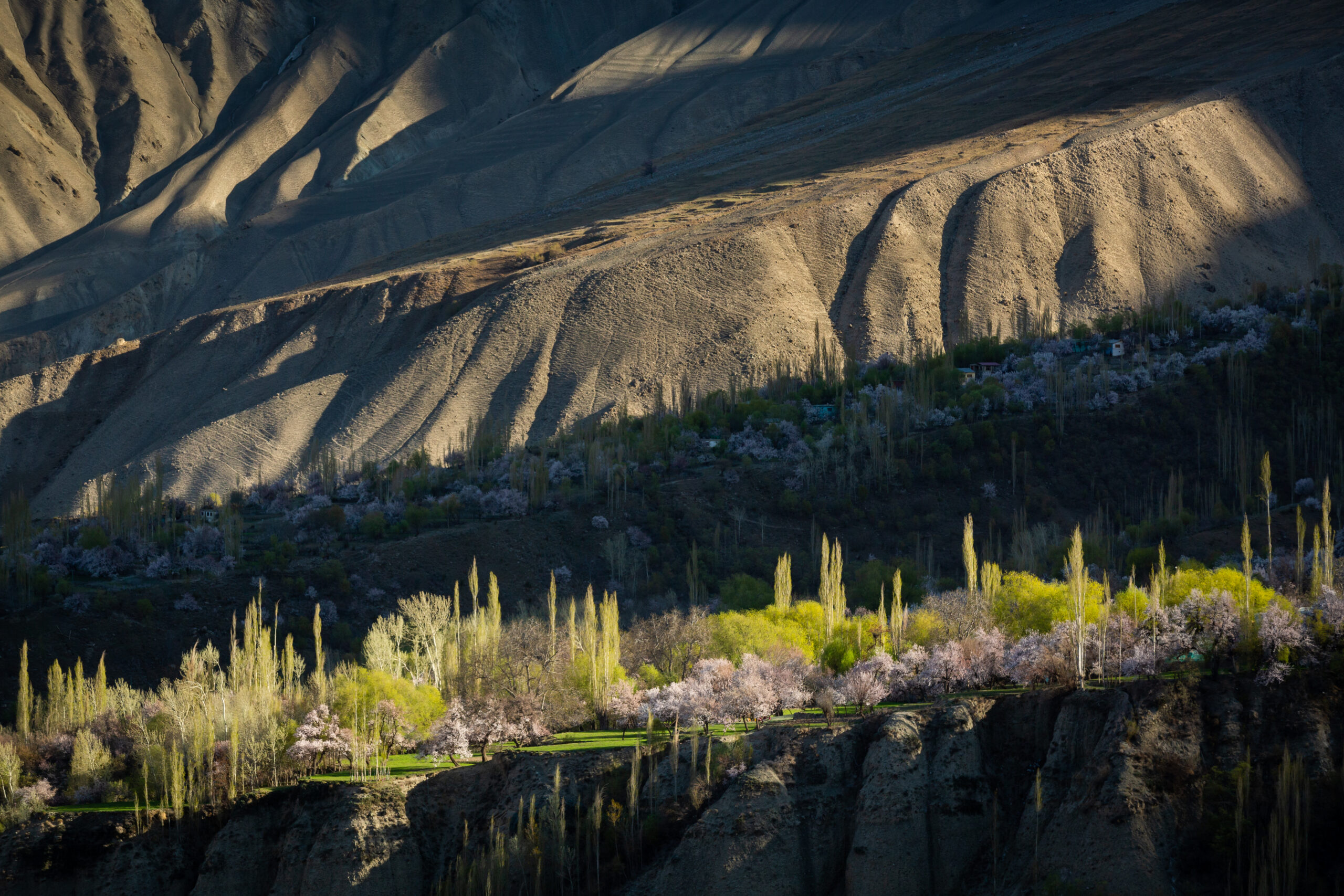
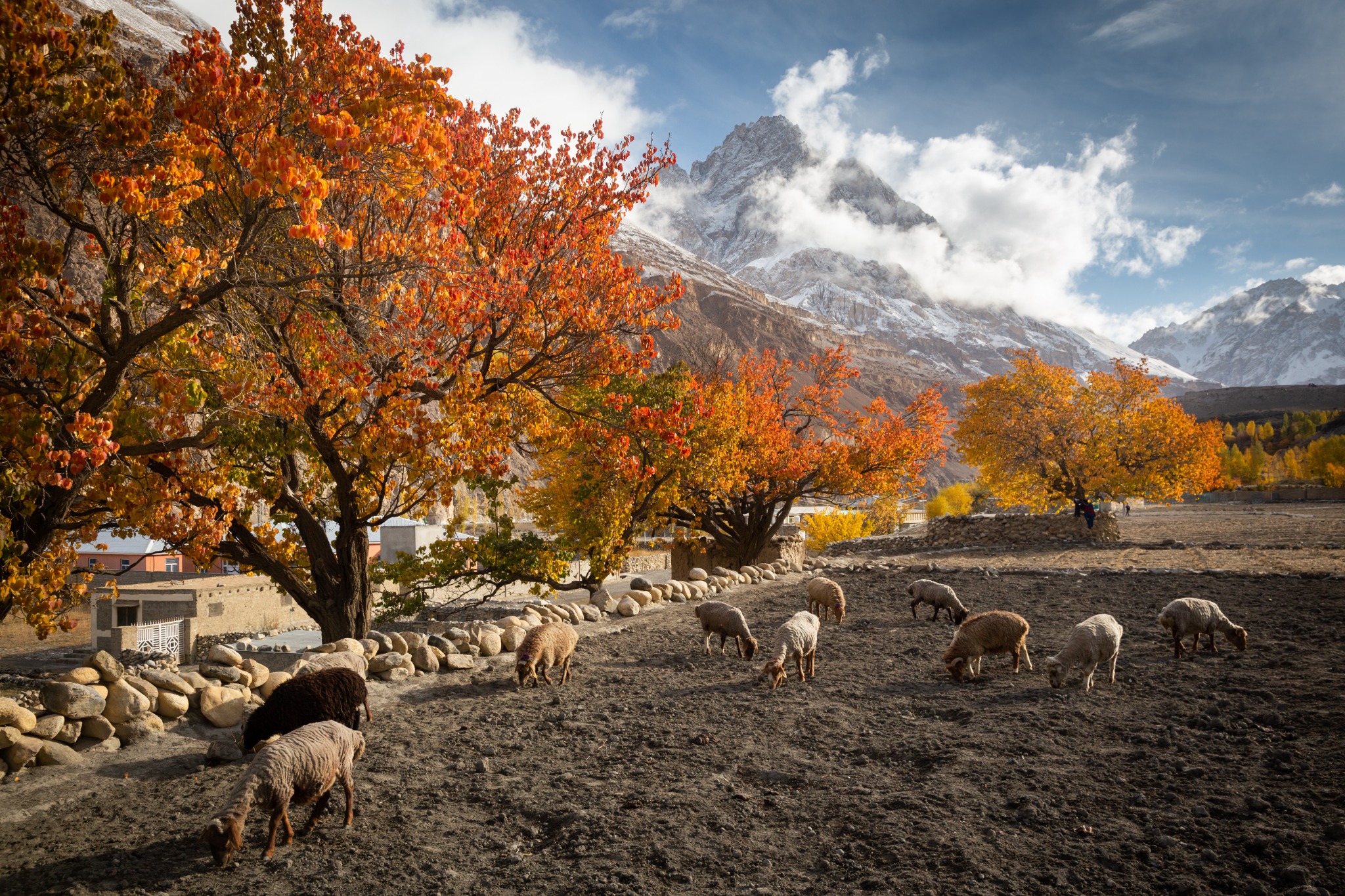
Autumn in Hunza and Skardu is best understood as a moving season. Apricot orchards, poplar avenues and cultivated terraces change at different times, while the mountains remain a constant backdrop. A village can still be green when another, higher or more exposed settlement is turning gold. The rewarding journey follows these differences rather than chasing a single advertised “peak autumn” date.
This guide explains where to look for autumn colour in Hunza, Nagar and Baltistan, how to combine the regions without spending every day on the road, and what photographers and first-time visitors should realistically expect. It focuses on inhabited valleys, heritage and accessible walks. Autumn sightseeing and a high-altitude trekking expedition require different preparation.
Crossroads Adventure · Editorial review: 6 October 2026
When is autumn in Hunza and Skardu?
September, October and early November can all form part of the autumn travel season, but they offer different experiences. September generally suits a broader combination of valley visits and walking, with more daylight than late autumn. October is the main planning month for visitors seeking colourful orchards and village landscapes. Early November can still be rewarding in suitable locations, although increasing cold, shorter days and leaves already falling make a colour-focused itinerary less predictable.
These are planning windows, not a forecast. A warm spell can delay change; wind or a storm can remove leaves quickly. Tree species, irrigation, slope orientation, elevation and local growing conditions all affect what you see. Even adjacent orchards can look different. Photographs from a particular October date in a previous year should therefore be treated as an example, not proof of what the same date will deliver this year.
For a first visit, allowing several days in each main region is more useful than insisting on one supposedly perfect date. A flexible local guide can change the sequence of village walks after observing conditions. Ask for recent photographs from the actual villages you plan to visit, with the capture date and location, rather than an attractive regional image without context.
| Period | What to plan around | Principal limitation |
|---|---|---|
| September | Village journeys, mountains and walking; early colour may appear locally | Many orchards can remain green |
| October | Main autumn-colour planning window across different valley locations | No shared peak date across Hunza and Baltistan |
| Early November | Selected late colour, quiet heritage visits and a more wintry atmosphere | Colder mornings, reduced daylight and possible leaf loss |
Hunza or Skardu: which is better for autumn?
Hunza is particularly rewarding for compact village-based exploration. Karimabad, Altit and nearby settlements combine orchards, inhabited lanes and mountain viewpoints within a relatively manageable area. Continuing into Upper Hunza changes the scenery: the valley narrows in places, glaciers become more conspicuous, and the sharp outlines around Passu contrast with cultivated pockets beside the highway.
Skardu is a gateway to a wider Baltistan journey rather than a single compact sightseeing area. The Indus valley, Kachura, Shigar and Khaplu each have their own scale and character. There are spacious river landscapes, apricot-growing villages, poplar lines and heritage buildings, but several of the rewarding stops are separated by substantial drives. A trip that includes Shigar and Khaplu needs enough time to stay in those valleys rather than returning repeatedly to one Skardu hotel. See the Skardu and Baltistan travel guide for a valley-by-valley explanation of bases and access.
Choose Hunza if you want several days of village walks with mountain views and fewer hotel changes. Choose Baltistan if you enjoy broad landscapes, palace architecture and exploring separate valleys. Combine both when you have enough nights to absorb the connecting journey. Neither region is automatically superior: the right choice depends on pace, mobility, interests and current leaf conditions.
Central Hunza: orchards, forts and village landscapes
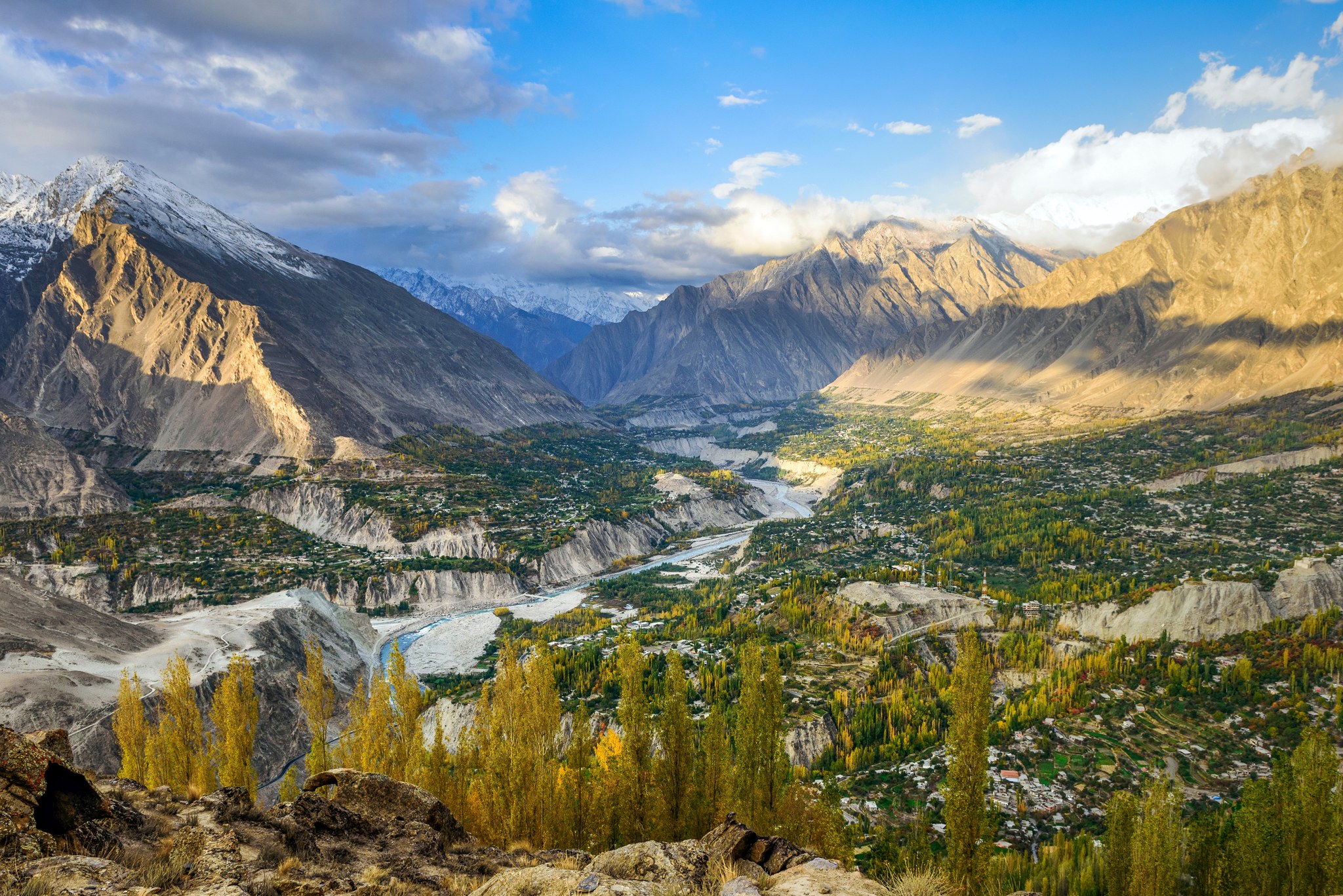
Karimabad and the landscape around Baltit Fort
Karimabad is a useful base for exploring Central Hunza. The Gilgit-Baltistan Tourism Department places the settlement at approximately 2,500 metres, although individual hotels and viewpoints sit at different elevations. The combination of a hillside town, cultivated terraces and large mountain scenery gives photographers several layers to work with. A photograph can tell more about Hunza when it includes its lived landscape, rather than showing only a peak above a tree.
Baltit Fort adds historical substance to a seasonal visit. Approach through the settlement and allow time for interpretation inside, subject to the site’s current access arrangements. The final approach involves uphill walking and steps; it should not be described as an effortless stop for every guest. People with limited mobility may prefer a slower approach, assistance or an alternative village activity. Ask about practical access before booking.
Do not pack the morning with a fort visit, multiple villages and a distant excursion. A more satisfying half-day pairs Baltit with a short walk and a relaxed lunch. Keep an afternoon free for the orchard conditions and mountain visibility you actually find. A balcony facing the valley can be useful in changeable weather, but it does not replace walking through the settlement.
Altit village and its orchards
Altit is worth visiting as a historic settlement as well as a fort. The lanes, timber details, irrigation channels and cultivated surroundings offer a different scale from the main mountain viewpoints. The Aga Khan Development Network’s account of heritage conservation describes the restoration of Altit and other northern heritage sites. That work provides useful context for appreciating the buildings beyond their photographic appeal.
An orchard is a working property. Some trees stand beside public paths, while other inviting-looking terraces are private. Ask before entering, do not move irrigation gates or stand on field edges that can crumble, and leave fruit where it belongs. A guide can arrange a suitable orchard visit with permission. Access is better when it benefits the household and respects the day’s work.
Autumn is also a good time to notice the relationship between water, agriculture and settlement. A line of trees beside a channel does not exist simply to frame a photograph. It reflects maintained irrigation and cultivation in a dry mountain environment. Ask about crops, storage and seasonal work, allowing people to describe their own lives rather than turning a conversation into a prepared cultural performance.
Duikar and higher viewpoints
Duikar offers an elevated perspective over parts of the Hunza landscape. It is useful when visibility is good and the road is suitable, but there is no guarantee that sunrise will illuminate every mountain simultaneously. A cloud bank, haze or valley shadow can change the outcome. Reaching a viewpoint well before dawn also means colder conditions and a longer outdoor wait than a midday visit.
Photographers should consider one sunrise attempt and leave room for a second opportunity, rather than building the whole visit around a single morning. Guests who do not enjoy early starts can find the same landscape rewarding later, especially when side light brings out terraces and ridges. Ask the driver about the safest stopping place and avoid placing tripods where vehicles need to pass.
Upper Hunza: Gulmit, Ghulkin, Borith and Passu
The journey north from Central Hunza should be a transfer with meaningful stops, not a list of roadside photographs. Attabad Lake provides a strong change in scale and colour. It can be appreciated from suitable viewpoints without automatically adding a boat activity. Boating is optional and depends on conditions, operating arrangements and the guest’s interests; ask what is included rather than assuming that every activity is covered by the journey price.
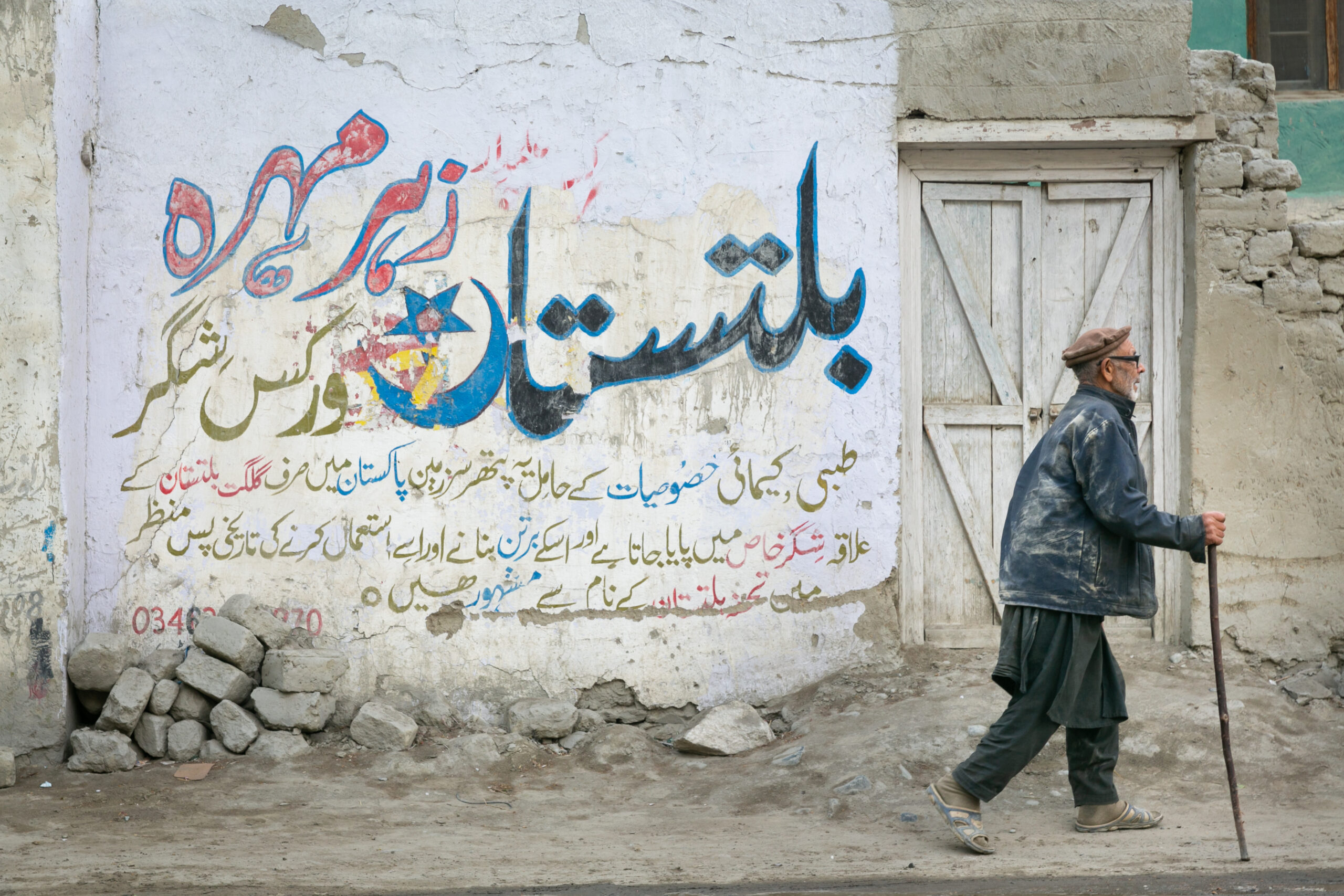
Gulmit makes a useful cultural and village stop. Walk slowly enough to notice lanes, houses and the relationship between the settlement and surrounding fields. Upper Hunza includes Wakhi-speaking communities, but the region should not be treated as culturally uniform. Local guides can explain the particular history and identity of each settlement without presenting one household as representative of everyone. Our people and cultures of Gilgit-Baltistan guide provides further context for these encounters.
Ghulkin and Borith can add village scenery and quieter walking, depending on the route chosen. A maintained village path and a glacier crossing are different activities. If a programme mentions walking between Ghulkin and Borith via the glacier, request the route, guide requirements, current conditions and physical demands. A glacier route is not an automatic extension of an easy autumn village stroll.
Passu is especially memorable for its dramatic mountain outlines. Allow a night nearby if photography is important: dawn, changing cloud and evening light are difficult to use well when passing through on a tight schedule. Tree colour may be scattered rather than continuous, and the strongest composition can combine a small cultivated foreground with mountains, river or glacier scenery. The famous shapes remain rewarding even when the nearest orchard has already lost its leaves.
Hussaini’s suspension bridge is an optional site rather than a compulsory crossing. Conditions, crowding and individual comfort should govern the decision. Guests can appreciate the location without walking onto a structure that makes them uncomfortable. Never encourage someone onto a bridge merely for a photograph, and respect any local restriction or closure.
Nagar: a valuable addition to an autumn Hunza journey
Nagar deserves its own place in an itinerary. It is not simply the other side of a photograph taken from Hunza. Cultivated settlements and side valleys offer additional orchard landscapes, while mountain and glacier viewpoints provide a wider sense of the region. Depending on your base, a dedicated day can be more useful than fitting Nagar into an already long transfer.
Hoper is commonly included for its village setting and nearby glacier landscape. Keep the visit centred on safe, established viewpoints and locally appropriate paths. The appearance of the glacier can include dark debris as well as exposed ice; a rocky surface is not proof that the glacier has disappeared. Going onto glacier terrain requires a separate assessment and suitable guidance.
Minapin can be considered for village time or a walking programme, but a Rakaposhi Base Camp trek is a substantial activity rather than a brief detour. Autumn weather at a village does not tell you what conditions will be at a higher camp. If trekking is the main purpose, plan the route separately with suitable equipment, overnight arrangements and a weather decision. For less demanding autumn journeys, enjoy the inhabited valley and roadside mountain views without promising a high camp.
Autumn in Skardu and Baltistan: where to spend time
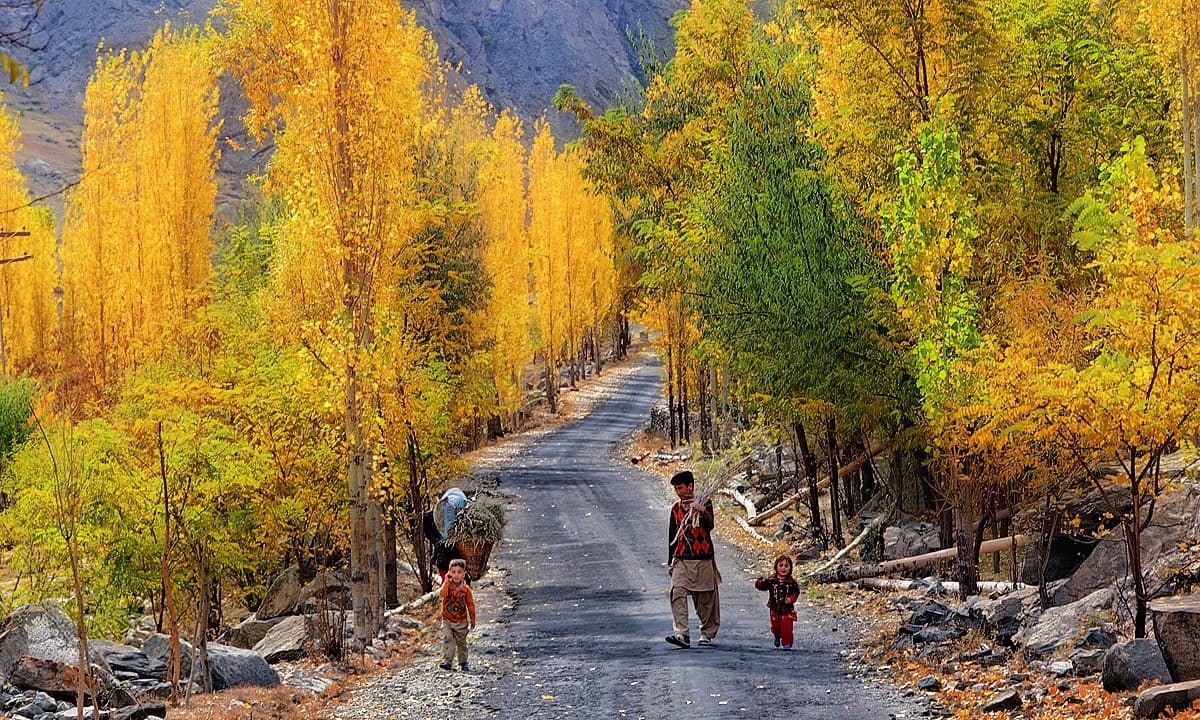
Skardu town, Kharpocho and the Indus landscape
Skardu is a practical arrival point, supply centre and base for selected excursions. Its landscape includes urban activity, agriculture and a broad river setting. A seasonal journey gains depth when it makes room for the town rather than treating it only as an airport stop. A local market visit or a guided conversation about Balti food and trade can balance a day of landscape photography.
Kharpocho offers an elevated perspective, but the approach involves a climb. Confirm footing, access and the time required for the individual group. Carry a warm layer even if the town feels comfortable. For anyone unable to undertake the walk, a suitable river or village viewpoint may be the better choice. Photographic access should be matched to mobility, not assumed from a short distance on a map.
Kachura lakes and nearby villages
Upper and Lower Kachura are separate lakes with different access arrangements. The official Upper Kachura guide places it around 35–40 kilometres from Skardu and describes it as a possible half-day outing. Actual timing depends on your hotel, road conditions, walking pace and how much time you spend around the lake.
Autumn interest is not limited to a lake’s edge. Fields, village lanes and trees along the approach can make the excursion more distinctive. At Upper Kachura, check the current walking access rather than promising a vehicle will reach every desired viewpoint. At Lower Kachura, confirm property entry and any photography restrictions. A paid site visit, boating and meals may each be separate expenses.
Chunda: an elevated village perspective
The official Chunda description places the village area at approximately 2,600–2,800 metres and notes its orchards and views over Skardu. The ascent is steep and winding; appropriate vehicles and an experienced local driver matter. Use official advertised journey times as orientation, then ask your driver for a current estimate from your actual starting point.
Chunda can provide a more intimate agricultural foreground than the open river plain. Walk with permission where fields and homes are involved. A local guide can identify a suitable public path and introduce the settlement respectfully. Avoid trampling planted edges to reach a higher camera angle. If conditions are windy or the ascent is unsuitable, retain a lower-altitude alternative instead of forcing the excursion.
Shigar: heritage and cultivated valley scenery
Shigar works well as an overnight stop. This allows time for its heritage setting and village landscape without continually watching the clock for a return drive. AKDN’s account of Shigar Fort explains its conservation and adaptive reuse. A guided visit can connect architecture, local history and the inhabited surroundings.
The strongest autumn experience may be a quiet walk beside cultivated land rather than another distant viewpoint. Ask about irrigation, the changing agricultural year and how households use and store fruit. Heritage properties can offer an attractive setting, but visiting a restored building and staying in one are different arrangements. Reserve accommodation in advance and check that the room and heating meet your needs.
Khaplu: give the valley its own nights
Khaplu is a separate eastern Baltistan destination and deserves more than a rushed return outing. The GB Tourism Department’s valley guide identifies its historic character and broad April–October visiting season. Autumn visitors can combine the palace, settlement walks and orchard landscapes, adjusting the programme to light and leaf conditions.
Allow at least one overnight when including Khaplu; two can give the journey a calmer rhythm and another chance for photography. Mosque visits depend on local access, worship and dress requirements. A heritage stop should never interrupt prayers or assume unrestricted photography. Ask whether interiors can be visited and follow the site’s instructions.
A route towards Hushe is a further extension, not something to add casually at the end of a palace visit. It can introduce impressive mountain-valley scenery, but conditions, daylight and the driving demands need separate consideration. You do not need to reach every valley to have a meaningful Baltistan journey.
How to combine Hunza and Skardu without rushing
A combined journey should reserve actual days for both regions. The connection between Baltistan and Hunza is a major transfer, involving the Skardu road and Karakoram Highway. It is not a short sightseeing link. Plan a full daylight travel day, allow for stops and delays, and consider an overnight around Gilgit if the group would benefit from dividing the distance. A route planner’s minimum driving estimate is unsuitable as a promise for a mountain journey.
The following example is a planning framework, not a fixed departure or guaranteed colour itinerary. It assumes a domestic flight into Skardu is available and operating. If the arrival changes, the whole sequence may need adjusting. For guests with only a week, choose Hunza or Baltistan rather than compressing both.
| Day | Suggested focus | Planning purpose |
|---|---|---|
| 1 | Arrive Islamabad | Rest and domestic-flight preparation |
| 2 | Fly to Skardu if operating; easy local afternoon | Avoid an ambitious arrival-day programme |
| 3 | Kachura or Chunda, chosen for conditions | Use recent local colour information |
| 4 | Shigar heritage and village time; overnight | Give the valley more than a short stop |
| 5 | Continue to Khaplu; settle in | Separate transfer and exploration |
| 6 | Khaplu walks and heritage | Flexible light and orchard time |
| 7 | Return towards Skardu | Prepare for the western transfer |
| 8 | Transfer to Gilgit or Central Hunza | Full road day; overnight choice depends on pace |
| 9 | Central Hunza | Forts, villages and orchards |
| 10 | Nagar or another Central Hunza day | Conditions and walking preference decide |
| 11 | Upper Hunza; overnight near Gulmit or Passu | Retain morning or evening light |
| 12 | Upper Hunza, then reposition for return | Avoid a last-minute airport transfer |
| 13–14 | Return to Islamabad with contingency time | Reach Islamabad at least a day before the international departure |
This framework needs extra time if replacing flights with overland travel. Autumn closure risk also means the Naran–Babusar route must never be assumed open. Confirm the usable road route before departure. On the return, maintain enough time for a road alternative if a mountain flight is cancelled; a single spare afternoon does not cover every disruption.
Autumn photography: useful choices in the field
Start by deciding what you want to photograph: broad landscapes, orchards, architecture or people. These require different timing. A sunrise viewpoint may be excellent for distant mountains while leaving the nearest village in shadow. An orchard can become more interesting later when light reaches the trees. Backlit leaves work well when conditions permit, but a flat cloudy day can be useful for close views and subtle colours.
Carry a flexible lens range rather than assuming the widest lens will suit every scene. A longer focal length can connect terraces and a distant mountain, while a moderate lens works well in village streets. A tripod is helpful in low light if you can use it without blocking paths. Keep spare batteries warm and protect equipment against dust, especially when working near roads or exposed river plains.
Ask permission before making identifiable portraits. Agree on the photograph before raising the camera, and accept a refusal immediately. Do not ask children to enter roads, climb walls or repeat work for a staged scene. Drone use requires separate checks on current permissions, site restrictions, privacy and nearby aviation; a scenic setting is not automatic permission to fly.
For a dedicated photography journey, fewer bases and repeat visits usually provide more opportunities than a longer attraction list. A second morning at the same village may produce different light and a better conversation. Leave time to review images and rest. Drivers should never be pressured into risky roadside stops because a cloud has briefly cleared.
Weather, access, accommodation and packing
Expect a pronounced difference between sunshine and shade, and between the middle of the day and an early-morning viewpoint. Later autumn requires warmer clothing than an orchard photograph might suggest. The temperatures at Skardu airport, a Karimabad hotel and an exposed Upper Hunza viewpoint are not interchangeable. This guide does not assign unsupported temperature averages to each location: use the Pakistan Meteorological Department and current local information close to departure.
Pack layers, a windproof outer garment, comfortable shoes with grip, a warm hat and gloves for photography stops. A light day bag should hold drinking water, personal essentials and an extra layer. If the programme includes trekking, request a route-specific equipment list instead of treating general sightseeing clothes as adequate. Sun protection remains useful even in cold air.
Check room heating, hot-water hours and backup power when selecting accommodation. “Premium” is relative to local availability, especially in smaller settlements. Ask about the actual room category, bathroom arrangement and access stairs. A beautiful view does not establish that a property meets a guest’s mobility or comfort requirements. Reserve popular rooms early while keeping the itinerary capable of responding to weather.
Before every major transfer, review the forecast, road status and NDMA advisories. Mountain roads can be affected by rockfall, repairs, snow and other disruptions in any season. Travel during daylight where practical, use a suitable vehicle and allow the driver to make safety decisions. A hired vehicle does not eliminate weather-related access limits.
Make autumn visits useful to local communities
Choose local guides, buy permitted local produce and pay clearly agreed fees for arranged visits. An orchard owner may welcome guests, but that welcome should not become an expectation of free access to every property. Avoid crowding a household or interrupting farm work. Keep conversations respectful and do not romanticise communities as unchanged by modern life.
Carry litter out, including food packaging and tissues. Do not pick leaves or fruit to improve a scene. Stay on established paths and keep vehicles off cultivated ground. At heritage sites, pay entry fees where required and respect photography restrictions. These habits protect the places that make autumn journeys distinctive.
Frequently asked questions
What is the best month for autumn colour in Hunza and Skardu?
October is the main planning month, but the best dates vary between locations and years. Allow several days, include different valley settings and use recent local observations. No operator can guarantee peak colour in every village on a fixed date.
Can I see both regions in seven days?
You can make a compressed trip, but major transfers will consume much of it. For a richer autumn experience, spend a week in one region or allow roughly two weeks for a combined journey with arrival, return and contingency time.
Is autumn suitable for non-trekkers?
Yes. Many rewarding experiences involve village walks, heritage visits and viewpoints reached by road. Confirm the walking demands of each site; forts, lakeside approaches and hillside settlements can still involve steps, uneven paths or gradients.
Should I add Khunjerab, Deosai or Fairy Meadows?
Only after separately checking current access, weather and suitability. These higher or more demanding extensions are not equivalent to an orchard visit. A colour-focused journey can be complete without any of them.
Are meals, boating and optional activities included?
That depends on the written programme. Ask for a clear list of inclusions and exclusions, including entry fees, meals, optional activities, domestic flights and transport arrangements following a cancellation.
How early should I return to Islamabad?
Plan to reach Islamabad at least one day before the international departure and retain appropriate contingency time for the chosen domestic transport. Mountain-flight cancellation or a road interruption may require a larger buffer.
Plan an autumn journey with Crossroads Adventure
A well-planned autumn journey balances seasonal colour with places that remain worthwhile when conditions change: historic settlements, local conversations, mountain landscapes and time on foot. Share your dates, preferred pace, walking ability and whether photography is the main purpose. Crossroads Adventure can shape a private journey around those priorities, with a realistic route and clear arrangements for accommodation, guiding and transport.
Continue exploring with our guide to Pakistan’s mountain ranges and short treks in Hunza and Nagar. Choose walking extensions according to the season and your ability rather than adding them automatically to a sightseeing programme.
Continue exploring northern Pakistan
Plan your northern Pakistan journey
Share your dates, interests, walking ability and preferred pace. Crossroads Adventure can shape a private journey around the places and experiences that matter to you.
Start planning your journey