Crossroads field guides · Spring & autumn
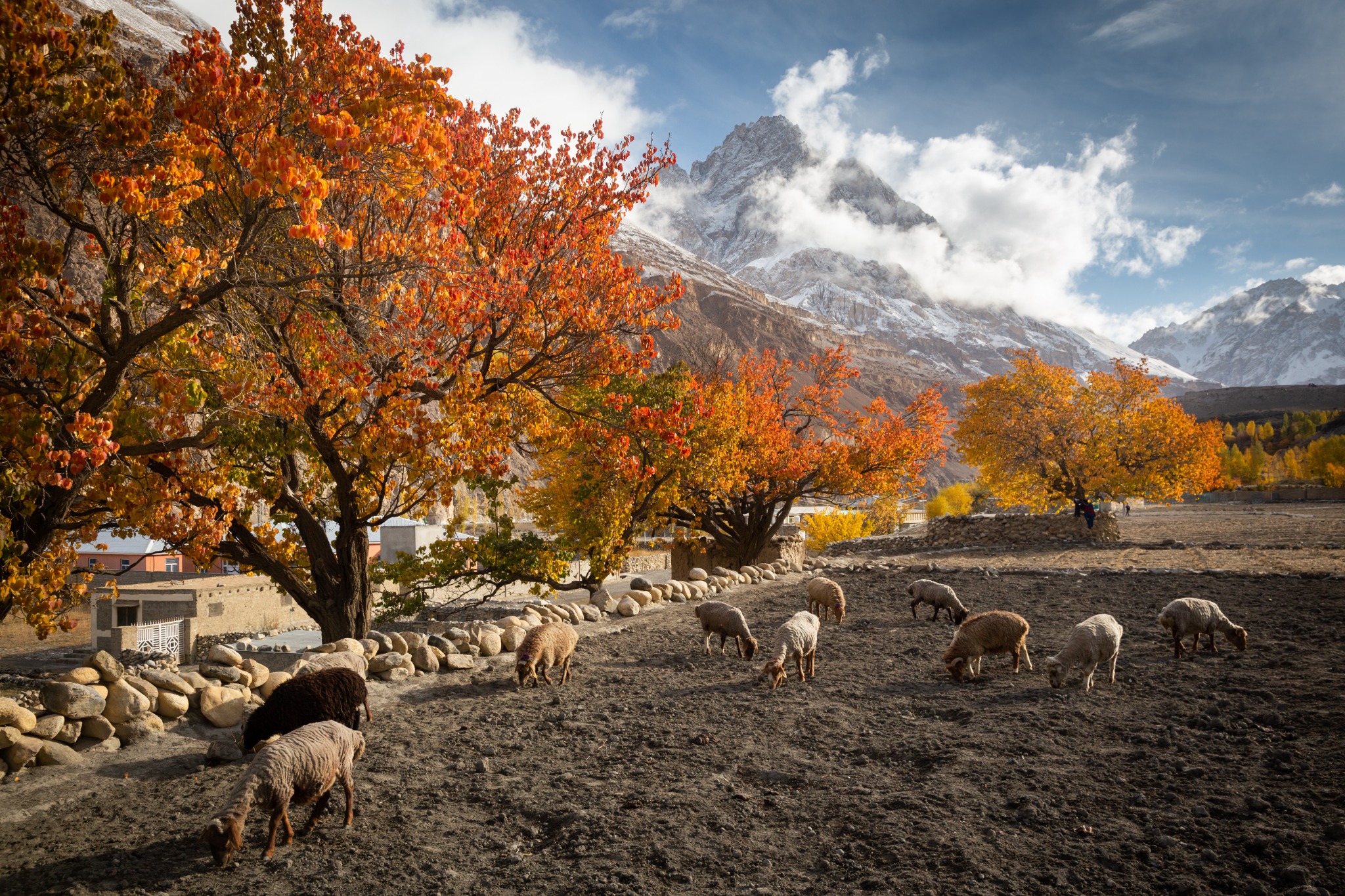
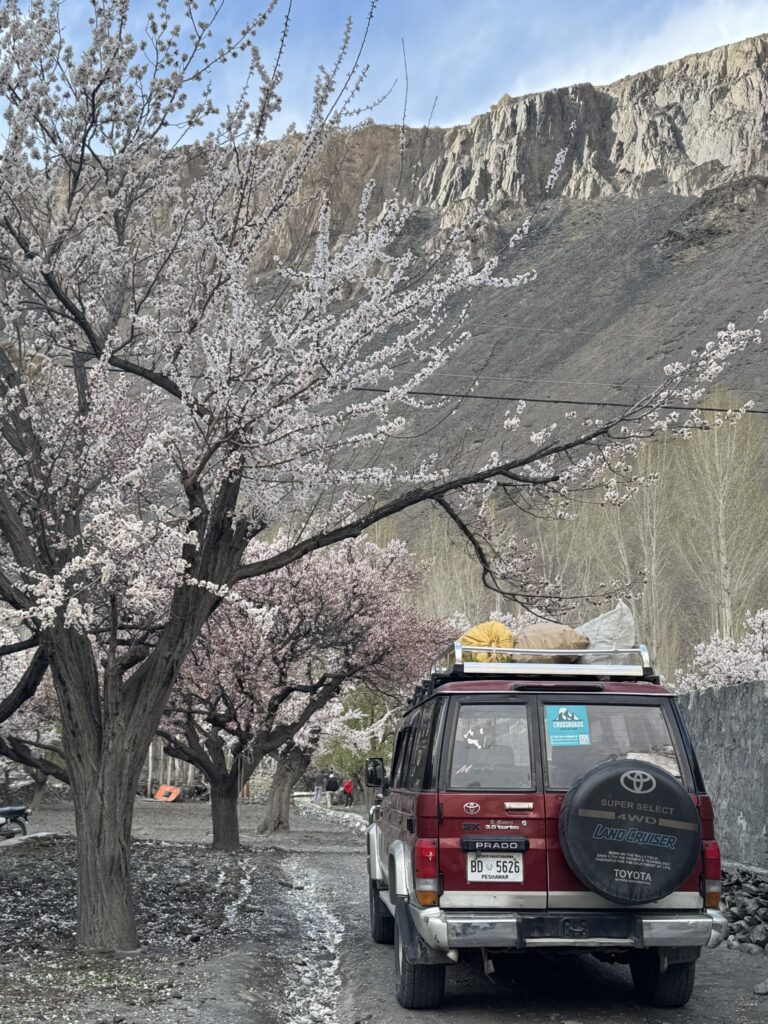
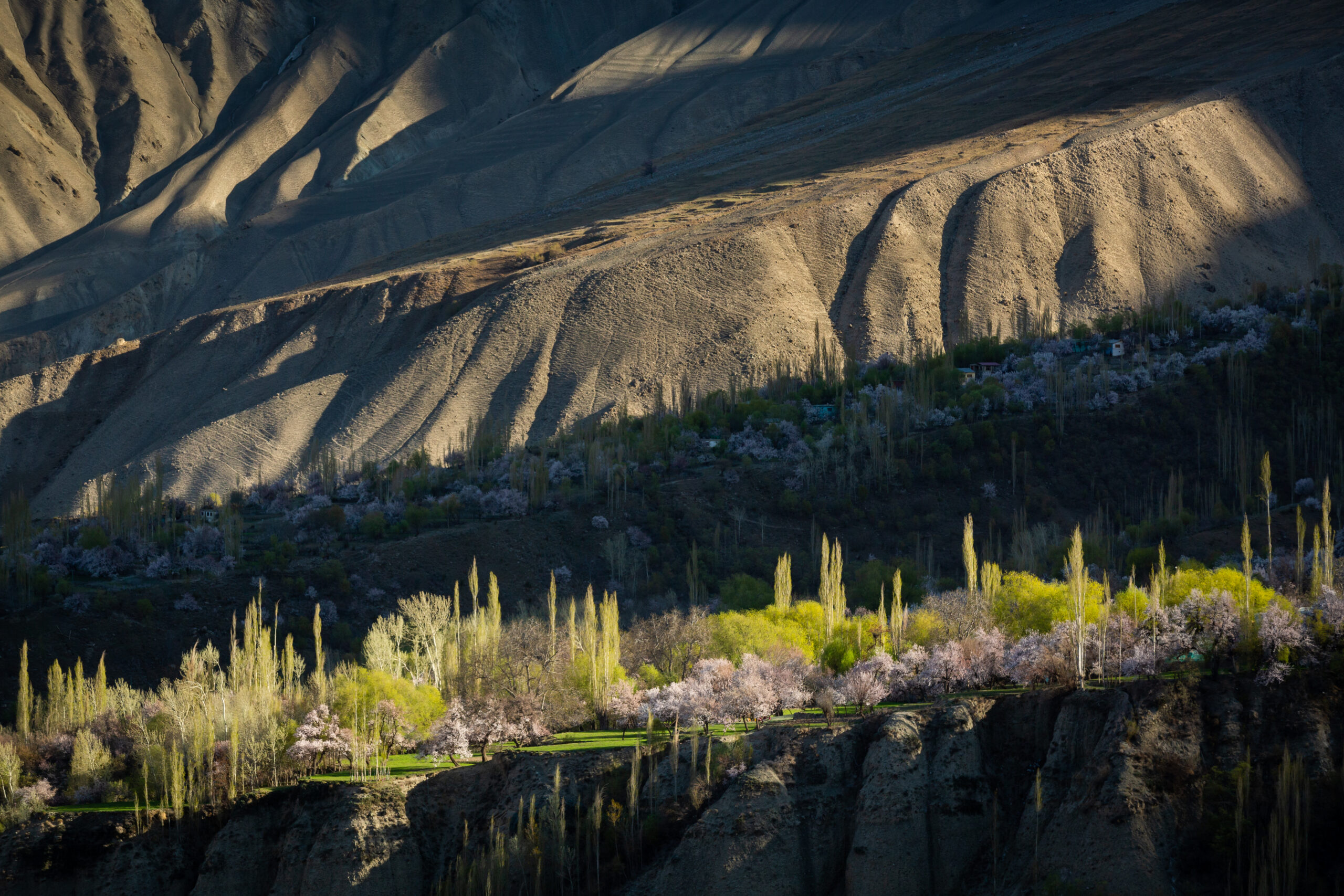
Spring blossom in northern Pakistan is an agricultural season as much as a photographic one. Apricot, cherry and other fruit trees flower among inhabited villages, irrigation channels and cultivated terraces, with snowy mountains above. The appeal comes from that combination: a working orchard landscape beginning another year beneath peaks that still look wintry.
The blossom does not arrive everywhere together. Elevation, exposure, tree variety and that year’s weather affect when individual orchards flower. A useful journey therefore connects several suitable villages, keeps its daily sequence flexible and includes heritage and local experiences that remain worthwhile before or after peak bloom. This guide explains how to plan for Hunza, Nagar, Gilgit and Baltistan without promising a fixed natural event.
Crossroads Adventure · Editorial review: 6 October 2026
When is blossom season in northern Pakistan?
For Gilgit-Baltistan, mid-March through April is a useful broad planning window, with different settlements flowering at different stages. It is not a statement that every village has blossom throughout those weeks. Lower and warmer locations can develop earlier, while higher or colder settlements can follow later. Individual trees may also flower differently because of variety and local conditions.
A 2026 research paper on Gilgit-Baltistan’s apricot landraces reports flowering observations ranging from mid-March at Oshikhandas, at 1,457 metres, to the last week of April at Memushtang, at 3,380 metres. The study also records reported year-to-year shifts of around 10–15 days. These surveyed observations illustrate regional variation; they are not a bloom forecast for a future departure.
For a first blossom journey, build in several days around a main valley rather than allocating a single afternoon. If blossom is the priority, ask your guide to check orchards close to departure and adjust the day’s route to actual conditions. An accommodation booking may fix your base, but it need not fix the order of every nearby village visit.
Photographs labelled only “Hunza spring” can be misleading for planning. Ask which village they show, when they were captured and which trees are flowering. A recent image from the actual settlement is more useful than a beautiful image from another year. Likewise, a blossom festival date may reflect an event schedule rather than the precise moment when every orchard is at its best.
| Planning period | Potential focus | What to verify |
|---|---|---|
| Mid to late March | Earlier flowering in suitable lower or warmer valley locations | Current development in named orchards; colder villages may still be dormant |
| Late March to mid-April | A broad mix of valley settlements, adjusted to current conditions | Differences between tree varieties, elevations and aspects |
| Later April | Later flowering in selected colder or higher locations | Whether nearby lower orchards have already moved into leaf |
Is it cherry blossom, apricot blossom or both?
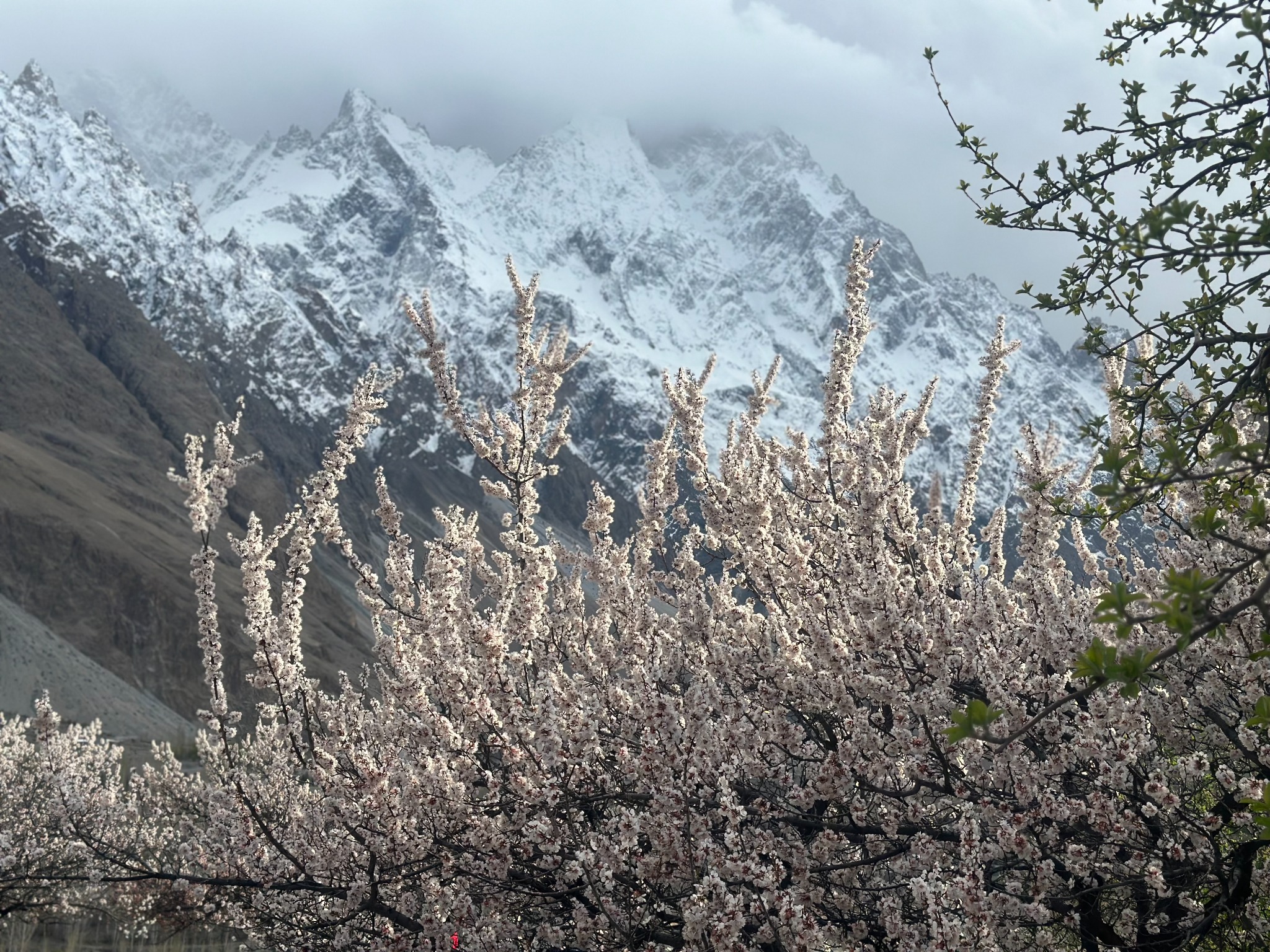
“Cherry blossom in Hunza” is a familiar search phrase, but it should not be used to identify every flowering tree. Apricot is central to many cultivated landscapes across Gilgit-Baltistan; cherry and other fruit trees also occur. White and pale pink flowers in a photograph do not, by themselves, establish which fruit is being grown.
Ask a grower or knowledgeable local guide to identify the trees. An orchard can include several varieties, and flowering can differ within the same village. This makes a journey more interesting: visitors can compare flowers, field layouts and local uses of fruit instead of treating the valley as one uniform display.
Blossom is also distinct from harvest. A spring visit is not the season for picking ripe apricots from the flowering trees. Dried fruit and other stored products may be available, but their origin and preparation should be explained honestly. If a household offers food, ask about ingredients and any dietary needs before accepting.
The flowers are part of the household’s crop. Do not pull down branches, remove blossoms or shake a tree for falling petals. A dramatic photograph is not worth damaging the coming harvest. Leave pollinating insects and farm equipment undisturbed, and keep children from running through cultivated areas without permission.
Spring blossom in Hunza: where to spend time
Karimabad: a practical base rather than a single blossom viewpoint
Karimabad is a convenient base for a Central Hunza visit. The official GB Tourism guide gives an approximate elevation of 2,500 metres and identifies its historic role as the former centre of the Hunza State. The settlement’s hillside setting means hotels, lanes and orchard areas occupy different levels; access should be described for the actual property and route.
Several nights here allow you to combine blossom walks with heritage and mountain scenery. Do not spend the whole visit looking for one famous composition. Cultivated terraces, irrigation channels, village paths and distant peaks provide many possibilities. A guide can arrange a suitable orchard visit and explain which paths are public.
The approach to Baltit Fort involves uphill walking and steps. Schedule it at a comfortable pace, particularly after arriving from a lower altitude. Guests with limited mobility should request a practical access assessment before the visit. A short distance on a map does not necessarily mean a short, easy walk.
Altit: heritage, orchards and village life
Altit pairs an important historic building with an inhabited village and cultivated surroundings. Its appeal in spring comes from the relationship between those elements, rather than flowers alone. The Aga Khan Development Network describes the conservation of Altit, Baltit and other northern heritage properties. Visiting with interpretation helps connect their architecture to community history.
Allow time to walk through appropriate lanes and pause at permitted orchard areas. Do not enter a courtyard because its flowering tree looks inviting. A local introduction is especially valuable when meeting residents: it gives the household a choice about receiving visitors and helps explain what the guests are interested in.
Combine a fort visit and an orchard walk as a balanced half-day, then keep the remaining time flexible. If rain or wind affects the blossom, architecture and village interpretation can still make the visit meaningful. A strong programme avoids making every activity depend on a fully flowering tree.
Ganish and other Central Hunza settlements
Ganish can add a different historic village perspective. Keep the visit focused on the settlement’s own heritage, current access and the paths your guide considers appropriate. It should not be presented merely as another orchard stop. Residents’ homes and shared spaces remain part of daily life, even where visitors are welcomed.
Nearby villages and agricultural areas can provide additional blossom possibilities, but the best choices should come from current local observations. A particular named place may have beautiful flowers one week and little remaining the next. Repeating a fixed list is less useful than choosing several suitable locations and giving each enough time.
Gulmit, Ghulkin and Passu in Upper Hunza
Upper Hunza introduces different village settings and more conspicuous glacier and mountain scenery. The official Hunza district overview identifies Gulmit, Passu and Borith among its visitor locations. Blossom should be checked locally rather than inferred from conditions in Karimabad. Even when flower coverage is limited, the inhabited landscape and mountains can justify the journey.
Gulmit offers a useful base for cultural and village exploration. Ghulkin can contribute quieter walking and agricultural views, subject to local access. Do not confuse a village stroll with a glacier crossing towards Borith: the latter requires a separate assessment, suitable guiding and a clear explanation of the route. Snow or spring weather can affect walking conditions beyond the maintained village paths.
Passu is rewarding for its striking mountain outlines. An overnight provides more flexibility for light and cloud than a hurried roadside stop. A flowering tree with distant peaks can make a memorable photograph, but the programme should never guarantee that exact combination. When trees are not in bloom, river, village and mountain scenes still provide a strong sense of place.
Attabad Lake can be included on the transfer between Central and Upper Hunza. It contributes landscape variety rather than blossom itself. Boating, if wanted, is an optional activity subject to suitable conditions and separate arrangements. Guests should know whether it is included and should have an equally worthwhile alternative if they prefer to stay ashore.
Nagar: orchards with a different valley perspective
Nagar is a useful companion to a Hunza blossom journey because its cultivated settlements and side valleys create additional opportunities to respond to seasonal variation. Give it a dedicated day if time permits. Trying to combine a full Nagar exploration, multiple Hunza forts and a northward transfer can leave very little time for actual walking or photography.
Hoper can provide village scenery alongside a glacier landscape. The inhabited area and established viewpoints are appropriate starting points for a general visitor programme. Going onto a glacier is a separate activity, and spring conditions must be checked. Dark surface debris is part of many glacier landscapes; do not describe every rocky area as a glacier that has vanished.
Minapin can be considered for village time when local conditions suit. A Rakaposhi Base Camp trek is a different undertaking, with greater physical demands and higher terrain. Flowering trees in a lower settlement do not indicate that an upper trail is snow-free. For a blossom-focused journey, keep the emphasis on accessible villages and arrange a trekking extension only after a route-specific assessment.
Local guiding helps explain the distinct identity of each settlement. Hunza and Nagar share a mountain setting, but they should not be treated as interchangeable cultural labels. Listen to how residents describe their community and avoid using one household’s customs as a universal description of the region. Read our guide to the people and cultures of Gilgit-Baltistan for further community and language context.
Spring blossom in Skardu, Shigar and Khaplu
Skardu and Chunda
Skardu is an arrival gateway and practical base for selected Baltistan excursions. Its wider landscape includes settlements, cultivated areas and an expansive river plain. The best blossom visits may be in villages around the town rather than at the most prominent sightseeing landmark. Keep a flexible day available to follow local reports. Our Skardu and Baltistan guide explains how to combine village visits with Shigar, Khaplu and the lakes.
Chunda offers orchards and an elevated view over the Skardu landscape. The official destination page gives an approximate elevation of 2,600–2,800 metres and identifies April–May as its broad apricot-blossom visiting period. That promotional season description does not guarantee flowers throughout both months. Check actual orchard development before arranging the ascent.
The road to Chunda is steep and winding; use a suitable vehicle and local driver. The village walk should follow appropriate paths, with permission for cultivated land. If the approach is unsuitable because of weather or road conditions, choose another valley-level visit rather than insisting on a particular viewpoint.
Kachura and its village surroundings
Kachura can combine lake scenery with village and orchard time. Upper and Lower Kachura are different sites, and their access arrangements should be explained separately. The official Upper Kachura description places it roughly 35–40 kilometres from Skardu. Allow a meaningful excursion rather than a rushed photograph between other distant destinations.
Use village paths where permitted and ask before entering orchards. At the lakes, confirm walking access, property entry requirements and optional boating arrangements. Weather can alter both the water’s appearance and the practicality of spending time at its edge. A lake visit remains valuable even if the nearest trees have not yet flowered.
Shigar: spring in a cultivated heritage valley
Shigar combines heritage architecture with agricultural surroundings, making it a useful overnight stop in a blossom itinerary. An overnight lets you explore outside the busiest transfer hours and gives another opportunity if the first afternoon is windy or overcast. Heritage interpretation and village walks provide substance beyond a colour-focused visit.
The AKDN account of Shigar Fort’s conservation explains its restoration and adaptive reuse. A visit can help guests understand why maintaining old buildings and public spaces matters to the valley. Site entry, guiding and an overnight stay are different services and should be arranged clearly.
Walk slowly, pay attention to irrigation and ask about local crops. Do not assume an orchard welcomes visitors because it borders a hotel or heritage site. Working fields deserve the same respect as private courtyards. A guide can help arrange an introduction or identify an appropriate path.
Khaplu: allow time rather than making a rushed return journey
Khaplu adds another distinct valley and heritage setting to a Baltistan programme. The official valley guide describes its historic character and broad April–October visiting season. Spring orchard conditions still vary locally and should be checked close to the visit.
At least one overnight is useful; two provide a more relaxed exploration of the palace, settlement and surrounding agricultural landscape. Mosque visits depend on worship, dress and local access rules. Ask about permission for interiors and photography. These are living places, not scenery that exists solely for guests.
A further extension towards Hushe requires its own time and road assessment. It is not automatically appropriate for an early-spring blossom programme. A journey can be complete with Skardu, Shigar and Khaplu, without adding every high valley or distant viewpoint.
Ghizer: a quieter alternative west of Gilgit
A blossom journey does not have to follow only the best-known Hunza and Skardu route. The agricultural valleys west of Gilgit can offer another approach, particularly for guests who enjoy village time and are willing to plan around current local conditions. The official Punial Valley guide identifies its cultivated landscape and fruit orchards. Gahkuch, Gupis and suitable side valleys can be considered as part of a dedicated Ghizer journey.
Do not add all of Ghizer as a one-day detour to an already full Hunza programme. Choose a manageable section or allocate additional nights. A route focused on lower valley settlements can have different access requirements from a programme continuing towards higher Phander or Shandur. Local flowering and road conditions should decide how far to extend the visit.
Ghizer is especially useful when the traveller’s interest is agricultural landscapes and community encounters rather than collecting famous landmarks. Arrange walking with local guidance and permission where necessary. As elsewhere, an orchard photograph should include an explanation of the household’s crop and work, not a claim that the settlement is unchanged by modern life.
This guide concentrates on Gilgit-Baltistan’s orchard valleys. Chitral, Swat and other northern regions require their own blossom and access planning; the flowering dates here should not be applied to them. In particular, a spring route between Ghizer and Chitral must not assume the high Shandur connection is open.
Should you choose Hunza, Baltistan or both?
Choose Hunza if you prefer a relatively concentrated village-and-heritage programme with several nights around Central Hunza and a shorter extension into Upper Hunza. Choose Baltistan if you enjoy exploring separate valleys, heritage properties and broad landscapes, and are comfortable with more substantial transfers between bases.
For a week, one region usually makes the better journey. For approximately two weeks, a combined programme can include meaningful time in both, although the inter-regional drive still needs a full travel day and may benefit from an intermediate overnight. A route containing both names is not necessarily a well-balanced route: count the actual exploration days after transfers and buffers.
Gilgit can be more than a connection between regions. Depending on seasonal conditions and the wider route, suitable lower-valley agricultural areas may contribute useful blossom opportunities. A heritage stop such as Kargah can also add context, subject to current access. Avoid adding a detour just to lengthen a place list; include it when it serves the journey’s interests and timing.
A realistic spring blossom itinerary
The following framework assumes domestic flight access is available and operating. It deliberately leaves room for local decisions. The same route should not be sold as a guaranteed bloom sequence, and it needs more time if flights are replaced by long road journeys.
| Day | Suggested programme | Why it helps |
|---|---|---|
| 1 | Arrive Islamabad; rest | Prepare for the domestic connection |
| 2 | Fly to Skardu if operating; easy afternoon | Avoid ambitious arrival-day plans |
| 3 | Chunda, Kachura or another suitable village | Choose using current blossom reports |
| 4 | Shigar heritage and orchards; overnight | Combine culture and seasonal landscape |
| 5 | Continue to Khaplu | Allow daylight for the transfer |
| 6 | Khaplu heritage and village exploration | Keep flexible walking and photography time |
| 7 | Return towards Skardu | Prepare for the connecting journey |
| 8 | Transfer towards Gilgit or Hunza | A major road day, with an overnight choice suited to the group |
| 9 | Central Hunza forts and orchards | Explore one area well |
| 10 | Nagar or another Central Hunza day | Follow the actual flowering stage |
| 11 | Upper Hunza; overnight | Add village and mountain variety |
| 12 | Upper Hunza and reposition for return | Retain flexibility for the domestic connection |
| 13–14 | Return to Islamabad with contingency time | Be in Islamabad at least a day before the international flight |
A shorter Hunza-only programme could use several nights in Central Hunza and one or two in Upper Hunza, with Gilgit and Islamabad travel arranged around actual schedules. A Baltistan-only programme could divide time between Skardu, Shigar and Khaplu. In either case, protect the return buffer before adding another excursion.
Check the road route explicitly. Spring does not mean seasonal high passes are open. The Naran–Babusar route must not be assumed available simply because trees are flowering in Hunza. Flight cancellations also require a practical alternative, not an instruction to continue the original timetable regardless.
Blossom photography and orchard etiquette
Look for compositions that explain the place: a flowering tree beside an irrigation channel, cultivated terraces below a fort, or blossoms against a distant mountain. A close-up records a flower; a wider scene can show how the orchard fits into the village. Both have value, but neither requires damaging plants or entering private land without permission.
Light matters as much as the flowering stage. Backlit petals can be attractive when sun and background align, while soft cloud can help with close details. Early mornings may give calmer conditions, but mountain shadows can delay useful light in a particular orchard. Ask a guide who knows the village rather than assuming sunrise is best everywhere.
Carry a versatile lens range and protect equipment from dust and changing weather. A tripod can help in low light if it does not obstruct a path. Wind can move blossoms faster than a long exposure allows; adjust your method to the conditions. Keep batteries warm during cold starts and allow condensation to clear carefully when moving equipment into heated rooms.
Ask before photographing people or homes. A welcoming conversation is not consent for an identifiable portrait. Do not stage children beneath trees, ask residents to repeat work or interrupt farm activity for a camera. Drone photography needs current permission checks, respect for privacy and compliance with aviation and site restrictions. An open-looking valley is not automatically an unrestricted flying area.
Stay on agreed paths, do not pick flowers and carry all litter out. Pollination and the developing crop matter to households. An arranged orchard visit can support the grower through a clearly agreed fee or purchase, but fruit and handmade products should never be demanded as part of hospitality.
Spring weather, road access and accommodation
Blossom season is not summer. Sunshine can feel comfortable while an early start, shaded lane or exposed viewpoint feels cold. Rain, wind and snow at higher elevations can affect the programme. Temperatures differ between towns, hillside hotels and mountain stops; this guide does not assign unsupported averages to every village. Consult the Pakistan Meteorological Department and current local information close to travel.
Carry layers, a windproof and water-resistant outer garment, comfortable shoes with grip, and a warm hat and gloves for photography mornings. Bring sun protection and a small day bag for water and personal essentials. If walking on higher trails is proposed, ask for a separate equipment and access assessment. General village-walking clothes are not a substitute for trekking preparation.
Confirm room heating, reliable hot water and the actual accommodation category. A property may reopen seasonally or offer different services early in the year. Smaller villages can have simpler facilities than larger centres, even when the surroundings are exceptional. Ask about stairs and bathroom access if mobility matters.
Review current NDMA advisories before major travel days. Road repairs, rockfall, snow and weather can all disrupt plans. Use a suitable vehicle and experienced driver, and leave room for a safe decision when conditions change. A prepaid itinerary should never encourage travel through an official closure.
What if you arrive before or after peak blossom?
First, assess conditions locally rather than assuming the entire region is in the same stage. Another village or tree variety may still offer flowers. A flexible guide can help, but changing plans should remain sensible: an all-day drive to chase an unverified photograph can be less rewarding than exploring the valley you are already in.
Second, use the experiences that do not depend on flowers. Fort interpretation, village walks, mountain views, food and conversations about irrigation and agriculture can all be meaningful. The programme should have these foundations from the start. If flowering has passed, be honest about it and enjoy the emerging leaves rather than describing the landscape as peak blossom.
Third, understand the limits of a seasonal promise. No responsible itinerary can guarantee a natural event on a fixed day. What can be promised is careful preparation, current local checks, appropriate guiding and a route that gives reasonable opportunities across several locations.
Frequently asked questions
What is the best time for spring blossom in Hunza?
Late March and April form a useful broad planning period, but individual villages and orchards vary. Use recent local information and allow several days rather than expecting one date to suit the whole valley.
Are the flowers all cherry blossoms?
No. Apricot is prominent in many Gilgit-Baltistan orchards, and cherry and other fruit trees also occur. Ask locally to identify the trees rather than labelling every white or pink flower as cherry blossom.
Can I combine Hunza and Skardu for blossom?
Yes, if you allow enough time for meaningful visits and the connecting transfer. Approximately two weeks gives a more balanced framework than trying to cover both regions in a single week, although actual transport and contingency requirements must be checked.
Can I add Deosai or high-altitude trekking?
Only after separately confirming access and suitability. Flowering orchards do not establish that high roads or trekking routes are open. Keep a spring blossom programme centred on suitable inhabited valleys unless an extension has been properly assessed.
Can visitors enter any orchard?
No. Orchards can be private working land. Ask permission or arrange access through a local guide, keep to agreed paths and do not pick flowers or disturb farm work.
Should I book around a blossom festival?
A confirmed event can add interest, but verify its current dates and programme with the organisers. An event date is not a guarantee of peak flowering throughout nearby villages.
How should I protect my international connection?
Plan to reach Islamabad at least one day before departure and allow suitable contingency for domestic-flight cancellation or road disruption. Do not schedule a mountain flight on the same day as the international departure.
Plan a spring journey with Crossroads Adventure
Share your available dates, preferred pace, walking ability and whether blossom photography is the main purpose. Crossroads Adventure can build a private journey around suitable valley bases, original local experiences and realistic travel arrangements. The aim is a rewarding visit through the flowering season, with enough depth to remain worthwhile when nature changes the daily plan.
For a wider understanding of the landscape, read our guide to Pakistan’s mountain ranges. If you are considering walking extensions, our Hunza and Nagar trekking guide helps distinguish village exploration from higher routes that need separate seasonal preparation.
Continue exploring northern Pakistan
Plan your northern Pakistan journey
Share your dates, interests, walking ability and preferred pace. Crossroads Adventure can shape a private journey around the places and experiences that matter to you.
Start planning your journey