Crossroads field guides · Culture & heritage
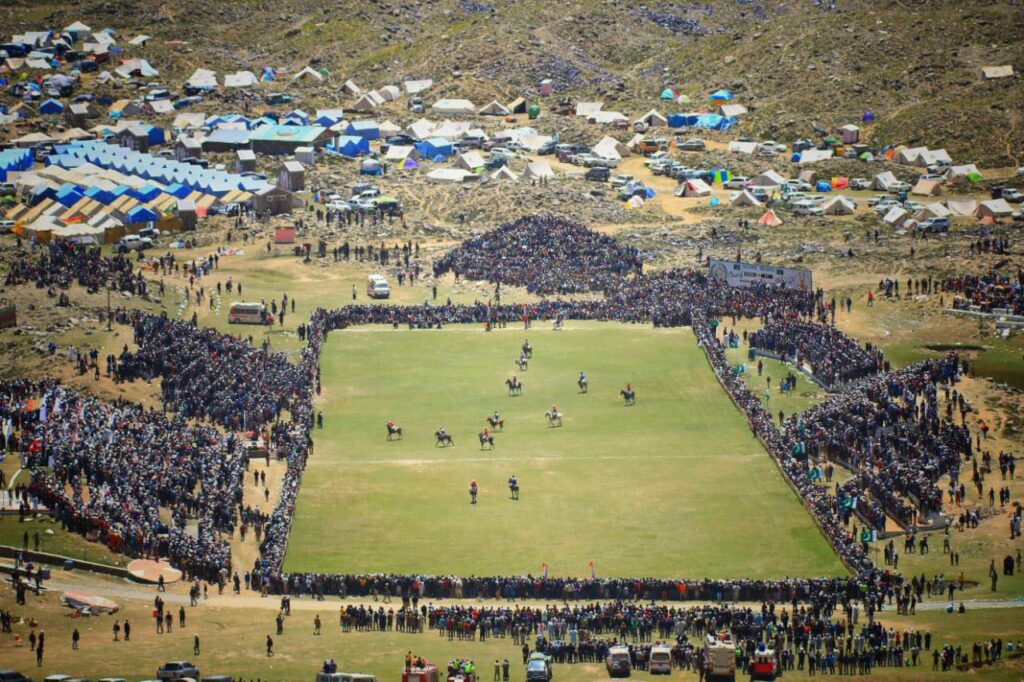
The Shandur Polo Festival brings the mountain polo traditions of Chitral and Gilgit-Baltistan to a high plateau at approximately 3,700 metres above sea level. The setting is unusually open: a polo ground, a lake, surrounding mountain slopes and, during the festival, a temporary settlement of spectators and camps. The attraction is the combination of a serious sporting rivalry and the journey through the valleys on either side of Shandur Pass.
For travellers, the most useful distinction is between the festival and the place. Shandur Pass can be part of a mountain journey when the road is open, but visiting the ground outside the announced festival does not guarantee a polo match, a cultural programme or an operating visitor camp. Festival dates also change. A good itinerary starts with the official announcement for the intended year, then works backwards through transport, accommodation and gradual ascent.
This guide covers the history, recent dates and results, what spectators can expect, the separate approaches from Chitral and Gilgit, camping arrangements and realistic journey design. Driving times and route distances below are approximate editorial planning ranges, not current road reports, transport schedules or guaranteed transfer times.
Dates checked on 6 October 2026: the 2026 festival was held from 11–13 June. The 2025 announced dates were 20–22 June. We have not verified an official 2027 schedule at this review. Do not book a future journey on the assumption that the festival will always take place on 7–9 July. 1 2
Crossroads Adventure · Editorial review: 6 October 2026
Shandur Festival quick facts
| Detail | Practical answer |
|---|---|
| Country | Pakistan |
| Setting | Shandur Pass, between Upper Chitral and the Ghizer region of Gilgit-Baltistan |
| Approximate altitude | 3,700 metres, or roughly 12,140 feet |
| Main attraction | Mountain polo, particularly the Chitral–Gilgit rivalry |
| Usual event length | A three-day festival; consult the current programme |
| Verified 2026 dates | 11–13 June 2026 |
| Announced 2025 dates | 20–22 June 2025 |
| Next festival | Official 2027 dates not verified at the October 2026 review |
| Main western approach | Chitral → Booni → Mastuj → Laspur → Shandur |
| Main eastern approach | Gilgit → Gahkuch → Gupis → Phander → Shandur |
| Overnight style at the pass | Temporary camping; facilities depend on the booked camp |
| Journey planning | Allow approach nights, festival time and a disruption buffer |
The altitude and geographical connection are described by the Gilgit-Baltistan Tourism Department. Pakistan’s tourism authorities widely promote Shandur as the world’s highest polo ground. Treat the elevation as approximate: published descriptions use different rounded metre and foot figures. 3
Where is Shandur?
Shandur lies on the mountain route linking Upper Chitral in Khyber Pakhtunkhwa with the Ghizer region of Gilgit-Baltistan. From the Chitral side, the final approach comes through Laspur. From the Gilgit side, travellers approach through the valleys around Gupis and Phander. The pass is the connecting point between these two regional journeys. 3
The polo ground sits in an exposed high-altitude landscape. Unlike an urban stadium, the surrounding space is used for movement, camping and festival infrastructure. A visitor may need to walk over grass, gravel or uneven ground between a vehicle drop-off, a campsite and a viewing area. Proximity on a map does not tell you whether a tent is quiet, sheltered, near toilets or within a manageable walk of the ground.
Shandur Lake forms part of the setting, but the festival does not turn the whole plateau into a recreation area with unrestricted access. Follow the current instructions on camping, waste, water use, restricted areas and vehicle parking. Ask a local guide about suitable short walks, especially where horses, traffic or festival operations are active.
For itinerary purposes, Shandur is a destination requiring its own overnight and road arrangements. It is not a short excursion from Hunza or a straightforward return day trip from Gilgit city. A journey that shows the festival as one afternoon between distant hotel stays usually conceals substantial driving or an uncomfortable arrival at altitude.
Festival dates and recent results
The dates are announced annually
Many older articles identify 7–9 July as the Shandur festival period. That timing appears in earlier official reporting, including the 2018 announcement. Recent editions demonstrate why it should be treated as historical timing rather than a permanent booking calendar. 4
| Edition | Verified timing | Information for readers |
|---|---|---|
| 2025 | Announced for 20–22 June | Official Gilgit-Baltistan announcement; this is a past edition |
| 2026 | 11–13 June | Official Khyber Pakhtunkhwa preparation announcement, corroborated by event reporting |
| 2027 | Not verified at this review | Wait for a dated official announcement before treating proposed dates as confirmed |
Festival planning involves provincial authorities, local administration, road preparation and the event programme. An official Gilgit-Baltistan briefing discussed adjustments associated with the Muharram calendar. The practical lesson is to check the particular year; a commercial itinerary copied from an earlier edition is not evidence of the next schedule. 5
Reconfirm the dates before paying for fixed international flights, then check the latest programme shortly before departure. Establish whether your booked camp covers the night before the first match, all festival nights and the final departure morning. A three-day event can require more than three days of accommodation and several additional days of travel.
Recent finals
In the 2026 final, Gilgit-Baltistan defeated Chitral 6–5. The preceding 2025 final was won by Chitral 9–8 after extra time, according to the Gilgit-Baltistan Tourism Department. These close results help explain the attention given to the final match. They are historical results, not a promise about future teams or fixtures. 6 7
History and the Chitral–Gilgit rivalry
A festival built around an older sporting tradition
Polo belongs to the sporting life of both Chitral and Gilgit-Baltistan. Shandur provides a prominent meeting ground for these regional traditions, bringing players and supporters into a shared mountain setting. The contemporary festival’s visitor camps and cultural programme are only one layer of the occasion; the match matters to local spectators as sport.
Official historical accounts commonly associate polo at Shandur with 1936. Radio Pakistan’s account describes Major Cobb’s wish for games under moonlight and refers to the ground as the “Moony Polo Ground.” This is a useful account of the ground’s twentieth-century history, but it should not be turned into a claim that polo originated there or that an identical festival has operated without interruption every year since 1936. 4
Visitors sometimes encounter elaborate origin stories, inconsistent names and precise claims about the first tournament in promotional descriptions. A guide should distinguish a commonly cited historical milestone from details requiring stronger documentation. The clear point is that Shandur’s reputation rests on a long-standing relationship between the two polo regions and a distinctive high mountain venue.
Why the rivalry matters
The final attracts attention because supporters arrive with strong regional loyalties. Watching alongside people who know the riders, recognise a team’s style and remember earlier results gives the match more context than viewing it only as a photographic spectacle. Ask a guide to explain the teams in the current programme and what distinguishes the local style.
Chitral and Gilgit-Baltistan also contain diverse communities, languages and local histories. The festival should not be presented as proof of one uniform “northern culture.” A Chitral-side journey and a Ghizer-side journey introduce different valley settings, settlements and hosts. Time in the approach valleys gives the event a more grounded cultural context.
Readers exploring the wider subject can continue with our Pakistan cultural heritage guide. Shandur is best understood as living sporting heritage: people practising and supporting a tradition in the present, rather than a monument visited only for its age.
Understanding freestyle mountain polo
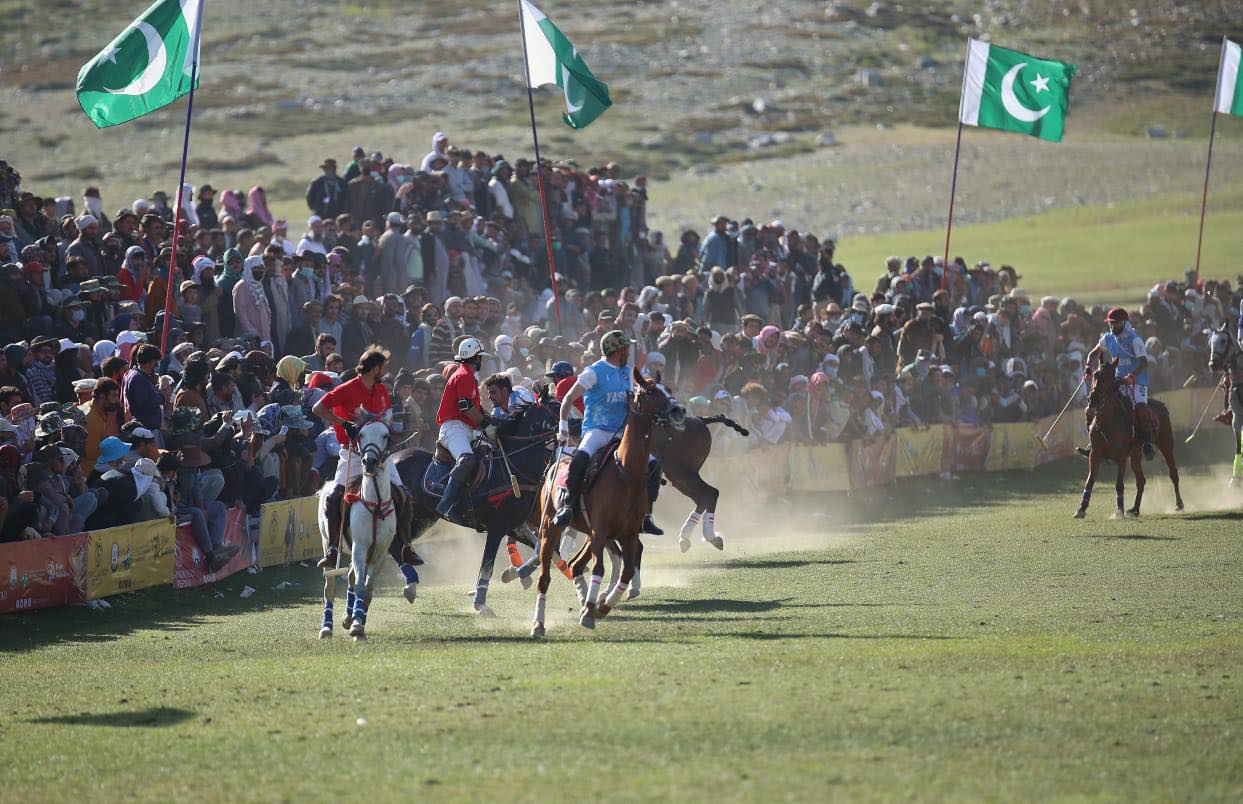
Shandur is associated with freestyle mountain polo, which differs from the regulated international version many visitors know. Public accounts describe teams of six players, rather than the four-player teams typical of international field polo. An APP account describes a match lasting about an hour with a ten-minute interval. Use the current event programme for the exact format, fixture lengths and any special arrangements. 8
The word “freestyle” should not be reduced to the phrase “there are no rules.” Riders operate within a local sporting tradition and customary expectations. A first-time spectator will understand more by having a local explanation of play, scoring, restarts and the decisions made during the particular match.
The basic action is easy to follow: mounted players use mallets to move the ball towards the opposing goal. The speed of turns, the movement of horses and the close contest for the ball create much of the drama. Watch how a rider anticipates the next movement and how teammates create space. A local guide can help distinguish a purposeful play from a moment that looks chaotic to a newcomer.
Spectators must respect the pitch edge. Horses and balls can reach the margins quickly, and a photographer stepping forward for a better angle can interfere with play. Remain in designated viewing areas, follow stewards’ instructions and keep children close. A telephoto lens is more useful than trying to stand inside the playing area.
The interval and quieter periods can be good times to learn about the match. Access to players, horses and preparation areas is not automatic. Ask before approaching, and avoid distracting anyone handling an animal. A ticket, camp booking or guide does not itself provide backstage access.
What happens during the festival?
The polo fixtures are the core reason to attend. Official programmes may also include music, cultural performances, stalls and other activities. Their timing and availability vary by edition; use the announced schedule instead of assuming that every activity advertised in an older article will take place. 3
A useful festival day begins with a clear meeting point, the expected fixture time and an agreed plan for returning to camp. Arrive early enough to find the viewing area and understand the access arrangements. Allow for security checks, parking restrictions and walking time. A driver may not be able to wait beside the ground or retrieve a group immediately after a match.
Between fixtures, the most rewarding experience may be informal: discussing polo with a guide, observing supporters’ enthusiasm, meeting hosts or making a short permitted walk. Avoid scheduling every hour around an assumed list of performances. Weather, official ceremonies and match timing can change the rhythm of the day.
The final often creates the greatest demand for space and transport. If seeing it is your priority, keep that day clear and plan the departure conservatively. Trying to watch the final, cross a difficult road section and reach a distant airport on the same day leaves little room for delay.
Outside the festival period, ask specifically whether a polo fixture has been arranged. An empty ground can still be meaningful as a landscape visit, but the travel experience is different. Camps, food stalls and temporary facilities may also have been removed.
How to reach Shandur from Chitral
Route structure
The western approach follows Chitral → Booni → Mastuj → Laspur → Shandur. Chitral town provides the main lower-valley base; Booni and Mastuj are useful waypoints before the final climb through the upper valley. The entire transfer should be treated as a mountain road journey with changing surfaces and variable traffic.
For initial planning, allow roughly 160–180 kilometres and 7–10 hours from Chitral town to Shandur, including reasonable stops under workable conditions. This is an editorial range. Road works, damaged sections, bridge arrangements, festival traffic and the precise start point can produce a substantially longer day. Obtain a current estimate from the driver actually operating the route.
The 2026 official preparation meeting specifically addressed access-road work, flood-affected locations and a temporary bridge at Shehdas. That is useful evidence that route readiness matters; it does not establish that the same bridge situation or road condition will apply to a future edition. 1
Break the approach into overnight stages
For most visitors, a stop in the upper valleys is more comfortable than travelling directly from Chitral to a first night at 3,700 metres. Ask about actual accommodation availability in Mastuj and Laspur, and confirm the elevation of the proposed sleeping location. Additional nights need to be designed around acclimatisation, not simply inserted as sightseeing stops.
Chitral offers the opportunity for a separate town visit and local cultural experiences before the mountain transfer. Confirm opening arrangements for any museum, religious site or heritage building included in the plan. A stop described as “Chitral sightseeing” should identify the places and the time available, rather than promise a complete introduction during a late arrival.
Reaching Chitral from elsewhere in Pakistan
An overland approach from Islamabad commonly involves the road corridor towards Dir and the Lowari Tunnel, followed by the onward journey to Chitral. It is a separate travel stage from the Chitral–Shandur transfer. For foreign travellers, the security advice on this approach is material: at this review, the UK FCDO advises against all travel on the N45 from north of the Mardan ring road to the edge of Chitral city. Check nationality-specific advice and insurance before selecting this route. 9
Do not assume that a direct Chitral flight will operate on your preferred day. Verify bookable airline services for the intended dates and have a realistic alternative. A journey proposal should state whether the Chitral transfer is by air or road and what happens if that arrangement changes.
How to reach Shandur from Gilgit
Route structure
The eastern approach follows Gilgit → Gahkuch → Gupis → Phander → Shandur. It introduces the Ghizer valleys and provides the option of a lower-altitude hotel or guesthouse stay before the final approach to the plateau. Phander is a useful named planning base, but the availability and condition of a particular property must be confirmed.
For initial planning, allow approximately 210–230 kilometres and 8–11 hours for a direct Gilgit–Shandur journey under workable conditions. A more comfortable design usually splits the road journey with valley nights. As on the Chitral side, these figures are broad editorial estimates and should be replaced by current local timings before departure.
The eastern approach is not automatically faster because an itinerary starts with a flight to Gilgit. Flight arrival time, baggage collection, vehicle preparation and the onward mountain transfer all need to fit the day. Arriving in Gilgit and immediately sleeping at Shandur also creates a large altitude increase.
Use Phander as part of a staged journey
An overnight in the Phander area allows a less hurried introduction to the valley and a shorter final road stage. A further upper-valley overnight may be appropriate for gradual ascent, but it should be booked at a verified location with a known sleeping elevation and suitable facilities. An unspecified “acclimatisation camp” does not tell a guest where they will sleep or how the ascent is managed.
Allow daylight for the final climb. Festival traffic can make the last part of the approach slower than expected. Confirm where the vehicle can unload luggage and how camping equipment reaches the booked site. If you are travelling as a group, identify which staff member remains responsible for arrivals while another manages the vehicle.
Reaching Gilgit
Flight schedules to Gilgit and Skardu can change at short notice, as current UK travel advice notes. A Skardu arrival requires a substantial additional road journey to reach Gilgit and then Ghizer; it is not an interchangeable airport transfer. Verify the full route before accepting an alternative flight. 9
Overland access from Islamabad also requires a route-specific decision. Babusar is seasonal, and the UK FCDO currently advises against all travel on a specified Karakoram Highway section between Mansehra and Chilas via Battagram, Besham, Dasu and Sazin. The existence of an open road is different from an appropriate route for a particular traveller. 9
Choosing transport and checking access
Select a vehicle for the actual road conditions and the size of the group, including luggage and camp equipment. A locally experienced driver and suitable ground clearance matter more than a vague promise of “comfortable transport.” Ask whether four-wheel drive is required for the current approach, whether the booked vehicle covers the final climb and whether a vehicle change is expected.
Public transport can help reach regional towns, but it should not be assumed to provide a timed festival transfer all the way to a booked camp. Seats, departure times and onward connections can be uncertain during peak demand. Independent travellers should confirm the final leg and the return arrangement before entering the upper valleys.
A through-journey from Chitral across Shandur to Gilgit, or in the reverse direction, can be rewarding. It requires confirmed access on both sides, coordinated accommodation and transport capable of completing the intended route. Ask who bears the cost if the through-route becomes unavailable and the group must return to its starting side.
Foreign visitors should verify Pakistan entry requirements through the official Pakistan Online Visa System, then ask about any local registration, festival access or route permissions applying to their nationality and itinerary. Do not confuse a visa with permission for every road, restricted area or special activity.
Keep a disruption day between the mountain journey and an international departure where possible. State the return airport and the backup plan in writing. A buffer is useful only when accommodation and transport can actually be extended if needed.
Camping, accommodation and facilities
What accommodation at Shandur means
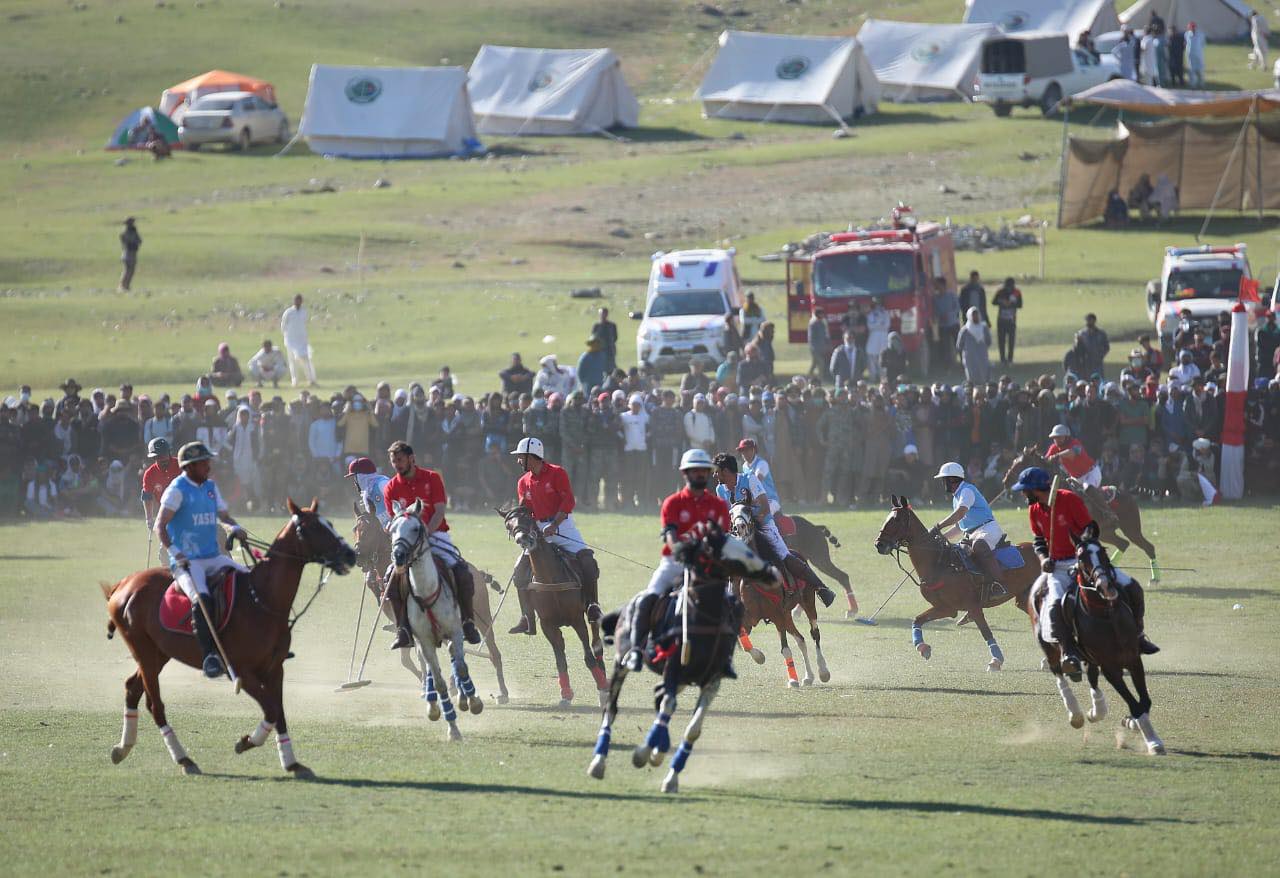
At festival time, the pass is principally a temporary camping environment. A photograph of a large tent settlement does not prove that tents are available to any arriving visitor. Some camps serve officials, teams or organised groups; others require advance booking. Confirm a named camp and the exact nights included.
Ask whether the accommodation is a private tent or a shared tent, how many occupants it has, and whether beds, mattresses, sleeping bags and pillows are supplied. Request the sleeping bag’s comfort rating rather than a general statement that bedding is “warm.” An insulated mattress is important because cold ground can make a thick sleeping bag inadequate on its own.
Establish the toilet arrangements, handwashing water, drinking-water treatment and the walking distance from the tent. A private toilet is a specific service that needs confirmation. Showers, heated washrooms and constant electricity should not be assumed at a temporary high-altitude camp.
Food, power and communication
Confirm which meals are included, the meal times on match days, how dietary needs are handled and whether drinking water is supplied throughout the stay. Festival stalls may be available, but relying on an unspecified stall for every meal is a different arrangement from a catered camp.
Bring enough cash for small purchases and incidental expenses. Do not plan on finding a dependable cash machine at the pass. Carry a charged power bank and agree where devices can be recharged if the camp uses limited generator or solar power. Avoid assuming round-the-clock charging access.
Mobile coverage and data should be treated as uncertain. Arrange meeting points and a communication plan before separating from companions. Offline copies of the itinerary, accommodation details and emergency contacts are more dependable than expecting a messaging application to work at every moment.
Lower-valley accommodation
Staying in a lower valley can offer more established facilities, but daily travel to the festival introduces additional driving and access constraints. Ask for the actual property, its altitude, its road distance from the ground and the expected round-trip time. “Hotel accommodation near Shandur” is too imprecise to judge.
Accessibility also deserves an individual discussion. Uneven surfaces, tent entrances, basic toilets and walking at altitude may be difficult for guests with limited mobility. Describe your needs before booking and obtain clear answers about assistance and facilities.
Altitude, weather and packing
Acclimatisation is part of the itinerary
Sleeping at approximately 3,700 metres involves a meaningful altitude exposure even when you reach the pass by vehicle. Fitness does not guarantee protection from altitude illness. CDC guidance recommends gradual ascent; above 3,000 metres, its detailed guidance limits increases in sleeping altitude to about 500 metres per day, with additional acclimatisation time. Discuss individual health concerns and any preventive medication with a clinician before travel. 10
Headache with nausea, dizziness or unusual fatigue after ascent can indicate altitude illness. Do not continue higher with symptoms. Worsening symptoms require descent and medical assessment; breathlessness at rest, confusion or difficulty walking steadily demand urgent action. A festival medical post is useful, but its existence does not replace a workable evacuation and descent plan. 11
Have the planner provide the sleeping elevation of every overnight. Two nights in a lower town do not automatically make a large final ascent appropriate. Day visitors also need to consider exposure at the ground and the time required to descend.
Prepare for an exposed plateau
Lower-valley summer weather is a poor guide to comfort at Shandur. Sunshine can feel strong, wind can chill a seated spectator, and the temperature drops after sunset. Rain or a sudden deterioration in weather can make camping considerably less comfortable. Pack for cold nights, potentially near or below freezing, rather than relying on a pleasant daytime forecast.
This is a packing assumption for an exposed mountain camp, not a published average-temperature table. Check a location-specific forecast close to departure and obtain the camp operator’s current advice. Ask whether the tents can withstand wind and rain and whether spare dry bedding is available if equipment becomes wet.
Useful items include thermal layers, fleece or an insulated jacket, a windproof waterproof outer layer, warm hat and gloves, comfortable shoes with grip, sunglasses, sunscreen and a brimmed hat. A head torch helps with uneven ground and nighttime toilet visits. Keep medication, documents and electronics protected from dust and water.
Carry a small day bag for the match with water, a warm layer and essential personal items. A camp close to the ground may still be inconvenient to revisit during a crowded fixture. Families should agree in advance who carries children’s layers and how to regroup if the viewing area becomes busy.
Realistic festival journey outlines
The following outlines show how to structure time; they are not fixed departures or medically approved ascent plans. Final overnight choices must use verified sleeping elevations, current road access and confirmed accommodation. Extend the approach if the altitude profile requires it.
Gilgit-side journey with valley nights
| Stage | Suggested purpose |
|---|---|
| Arrival day | Reach Gilgit, settle in and check onward arrangements |
| Valley approach | Travel through Ghizer towards the Phander area; stay overnight |
| Upper-valley stage | Use a confirmed intermediate stay if needed for gradual ascent; retain time for local experiences |
| Pre-festival arrival | Reach the booked Shandur camp in daylight once the ascent plan permits |
| Festival days | Attend selected fixtures and the final, following the current programme |
| Descent day | Return to a confirmed lower-valley property without rushing to an airport |
| Return and buffer | Reach the departure gateway with time for road or flight disruption |
This commonly requires roughly eight to ten days from Gilgit arrival to final departure, depending on acclimatisation, the event schedule and the transport plan. More time may be needed for international connections or extensions. A shorter programme needs particularly careful scrutiny of ascent and transfer assumptions.
Chitral-side journey
Allow time in Chitral before continuing through the upper valleys. Build intermediate overnight stages towards Mastuj and Laspur using actual property availability and sleeping elevations. Arrive at Shandur before the fixture you most want to see, then descend to a booked lower-valley stay after your final festival day.
The route should be assessed against current travel advice before it is offered to a foreign visitor. An overland transfer from Islamabad adds a separate stage and may not be appropriate under the advice and insurance applicable to that guest. Avoid a plan that treats arrival in Chitral, upper-valley travel and first-night camping at Shandur as an effortless single day.
Through-journey between Chitral and Gilgit
A longer journey can approach from one side, attend the festival and leave on the other. This offers variety and reduces repetition, but it also increases coordination. Confirm where luggage stays during matches, whether the same vehicle crosses, and how the itinerary responds if one side becomes unavailable.
Add separate days for major extensions. Hunza, the Kalash valleys and Islamabad are not interchangeable overnight stops close to the pitch. Give each a realistic place in the route instead of building an itinerary around a long list of names.
Costs and booking questions
There is no reliable single price for a Shandur experience. The total changes with group size, starting city, flight or road access, vehicle type, camping standards, meals, staff and the number of approach nights. A dated, itemised quotation is more useful than an undated “festival package price.”
Ask for the full cost from a clearly defined starting point to a clearly defined finishing point. Identify domestic airfare, hotel nights, tents, bedding, meals, drinking water, driver costs, guide services and any event access charges. Clarify whether transfers to the campsite and equipment transport are included.
Do not assume that general spectator access, reserved seating, accreditation and a commercial camp booking are the same thing. Confirm the current arrangements with the relevant organiser. If a provider advertises free entry, ask whether that statement concerns only general viewing and whether parking, camping or other services have separate charges.
Before booking, obtain answers to these concrete questions:
- Which official announcement confirms the dates used in the quotation?
- What are the overnight locations and sleeping elevations?
- What exactly is supplied in the tent, and how many people share it?
- What toilet, water and meal arrangements are included?
- Who drives the final approach, and what vehicle is used?
- What happens if a flight is cancelled, a road closes or the festival dates change?
- Is there a suitable descent and evacuation arrangement, and what costs are excluded?
- What are the cancellation terms for each major component?
An appealing camp photograph or a broad comfort label does not answer these questions. Clear inclusions make it easier to compare proposals and choose the experience that fits your expectations.
Photography, etiquette and responsible visiting
Shandur offers strong photographic possibilities: the pitch within its mountain setting, riders in motion and the gathering of supporters. Work from permitted spectator positions and use an appropriate lens. Never step onto the pitch or into a horse-handling area to improve a composition.
Ask permission before making close portraits, particularly of women, children or people at their camps. A public festival does not make every tent and personal interaction available for photography. If someone declines, move on courteously.
Do not assume drone use is permitted. Security arrangements, airspace rules, animals and crowds make this an activity requiring specific current approval. Bring a conventional camera plan that works without aerial footage.
Treat the plateau and lake margins carefully. Take waste to the camp’s designated collection point and confirm how it leaves the pass. Avoid washing with detergent in natural water, leaving food scraps or placing tents outside authorised areas. Established local arrangements should guide fire and cooking decisions.
Support local hosts and providers where services are suitable. Ask before entering homes or photographing livestock and working areas during valley stops. Give regional traditions time and context; a conversation with a knowledgeable host often contributes more than adding another hurried viewpoint.
Combining Shandur with other experiences
Chitral and the Kalash valleys
A Chitral-side journey can include a separate cultural visit to the Kalash valleys if current advice and access permit. Allow additional days for the transfer and for time in the selected valley. Read our Kalash community and festival guide for the distinctions between Bumburet, Rumbur and Birir.
The Kalash festival calendar should be considered separately. A June or July Shandur edition does not automatically coincide with Chilam Joshi, Uchal, Phool or Choimus. A quiet cultural visit and a festival visit are different experiences; the dates must support whichever is promised.
Ghizer and Phander
The eastern approach naturally supports time in the Ghizer valleys. Allow an unhurried overnight for the landscape and local hospitality rather than using Phander only as a meal stop. Any fishing, boating or additional walk should be checked for local permissions, suitability and actual availability.
Hunza and Nagar
Hunza and Nagar can form a separate extension after returning towards Gilgit. Allocate several additional nights if you want meaningful time in settlements, heritage sites and mountain viewpoints. Adding Hunza as a rushed detour after the final match produces a long transfer and limited time at the destination.
Islamabad and wider heritage
International travellers may need gateway nights before and after the northern journey. These can support an optional visit to Islamabad or a separately planned heritage experience. See our UNESCO World Heritage Sites in Pakistan guide if the broader journey includes Taxila or other cultural sites. Keep those visits distinct from the festival logistics.
Frequently asked questions
When is the next Shandur Polo Festival?
At the 6 October 2026 review, an official 2027 schedule had not been verified for this guide. The 2026 edition took place on 11–13 June. Wait for the intended year’s official announcement before treating proposed dates as confirmed.
Is Shandur always held on 7–9 July?
No. That period appears in older announcements, but the official 2025 and 2026 schedules were in June. Date-sensitive journeys should use the current announcement.
How high is the Shandur polo ground?
The Gilgit-Baltistan Tourism Department describes Shandur at approximately 3,700 metres, roughly 12,140 feet. Rounded figures vary between publications. The practical issue is planning appropriately for a high-altitude visit and overnight stay.
Can I stay in a hotel at Shandur?
Festival accommodation at the pass is principally temporary camping. A hotel-based arrangement usually means staying in a lower valley and travelling to the ground. Confirm the property and transfer time.
Can I visit without camping?
It may be possible with a suitable lower-valley base and confirmed transport, but the driving, parking and match timings must work together. Visiting by day still involves exposure to the ground’s altitude.
Is a four-wheel-drive vehicle necessary?
That depends on the current route and road condition. Ask the locally operating driver what is required for the final approach and confirm the vehicle in the booking.
Can I see polo outside the festival?
Not automatically. A visit to the ground outside the event may find no match or festival infrastructure. Ask about a specifically confirmed fixture if polo is the main reason for travelling.
Is this suitable for children or older travellers?
Suitability depends on health, altitude tolerance, road comfort and camping requirements rather than age alone. Discuss medical concerns with a clinician and obtain clear accommodation and access details before deciding.
Plan a Shandur journey
A well-designed Shandur Polo Festival journey gives the sporting event enough time and supports it with realistic valley stages, suitable camping and a clear return plan. Begin with the intended year, your arrival gateway and whether the priority is polo, photography, cultural context or a longer mountain journey.
When contacting Crossroads Adventure, share your preferred dates, group size, accommodation expectations and any mobility or altitude concerns relevant to planning. The next step should be a specific proposal with confirmed event timing, named overnight locations, transport details and clear inclusions.
Use Start Planning to discuss a Shandur experience. Final arrangements should follow the current official programme, route advice and practical conditions for the intended departure.
Sources and review notes
Reviewed on 6 October 2026. Official sources below support dates, geography, historical background, match descriptions and recent results. Route distances, journey duration ranges, packing choices and sample pacing are editorial planning guidance. They should be checked against actual roads, accommodation elevations and services before booking. Future festival dates, fees, fixtures and camp facilities require current confirmation.
- DGIPR Khyber Pakhtunkhwa: 2026 festival preparation meeting and 11–13 June dates.
- Gilgit-Baltistan Tourism Department: announced 2025 dates, 20–22 June.
- Gilgit-Baltistan Tourism Department: Shandur Pass destination profile.
- Radio Pakistan: 2018 dates and historical account of the ground.
- Gilgit-Baltistan Tourism Department: festival planning briefing.
- Associated Press of Pakistan: 2026 final, Gilgit-Baltistan 6–5 Chitral.
- Gilgit-Baltistan Tourism Department: 2025 final report.
- Associated Press of Pakistan: local polo format and 2016 festival report.
- UK FCDO: Pakistan regional risks and transport advice.
- CDC Yellow Book: high-altitude travel and altitude illness.
- CDC Travelers’ Health: travel to high altitudes.