Crossroads field guides · Heritage & culture
Pakistan has six properties on the UNESCO World Heritage List, all classified as cultural heritage, according to the official country record checked for this guide on 6 October 2026. They cover an extraordinary span: an Indus civilisation city, Buddhist settlements and monasteries, an extensive Islamic funerary landscape, Mughal royal architecture and a sixteenth-century military fortress. 1
They also require different kinds of travel. Taxila is a practical excursion from Islamabad. Lahore Fort and Shalimar Gardens belong to the same UNESCO inscription but occupy separate locations within Lahore. Makli is accessible from Karachi, while Mohenjo-daro needs a separate inland Sindh plan. Takht-i-Bahi involves a hill climb; Rohtas rewards considerable walking over a large fortified enclosure.
This guide explains what each property represents, what visitors can realistically see and how to build a journey without confusing UNESCO recognition with every important historical place in Pakistan. Drive times and visit lengths below are planning estimates, not published opening hours or transport schedules. Traffic, weather, security arrangements, road works and conservation restrictions can change the day.
By Sultan Uddin · Crossroads Adventure · Editorial review: 6 October 2026
The complete list and what UNESCO status means
| UNESCO property | Province | Inscription | Practical base | Suggested time on site |
|---|---|---|---|---|
| Archaeological Ruins at Moenjodaro | Sindh | 1980 | Larkana or Sukkur | 3–4 hours including museum, if open |
| Taxila | Punjab, with components across the wider Taxila landscape | 1980 | Islamabad or Rawalpindi | Full day for a selected circuit |
| Buddhist Ruins of Takht-i-Bahi and Neighbouring City Remains at Sahr-i-Bahlol | Khyber Pakhtunkhwa | 1980 | Peshawar or Mardan | 2–3 hours at Takht-i-Bahi; separate arrangement for Sahr-i-Bahlol |
| Fort and Shalamar Gardens in Lahore | Punjab | 1981 | Lahore | 3–4 hours at the fort, 1–2 hours at the gardens |
| Historical Monuments at Makli, Thatta | Sindh | 1981 | Karachi or Thatta | 2–3 hours for selected monuments |
| Rohtas Fort | Punjab | 1997 | Islamabad, Rawalpindi or Jhelum | 2–3 hours for a focused visit |
The official list uses spellings such as Moenjodaro and Shalamar. Mohenjo-daro and Shalimar are familiar alternatives used throughout visitor literature. Different spellings do not indicate different properties.
A World Heritage inscription recognises a defined property and its outstanding universal value. It does not automatically include every nearby museum, mosque, shrine or neighbourhood. The museum at Taxila is essential for interpretation, but its usefulness to visitors should not be mistaken for a separate UNESCO inscription. Equally, two components in one inscription do not count as two World Heritage properties.
Pakistan also has a Tentative List: places the country may consider for future nomination. Harappa, Badshahi Mosque, Shah Jahan Mosque in Thatta and several other important places appear there. Tentative status is not inscription on the World Heritage List. Nor is recognition of an intangible cultural practice the same as listing a physical monument. Check the official UNESCO record when an itinerary advertises additional “UNESCO sites.” 1
1. Mohenjo-daro: an Indus civilisation city
What makes it important
Mohenjo-daro stands in Larkana District on the right bank of the Indus. Its principal remains belong to the Bronze Age Indus civilisation, particularly the third millennium BCE. Streets, wells, drainage features and brick-built neighbourhoods make urban organisation the central subject of a visit. Excavations began after identification of the site in 1922. The UNESCO inscription dates to 1980. 2
This is not a palace-centred archaeological site. Begin by asking how a city managed water, movement and densely packed housing. Follow a street alignment, examine a drain where viewing is permitted, and compare individual buildings with the larger neighbourhood arrangement. Such details explain why Mohenjo-daro matters even when the surviving walls are relatively low.
The Great Bath is the best-known feature. Its careful brick construction and associated spaces show how much attention was given to water management. Its precise use remains a matter of interpretation; a guide should distinguish evidence from proposed religious explanations. The Sindh antiquities department documents the excavations and principal remains, including the bath. 3
A later Buddhist stupa occupies the upper mound. It belongs to a much later chapter of the site, not to the original Indus city. Ask your guide to explain that chronological separation before photographing both together. UNESCO notes this later Buddhist construction above the older ruins. 2
What to see and how long to allow
Plan three to four hours for a selected walking route and the site museum, subject to its current opening arrangements. A suitable sequence is an introductory explanation, the upper mound and Great Bath area, selected lower-city streets, then museum displays. Reverse the museum and outdoor order if the opening arrangements or heat make that more sensible.
Avoid expecting every well-known Mohenjo-daro artefact to be displayed here. Objects excavated from the city are held in different collections, and displays can change. Ask what the local museum currently presents rather than promising a particular statue to a visitor.
The ground is exposed, dusty and uneven. A visitor can manage a shorter route without seeing every excavated sector. Anyone with limited mobility should request a route assessment in advance; a relatively flat landscape does not necessarily mean smooth, step-free paths.
Getting there
Larkana is the closest useful urban base. Allow roughly 45–60 minutes by road from central Larkana, depending on your accommodation and the approach. Sukkur can work as a larger gateway, but the transfer to the site is substantially longer: plan approximately two to three hours each way and verify the chosen route locally.
Karachi is too far away for a comfortable return road excursion. Arrange an overnight itinerary through inland Sindh or a confirmed air connection to a suitable gateway. Do not build a programme around an assumed daily flight to Mohenjo-daro Airport; check actual operating services before committing to hotels and onward transport.
Best season and a useful visit strategy
November to February generally gives the most comfortable outdoor conditions. March and October can still be hot, particularly in the middle of the day. Late spring and summer are demanding for prolonged walking, while rain or flooding can affect access and conservation work.
Start early when the gate schedule permits, carry more drinking water than you expect to need, and put any long driving after the main archaeological walk. The most rewarding questions concern urban life: where water came from, how buildings connected to streets and how archaeologists distinguish original remains from protective repairs.
2. Taxila: cities, monasteries and Gandharan art
A landscape rather than a single monument
Taxila is a serial archaeological property containing remains from different periods and functions. Its settlement sites and Buddhist monuments show changes in urban life, religion and cultural exchange. It entered the World Heritage List in 1980. The correct mental picture is a landscape of separate places, linked by road, rather than one enclosed ruin. 4
The wider historical setting is Gandhara, associated with the movement of people, ideas and Buddhist traditions across northwestern South Asia. Greek-influenced visual conventions and Buddhist subjects meet in Gandharan art. A useful visit links sculptures to the buildings where images were displayed and worship took place instead of treating the museum and monasteries as unrelated attractions.
Build a focused first-day circuit
Begin at Taxila Museum. Its collection comes from settlement sites including Bhir Mound, Sirkap and Sirsukh, and from several stupas and monasteries. Sculpture, household objects and other finds give the ruins a human scale. Allocate approximately 60–90 minutes, more if Gandharan art is your principal interest. 5
Continue to Sirkap, where a walk along the settlement layout helps explain the organisation of an ancient city. The official museum information places it about two kilometres from the museum. It is a separate stop, not a gallery inside the museum grounds. 6
For the afternoon, choose Dharmarajika and either Jaulian or Mohra Moradu, depending on interest, mobility and the day’s pace. Dharmarajika helps establish the scale and form of a stupa complex. The monastery visits make it easier to discuss shrines, residential cells and the relationship between communities of monks and their patrons. The museum’s official account identifies these among the sources of its excavated collection. 5
Do not turn a first visit into a race through every name on a map. Three well-interpreted archaeological stops and the museum are usually more useful than six hurried stops. Researchers and repeat visitors can divide the landscape over two days, adding less familiar components after checking access.
Getting there and practical terrain
From central Islamabad, allow roughly one to one and a half hours to the museum, with extra time for city traffic. Rawalpindi starting points can alter the route substantially. Once in Taxila, keep a vehicle available: the selected monasteries and settlement remains are not all within a practical walking circuit.
Several stops involve uneven stone surfaces, exposed paths or steps. Jaulian needs particular attention when planning for visitors who cannot manage slopes and stairs. Give your guide a clear mobility description before selecting the circuit, and ask for recent information rather than a broad assurance that “Taxila is accessible.”
Cooler months from October through March suit sustained outdoor visits. Winter mornings can be chilly; summer heat and monsoon rainfall require shorter outdoor sessions and flexibility. Carry water and plan lunch outside the archaeological grounds unless the site authority has designated a suitable facility.
What a good guide should explain
Ask your guide to distinguish the different cities, political periods and Buddhist institutions. They should also explain what an image represents: the historical Buddha, a bodhisattva, a narrative scene or a donor figure. A clear explanation of a few sculptures will help you recognise similar forms at Takht-i-Bahi and in other museums later in the journey.
3. Takht-i-Bahi and Sahr-i-Bahlol: Buddhist life in Gandhara
Why the inscription has two names
The World Heritage property combines the hilltop Buddhist monastery at Takht-i-Bahi with the nearby settlement remains at Sahr-i-Bahlol. UNESCO dates the monastery’s foundation to the early first century CE and emphasises the survival of its architectural arrangement. The two components belong to the same inscription, added in 1980. 7
Takht-i-Bahi is particularly useful for understanding how a monastery worked spatially. Look at the difference between religious courts and residential spaces, and consider how movement through the complex shaped daily practice. The site’s hill setting also changes the experience: views over the plain make the relationship between a monastic institution and its surrounding population easier to discuss.
A stupa is a sacred monument associated with relics and devotional practice; it is not simply a decorative tower. At an archaeological site, the surviving base and surrounding shrines may carry the story even when the upper structure and sculptures are missing. Allow your guide to reconstruct the arrangement verbally while keeping clear what is still present and what is inferred.
Visiting the monastery
Allow two to three hours from parking and approach to the return, including climbing, interpretation and rest stops. This is more realistic than assigning an hour because the main ruins look compact on a map. Visitors who move slowly, photograph extensively or want a detailed discussion should allow longer.
There are sustained steps and uneven surfaces. Wear shoes with grip, carry water and avoid the hottest portion of the day. This is not a suitable place to promise effortless access to a person who cannot climb stairs. A driver waiting below cannot solve the ascent; assess the actual walking requirement before including it.
The provincial archaeology directorate provides an official virtual view of the complex. It is useful before travel for understanding the layout and deciding what questions to bring to the visit. 8
Getting there and including Sahr-i-Bahlol
Mardan is the nearest substantial city. From central Mardan, allow approximately 30–45 minutes to the approach, depending on traffic. Peshawar is a practical overnight base; estimate around one and a half to two hours each way. Islamabad can also be used, but its longer transfer makes a dedicated full day necessary.
Sahr-i-Bahlol needs separate local coordination. Its archaeology sits within a populated landscape; do not expect another large, fully presented hilltop complex. Discuss what is currently accessible and worth seeing with the site authority or guide. A programme should not claim both components were visited when it included only Takht-i-Bahi.
October to March is generally the easier walking season. Check regional travel advice and local requirements before departure, especially for visitors whose nationality or itinerary may involve additional arrangements. These checks should establish the actual route and visit conditions rather than rely on assumptions about the whole province.
4. Lahore Fort and Shalimar Gardens: Mughal power and landscape
One UNESCO inscription, two separate visits
The 1981 inscription combines Lahore Fort and Shalimar Gardens. Their shared subject is Mughal architectural and artistic achievement, but one is a fortified royal complex and the other a carefully planned garden. The fort incorporates work from several rulers, while Shah Jahan commissioned the gardens in 1641–42. 9
At Lahore Fort, pay attention to changes in materials, ornament and function rather than treating everything as the work of one emperor. Courts, audience spaces and more intimate palace areas communicate different forms of access and authority. Shish Mahal is a key example of the refined decorative language associated with Shah Jahan’s period. Availability of particular interiors or specially managed areas must be confirmed for your visit.
The gardens provide a contrasting way to read royal architecture. Their three terraces, water features, pavilions and formal geometry connect landscape with ceremony and ordered space. Visit with the historic hydraulic design in mind, but do not assume every fountain will be operating or every feature will be presented identically throughout the year. 9
A realistic day in Lahore
Allocate three to four hours to the fort for a substantive guided visit. Then allow a transfer and one to two hours at Shalimar Gardens. The journey between them commonly needs 30–60 minutes, sometimes longer with congestion. Lunch and rest make this a full day rather than a short morning excursion.
For visitors deeply interested in architecture, divide them over two days. This leaves time for drawings, photographs or discussion without sacrificing the visit to heat and fatigue. A shorter visit can cover key spaces, but should be described honestly as selected highlights.
Badshahi Mosque, Ranjit Singh’s samadhi and the surrounding old city add historical context close to the fort. They do not become components of this inscription simply because they are nearby. UNESCO’s own assessment distinguishes the fort’s defined property from neighbouring monuments. 9
Access, seasons and walking
Lahore is a major air and rail gateway. Use a city hotel as your base and allow generous time for the old-city approach. Avoid assuming a vehicle can stop directly beside every entrance; busy streets, pedestrian areas and management arrangements can change the final approach.
Expect courtyards, long stretches of walking, steps and some uneven paving. At the gardens, shade varies by route and time of day. October to March is usually the most comfortable period, although winter fog and poor air quality can affect visibility, comfort and travel. Hot-season visits work best with limited walking early in the day and an indoor rest between stops.
When adding a mosque visit, carry clothing appropriate for a functioning place of worship and follow local instructions about shoes, prayer times and photography. That religious etiquette is different from the rules governing a palace courtyard.
5. Makli, Thatta: a funerary landscape of Sindh
What you are visiting
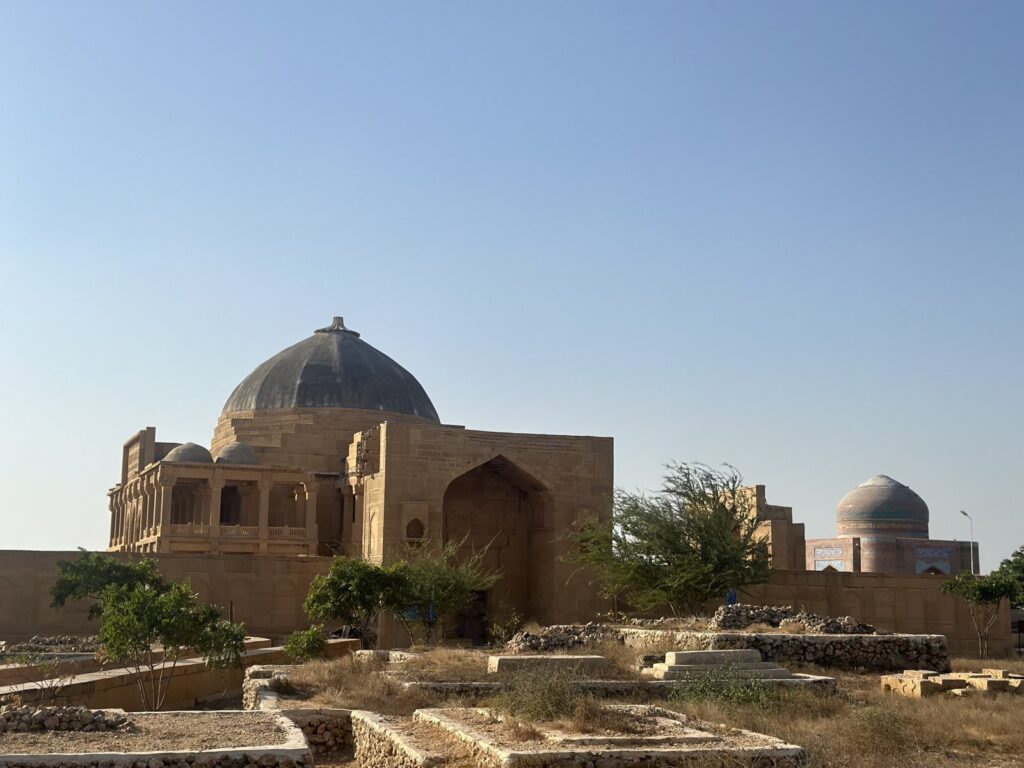
Makli is an extensive necropolis associated with the historic city of Thatta. Its monuments record Sindh’s political, religious and artistic life from the fourteenth to eighteenth centuries. It was inscribed in 1981. The site’s significance lies in an ensemble of tombs and architectural traditions, not a single grand mausoleum. 10
UNESCO highlights monuments associated with Jam Nizamuddin II, Isa Khan Tarkhan the Younger, Jan Baba and Diwan Shurfa Khan. Stone carving, brick construction and glazed decoration show different approaches to commemoration. Compare a carved stone surface with a tiled structure: the differences in technique and imagery make the history more legible. 10
Makli is also a burial landscape. Approach graves respectfully, avoid standing on funerary structures for photographs and give space to people attending a shrine or grave. A guide should identify which monuments you are entering and whether any devotional activity is taking place.
How to see it without becoming overwhelmed
Allow two to three hours for a curated selection of monuments. The landscape is too large to “complete” on foot during a quick excursion. Agree a route before setting out, including how much walking is involved and whether transport is permitted along particular approaches.
Choose a few buildings that illustrate different periods and materials. Spend time looking at doorways, inscriptions, tilework and the relationship between a tomb and its enclosure. Simply collecting photographs of domes misses the features that distinguish Makli from other cemeteries.
Some structures may be closed, fragile or under conservation. Stay outside barriers even when an opening appears easy to enter. Uneven tracks, exposed ground and limited shade make water, sun protection and sensible footwear necessary throughout the year.
Getting there and useful combinations
From Karachi, plan approximately two to three hours each way, depending on the starting district, traffic and road conditions. A Thatta overnight makes the pace easier for visitors with a strong interest in architecture. Makli should not be combined with Mohenjo-daro as a casual same-day sightseeing circuit: they are in very different parts of Sindh.
Shah Jahan Mosque in Thatta is a worthwhile nearby addition, particularly for visitors interested in brick and tile architecture. It is on Pakistan’s Tentative List, not part of Makli’s World Heritage inscription. Keep that distinction clear in the programme. 1
November to February generally provides the best conditions for walking. Karachi’s coastal climate does not guarantee cool conditions inland at Makli. Check the day’s forecast, begin earlier when practical and leave time for a proper lunch stop rather than pushing through several exposed sites without a break.
6. Rohtas Fort: sixteenth-century military architecture
Historical background
Rohtas Fort was built under Sher Shah Suri in the sixteenth century during the struggle for power with the Mughals. Calling it simply a Mughal fort obscures that origin. Its major interest is defensive architecture: a large enclosure, massive walls, bastions and monumental gateways. It entered the World Heritage List in 1997. 11
The fort was designed as a substantial military installation, not as a compact pleasure palace. That distinction explains the visitor experience. The scale of a gateway, its approach and the thickness of the walls can be more informative than a surviving decorative detail. Ask how entrances controlled movement and how the fort’s position related to the surrounding routes and landscape.
UNESCO describes fortifications extending more than four kilometres around the enclosure, with numerous bastions and gateways. Visitors should use that scale to choose a sensible walking route rather than attempt to follow every section of wall. 11
What to see and how long to stay
A focused two-to-three-hour visit can include selected principal gates, accessible defensive features and viewpoints. Have your guide choose a coherent route based on current access and mobility. Do not plan a visit around climbing every wall or entering every staircase; age, maintenance and exposure make some areas inappropriate for casual exploration.
There is a living settlement within the wider enclosure. Respect homes and daily activity, ask before photographing residents and distinguish public heritage areas from private spaces. A fortified landscape can contain contemporary life without becoming an unrestricted playground.
Getting there
The usual approach is via Dina, near Jhelum, followed by the local road to the fort. From Islamabad or Rawalpindi, allow roughly two and a half to three and a half hours each way, depending on the departure point and conditions. From Lahore, the journey is longer and deserves either a full transfer-day plan or an overnight nearby.
Rohtas can be incorporated into a journey between Islamabad and Lahore, but the stop adds meaningful time. Do not schedule an intensive fort visit and then an evening international departure from the other city without a substantial margin. A local driver familiar with the approach is preferable to relying on a long-distance bus and improvised last-mile transport.
October to March is generally comfortable for walking. Summer visits require a shorter early route because the broad enclosure offers limited continuous shade. Carry water before arriving and clarify the availability of toilets and refreshments rather than assuming full visitor facilities beside every entrance.
How to combine Pakistan’s UNESCO sites
A northern heritage journey: about seven days
For travellers arriving in Islamabad, a practical sequence is an arrival and rest day, a full Taxila day, and a separate Takht-i-Bahi excursion or Peshawar overnight. Continue south with a Rohtas stop and then spend two nights in Lahore, giving the fort and gardens a proper visit. Finish with a departure day that leaves room for ordinary city transfers.
This plan covers four inscriptions. It also allows museum context and avoids forcing Taxila and Takht-i-Bahi into the same crowded day. Add another day if the group walks slowly, has a strong interest in sculpture or wants a substantive Peshawar visit.
A Sindh heritage journey: about five days
Start in Karachi with an arrival day. Visit Makli and Thatta on a dedicated day, returning to Karachi or staying locally. Use a separate day for the transfer to inland Sindh, followed by Mohenjo-daro from a suitable base. Keep the final day for return travel and a realistic departure connection.
Air transport may reduce the long transfer, but only when operating schedules fit the journey. A road-based version needs more time for comfort and optional cultural stops. Do not treat a flight search result as a confirmed service until seats and operating details have been verified.
All six inscriptions: allow approximately twelve to fifteen days
Combine the northern circuit with the Sindh circuit using a confirmed domestic connection or a well-planned overland transfer. Twelve to fifteen days is a reasonable starting range for an interested traveller who wants museums, interpretation and rest, rather than photographs at entrances. Additional sites, slower walking, railway journeys or specialist study can justify longer.
List each day’s overnight city and realistic driving burden before booking. This exposes a common weakness in heritage itineraries: apparently modest sightseeing days that hide several hours of transfers. A good journey protects time at the sites instead of continually borrowing it for the road.
Practical planning for a heritage journey
Confirm the operational details shortly before travel
Opening days, museum arrangements, admission categories, guided access and conservation closures can change. Obtain current information from the relevant provincial archaeology department, museum or site management. Do not assume the entrance charge covers every separately managed interior, camera category or associated museum.
Ask for written confirmation of inclusions in your journey quotation: transport, guide, entrance tickets, museum visits, accommodation and meals should each be clear. Flights need a defined policy for cancellations and alternative ground travel. Clear commercial information prevents a historical journey becoming an argument about unexpected costs.
Choose a guide for the subject
The best general escort is not automatically a specialist in Indus archaeology, Gandharan sculpture and Mughal architecture. Ask whether a local subject guide will join at particular sites. Request explanations that separate established evidence, scholarly interpretations and local tradition. Legends can enrich a visit when they are identified as legends.
Plan for heat and walking
Most of these visits take place outdoors. Bring drinking water, a hat, sun protection and footwear that can handle dust, stone and steps. A light layer helps on cool winter mornings in Punjab and Khyber Pakhtunkhwa. In Sindh, protect the outdoor visit time from the strongest heat whenever opening arrangements permit.
Tell the planner about knee problems, heart or breathing conditions and difficulty with stairs before the route is fixed. Takht-i-Bahi and selected Taxila monasteries require different mobility decisions from a short garden visit. Ask for the specific walking distance and ascent, not a vague fitness label.
Photography and conservation
Do not touch sculpture, scratch inscriptions, climb fragile brickwork or move objects for a photograph. Follow staff directions about flash, tripods, drones and commercial photography. Drone use requires separate checking; an entrance ticket does not authorise flying over a protected site.
Original photographs are valuable, but captions should identify the correct place and period. Do not label the Buddhist stupa at Mohenjo-daro as an Indus building or present Shah Jahan Mosque as an inscribed World Heritage site. Accurate captions are part of responsible interpretation.
Frequently asked questions
How many UNESCO World Heritage Sites are in Pakistan?
There are six inscribed properties in the official UNESCO country record checked on 6 October 2026. All six are cultural properties. Tentative-list entries are separate. 1
Are Lahore Fort and Shalimar Gardens two UNESCO sites?
They are two separate places included in one World Heritage inscription. A visitor needs transport between them, but they count as one property in Pakistan’s total of six. 9
Is Harappa a UNESCO World Heritage Site?
Harappa is on Pakistan’s Tentative List rather than the inscribed World Heritage List. It remains an important archaeological place; its visitor value does not depend on confusing those two statuses. 1
Can I visit all six in one week?
A rushed itinerary might be constructed around favourable connections, but a week leaves little margin for long transfers, museum time, closures or thoughtful interpretation. Approximately twelve to fifteen days is a more useful planning range for a complete heritage journey.
Which site is easiest to visit from Islamabad?
Taxila is normally the most straightforward choice. Keep a full day if you want the museum and several archaeological components. Rohtas and Takht-i-Bahi need longer road excursions and should be planned separately.
What is the best overall season?
November to February is a practical shared window for the northern sites and Sindh. Winter fog, air quality and cold mornings can affect Punjab, while Sindh still needs sun protection. Site-specific weather and transport conditions should shape the final programme.
For a private heritage journey shaped around archaeology, Buddhist history, architecture or photography, Crossroads Adventure can help develop a route with realistic transfers, appropriate guides and time to understand the places you visit.
Sources and verification
Historical summaries and inscription status were checked against the following official sources. Travel durations, suggested routes and visit lengths are editorial planning estimates and require local confirmation for the actual travel dates.
- UNESCO: Pakistan country record and Tentative List
- UNESCO: Archaeological Ruins at Moenjodaro
- Government of Sindh: Mohen Jo Daro
- UNESCO: Taxila
- Government of Punjab: Taxila Museum
- Taxila Museum: Sirkap
- UNESCO: Takht-i-Bahi and Sahr-i-Bahlol
- Khyber Pakhtunkhwa Archaeology: Takht-i-Bahi virtual visit
- UNESCO: Fort and Shalamar Gardens in Lahore
- UNESCO: Historical Monuments at Makli, Thatta
- UNESCO: Rohtas Fort