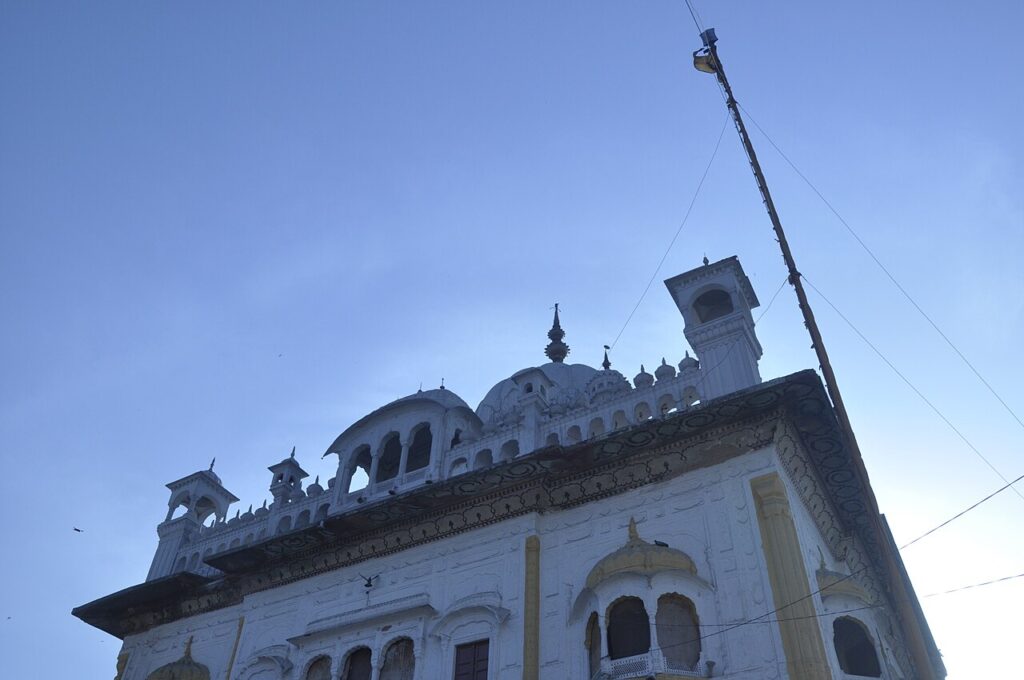
Baisakhi Mela in Pakistan and the Complete Sikh Heritage Tour Guide

Pakistan holds the heartland of Sikh sacred geography. Guru Nanak, the founder of Sikhism, was born in Nankana Sahib. He spent the final 18 years of his life in Kartarpur. The Gurdwara Panja Sahib at Hasan Abdal, home of Baisakhi Mela, the most celebrated Sikh festival in Pakistan, draws thousands of pilgrims from India, Canada, the United States, and across the world every April. This guide covers the Baisakhi Mela in full and takes you through every major Sikh heritage site in Pakistan you need to visit.

For the global Sikh community, visiting Pakistan is not simply a tourism decision. It is a pilgrimage into the very origins of their faith. The gurdwaras of Pakistan’s Punjab, particularly those associated with the life of Guru Nanak, sit in a different category from any other Sikh sacred sites in the world. They are the places where the story began. The cities and landscapes around them are the ones Guru Nanak walked, taught in, and is buried in. For diaspora Sikhs visiting from Canada, the United Kingdom, or the United States, arriving in Nankana Sahib or Kartarpur for the first time is described almost universally as one of the most emotionally powerful experiences of their lives.

Crossroads Adventure’s Sikh heritage and Baisakhi festival tour is designed to give international visitors a complete, professionally supported experience of Pakistan’s Sikh sacred landscape, combining Baisakhi festival attendance with visits to all major gurdwaras in a single curated journey.

What Is Baisakhi and Why Does Pakistan Host It?

Baisakhi, also spelled Vaisakhi, falls on April 13 or 14 each year according to the solar Sikh calendar and has two intertwined meanings. It is first the harvest festival of Punjab, celebrating the wheat harvest that ripens across the plains of Punjab at this time of year. Farmers gather, offer prayers, and celebrate the season’s abundance. But for Sikhs specifically, Baisakhi carries an additional and profound significance: it marks the founding of the Khalsa, the community of initiated Sikhs, by the tenth Sikh Guru, Guru Gobind Singh, in 1699. On that date at Anandpur Sahib in India, Guru Gobind Singh called for those willing to give their lives for their faith and created the order that defines the Sikh identity to this day.

Pakistan hosts Baisakhi at its major gurdwaras each year under the Pakistan-India Protocol on Visits to Religious Shrines of 1974, which facilitates cross-border travel for religious purposes. Thousands of Sikh pilgrims from across the globe, including India, Canada, the United States, and Europe, attend the celebrations. In 2025, Pakistan issued a record number of visas to Sikh pilgrims from around the world, a gesture that international Sikh leaders have consistently praised. Indian Sikh leader Ravinder Singh Sarna of the Shiromani Gurdwara Parbandhak Committee appreciated the efforts of the government, citing excellent arrangements for accommodation, medical care, and transport.

🌾
When Is Baisakhi Mela in Pakistan?

April 13 or 14 each year. The main ceremony alternates between Gurdwara Panja Sahib in Hasan Abdal and Gurdwara Janam Asthan in Nankana Sahib. In 2025, the main ceremony was held at Nankana Sahib. The full pilgrimage programme runs approximately ten days, visiting multiple gurdwaras across Punjab.

The Baisakhi Mela: What Happens and Where

The Baisakhi Mela in Pakistan is not a single-day event. It is a ten-day pilgrimage programme organised by the Evacuee Trust Property Board (ETPB) in collaboration with the Federal Ministry of Religious Affairs, covering all major Sikh sites across Pakistan’s Punjab. Each gurdwara has its own celebrations: special prayer ceremonies called Ardas, the singing of sacred hymns (Kirtan), and the communal meal service of Langar, where food is prepared and offered to all regardless of faith or background.

The Nagar Kirtan, a procession through city streets with devotees singing hymns from the Guru Granth Sahib, is one of the most visually striking elements of the Baisakhi celebrations. The singing of hymns from the Guru Granth Sahib, which is the Sikh holy book, is central to the Nagar Kirtan tradition, with Nagar meaning town and Kirtan meaning the singing of sacred hymns. These processions move through Nankana Sahib, Hasan Abdal, and Lahore during the Baisakhi period and are open to observers of all faiths.

Day Location Site Significance
Day 1 Hasan Abdal, Punjab Gurdwara Panja Sahib Main Baisakhi Mela opening ceremony. One of the holiest Sikh sites in Pakistan.
Day 2–3 Nankana Sahib, Punjab Gurdwara Janam Asthan Birthplace of Guru Nanak. The most sacred Sikh site in Pakistan.
Day 4 Farooqabad, Punjab Gurdwara Sacha Sauda Site where Guru Nanak performed an act of charity that became legendary.
Day 5–6 Narowal, Punjab Gurdwara Darbar Sahib Kartarpur Where Guru Nanak lived his final 18 years and is buried. Among the holiest sites in Sikhism.
Day 7 Lahore, Punjab Gurdwara Dera Sahib Built on the site where the fifth Sikh Guru, Guru Arjan Dev, was martyred in 1606.
Day 8 Eminabad, Punjab Gurdwara Rori Sahib Where Guru Nanak was imprisoned briefly by the Mughal commander Babar in 1521.
Day 9–10 Multiple sites Farewell ceremonies Final prayers, langar, and departure.
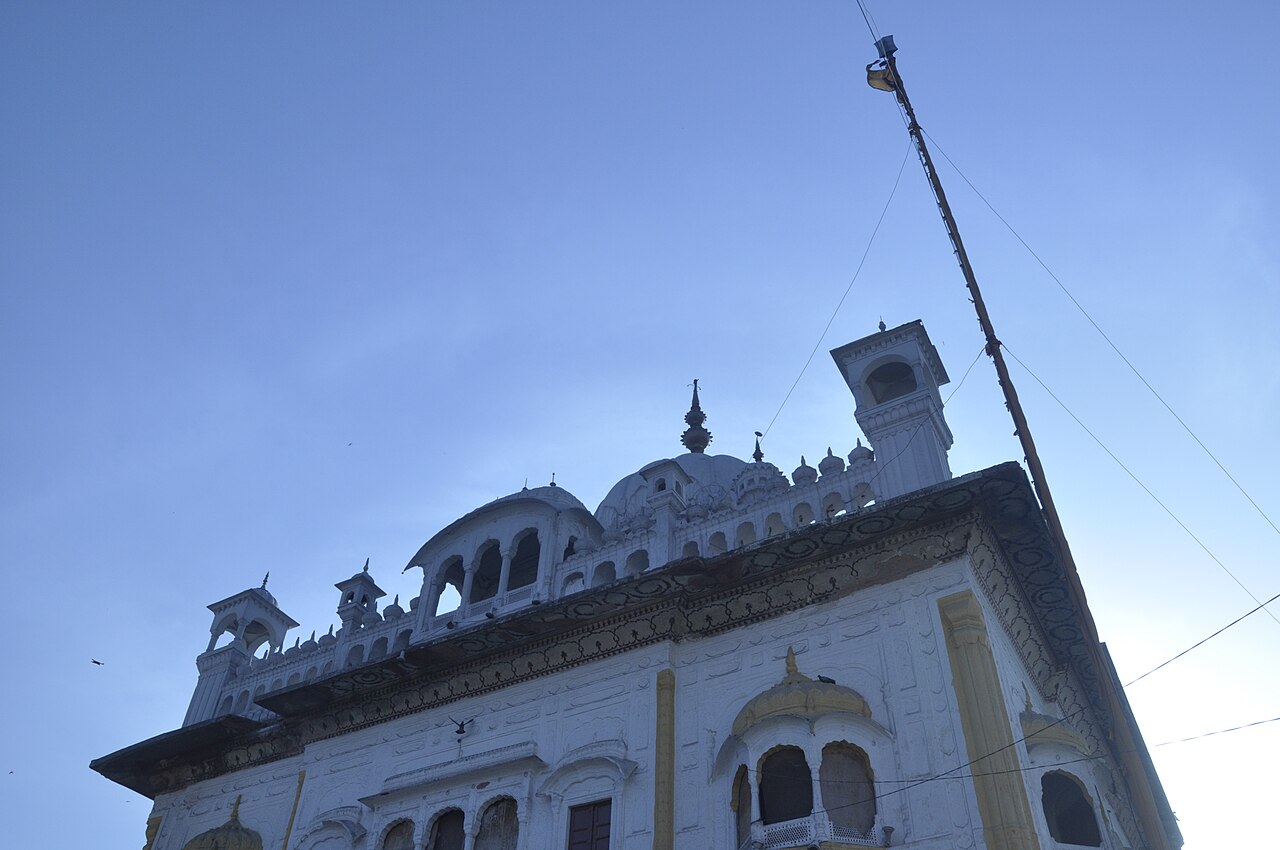
Gurdwara Janam Asthan Nankana Sahib Pakistan the birthplace of Guru Nanak at golden hour with the white and gold domes illuminated

Gurdwara Janam Asthan in Nankana Sahib, the birthplace of Guru Nanak and the holiest Sikh site in Pakistan, adorned for Baisakhi celebrations

The Complete Sikh Heritage Tour Guide: Pakistan’s Sacred Sites

Beyond Baisakhi, Pakistan’s Sikh heritage sites are open to visitors year-round and form one of the most significant pilgrimage circuits available anywhere in the world. The following are the major gurdwaras and sacred sites that every Sikh heritage tour of Pakistan should include.

Gurdwara Janam Asthan, Nankana Sahib

75 km from Lahore Nankana Sahib, Punjab Most sacred Sikh site in Pakistan Open year round

Gurdwara Janam Asthan, meaning “birthplace gurdwara,” marks the site where Guru Nanak Dev Ji, the founder of Sikhism, was born on 15 April 1469 in the village of Rai Bhoi di Talwandi, now called Nankana Sahib in his honour. The gurdwara is a large, beautifully maintained complex of white marble buildings with gold-capped domes, surrounded by a sacred pool called the sarovar. It is the single most important Sikh site in Pakistan and one of the holiest places in the Sikh world.

The complex contains several gurdwaras within its grounds, each associated with specific events in Guru Nanak’s early life. Gurdwara Bal Leela marks the place where the young Guru played as a child. Gurdwara Kiara Sahib commemorates a miracle associated with Guru Nanak as a young man, when a herd of cattle belonging to a neighbour was found to have been miraculously guided away from his crops without damaging them. The town of Nankana Sahib itself grew entirely around this sacred site and has been a centre of Sikh pilgrimage since Guru Nanak’s lifetime. The ETPB maintains the complex in excellent condition and welcomes visitors of all faiths throughout the year.

Gurdwara Darbar Sahib, Kartarpur

Narowal, Punjab Near the Indian border Where Guru Nanak is buried Kartarpur Corridor open for Indian pilgrims

Kartarpur is where Guru Nanak spent the final 18 years of his life, farming, teaching, and building the first Sikh community (Sangat) until his death in 1539. The Gurdwara Darbar Sahib that stands on the site today marks both where he lived and where he is buried, making it one of the most emotionally significant sites in Sikhism. The word Kartarpur means “City of God” or “City of the Creator,” the name Guru Nanak himself gave to the settlement he founded on the banks of the Ravi River.

The Kartarpur Corridor, opened in November 2019, is a visa-free crossing that allows Sikh pilgrims from India to enter Pakistan specifically to visit Kartarpur Sahib without a visa. Indian pilgrims register online, walk across the border, visit the gurdwara, and return the same day. For diaspora Sikhs visiting from Canada, the UK, or the United States, Kartarpur is visited on the standard tourist or pilgrimage visa as part of the broader heritage tour. The gurdwara complex has been beautifully restored and expanded in recent years by the Pakistani government, with the main building visible from across the Ravi River in India even without crossing the border.

Gurdwara Panja Sahib, Hasan Abdal

Hasan Abdal, Attock District 40 km from Rawalpindi Primary Baisakhi Mela venue Open year round

Gurdwara Panja Sahib is the venue of Pakistan’s largest Baisakhi Mela and one of the most revered Sikh shrines in the country. Its name comes from the Punjabi word panja meaning hand or palm, a reference to the most celebrated legend associated with this site. According to tradition, a local man called Wali Kandhari, who controlled the water source on the hill above the town, refused to share water with Guru Nanak and his companion Mardana. Guru Nanak then stopped a boulder that Wali Kandhari hurled down the hillside with his bare hand, leaving the impression of his palm in the rock. This rock, believed to bear the handprint of Guru Nanak, is the centrepiece of the gurdwara and the reason for its sacred status.

The gurdwara is built around a large rectangular sarovar whose blue-green water is considered sacred. The main hall, the langar hall, and the residential facilities for pilgrims are all maintained to a high standard by the ETPB. During Baisakhi, the complex accommodates thousands of pilgrims simultaneously and is one of the most visually extraordinary religious gatherings in South Asia.

The sacred sarovar pool at Gurdwara Panja Sahib Hasan Abdal Pakistan with the white gurdwara reflected in the perfectly still water

The sacred sarovar at Gurdwara Panja Sahib, Hasan Abdal. The gurdwara is the primary venue of Pakistan’s Baisakhi Mela and among the most revered Sikh shrines in the world

Gurdwara Dera Sahib, Lahore

Walled City, Lahore Martyrdom site of Guru Arjan Dev Ji Open year round

Gurdwara Dera Sahib stands within the walled city of Lahore, adjacent to Lahore Fort, and marks the site where the fifth Sikh Guru, Guru Arjan Dev Ji, was tortured and martyred in 1606 under the orders of Mughal Emperor Jahangir. Guru Arjan Dev was the first Sikh martyr and the compiler of the Adi Granth, the earlier version of the sacred scripture that would become the Guru Granth Sahib. His death transformed Sikhism from a peaceful spiritual movement into one that would also train itself for self-defence, directly influencing the character of the faith in all subsequent generations.

The gurdwara’s location beside Lahore Fort makes it a natural pairing with a visit to the Mughal monuments of the walled city. A Sikh heritage tour of Lahore can combine Gurdwara Dera Sahib with the Lahore Fort, Badshahi Mosque, and the Wazir Khan Mosque for a half-day that moves through both the Sikh and Mughal dimensions of the city’s history simultaneously. Crossroads Adventure’s Islamabad to Lahore cultural experience covers both layers in depth.

Gurdwara Sacha Sauda, Farooqabad

Farooqabad, Sheikhupura, Punjab Site of Guru Nanak’s legendary act of charity

Sacha Sauda, meaning “true bargain” or “true transaction,” marks the site of one of the most celebrated stories in Guru Nanak’s early life. Sent by his father to buy goods from the market with twenty rupees, the young Nanak instead used all the money to feed a group of hungry Sikh ascetics (sadhus) he encountered on the road. When his father learned of this, he was furious, but Guru Nanak described feeding the hungry as the only transaction of genuine and lasting value, a “true bargain.” The gurdwara built on this site commemorates that moment and has been a place of pilgrimage ever since.

Gurdwara Rori Sahib, Eminabad

Eminabad, Gujranwala, Punjab Site of Guru Nanak’s captivity under Babar

Eminabad is a small town in Gujranwala district that holds significant Sikh historical importance as the place where Guru Nanak and his companion Mardana were captured and briefly imprisoned by the Mughal conqueror Babar during his invasion of the subcontinent in 1521. The Gurdwara Rori Sahib, meaning “pebbles gurdwara,” marks the site where Guru Nanak was forced to work as a prisoner. According to tradition, when Guru Nanak began singing hymns while in captivity, Babar witnessed the event and was so moved that he released the prisoners. Guru Nanak’s compositions from this period, called the Babarvani, are among the most historically specific pieces in the Guru Granth Sahib and provide a direct eyewitness account of Babar’s invasion of Punjab.

Gurdwara Bhai Joga Singh, Rawalpindi

Rawalpindi, Punjab Restoration underway

The Gurdwara Bhai Joga Singh in Rawalpindi is one of several heritage gurdwaras in Pakistan currently undergoing active restoration under the ETPB’s ongoing preservation programme. Named after a Sikh general from the time of Maharaja Ranjit Singh, it represents the broader and often underappreciated Sikh heritage of Pakistan’s Rawalpindi and Hazara region, which was the heartland of Ranjit Singh’s Sikh Empire before British annexation in 1849.

Gurdwara Darbar Sahib Kartarpur Pakistan the site of Guru Nanak's final resting place with the magnificent restored complex and gardens at dusk

Gurdwara Darbar Sahib, Kartarpur, restored by Pakistan and opened as a destination accessible to Indian Sikh pilgrims via the Kartarpur Corridor since 2019

The Sikh Empire in Pakistan: Historical Context

The connection between Sikhism and the territory of modern Pakistan goes far beyond the pilgrimage sites of Guru Nanak’s lifetime. The Sikh Empire, founded by Maharaja Ranjit Singh in 1799, had its capital at Lahore and governed a territory covering most of modern Punjab, Sindh, and what is now Khyber Pakhtunkhwa and Kashmir. Ranjit Singh’s court in Lahore was one of the most sophisticated and cosmopolitan in South Asia at the time, employing generals, administrators, and artisans from France, Italy, and America alongside Sikh, Hindu, and Muslim talent from across the subcontinent.

The Sikh Empire’s monuments are scattered across Pakistan’s Punjab. The Samadhi of Maharaja Ranjit Singh in Lahore, adjacent to the Badshahi Mosque, is a beautifully crafted memorial pavilion built by his son Kharak Singh after his death in 1839. The Sikh artillery barracks and administrative structures in Lahore Fort itself date from the Sikh period. The tomb of Maharani Jindan, Ranjit Singh’s last queen, stands in Lahore. All of these sites are visited as part of a comprehensive Sikh heritage tour and add the political and imperial dimension of Sikh history in Pakistan to the spiritual dimension of the gurdwara circuit. Crossroads Adventure’s Sikh heritage and Baisakhi festival tour covers both layers across an eleven-day itinerary.

Planning Your Sikh Heritage Tour of Pakistan

Best Time to Visit

April is the optimal month. Baisakhi Mela falls on April 13 or 14, and visiting during the festival period gives access to the full pilgrimage programme and the extraordinary atmosphere of thousands of devotees gathered at each site. Outside of April, October to March offers comfortable temperatures. Summer visits (June to August) are possible but Punjab’s heat exceeds 40°C.

Visas and the Kartarpur Corridor

Non-Indian visitors need a standard Pakistan tourist visa, applied for through the NADRA online portal. Indian Sikh pilgrims can use the Kartarpur Corridor for a visa-free day visit to Gurdwara Darbar Sahib only, or apply for a full pilgrim visa through the religious shrines protocol to visit all sites. Apply well in advance as Baisakhi visas are in high demand.

Dress and Etiquette at Gurdwaras

Cover your head at all times inside gurdwara premises. Small head coverings are available at the entrance if you do not have one. Remove shoes before entering the main hall. Men and women are both welcome and no specific religious affiliation is required to enter. The langar (community kitchen) is open to everyone, regardless of faith, and eating a meal in the langar is a meaningful and genuinely welcoming experience.

Getting Between Sites

The major Sikh heritage sites are spread across Pakistan’s Punjab, from Hasan Abdal in the north to Nankana Sahib and Kartarpur in the central and eastern districts. Private transport is essential to cover them efficiently. Crossroads Adventure’s Sikh heritage tour handles all inter-site transport as part of the itinerary, ensuring no time is wasted on logistics.

Accommodation

Most gurdwaras offer free or low-cost accommodation (sarai) for Sikh pilgrims in dedicated pilgrim facilities. International visitors preferring higher comfort can stay in Lahore, Rawalpindi, or Nankana Sahib hotels and travel to each site by day. Crossroads Adventure selects appropriate accommodation for the duration of the tour based on guest preferences.

Photography

Photography is generally permitted in the courtyards and approach areas of most gurdwaras. Inside the main prayer halls, photography is more restricted and you should follow the lead of other devotees and ask permission when uncertain. The golden hour light at Nankana Sahib and Kartarpur is extraordinary and worth rising early for.

From the Crossroads team: We have guided international Sikh visitors from Canada, the UK, the United States, and Europe through Pakistan’s gurdwara circuit. Every single one of them describes Kartarpur and Nankana Sahib as among the most moving experiences of their lives. The hospitality of the local communities, the beauty of the restored gurdwaras, and the profound sense of connection to the origins of their faith create an emotional encounter that no other heritage journey quite replicates. Pakistan’s Sikh sacred landscape is not a footnote to the faith’s history. It is where that history began.

Frequently Asked Questions

When is Baisakhi Mela in Pakistan?

Baisakhi Mela in Pakistan falls on April 13 or 14 each year, following the solar Sikh calendar. The main ceremony alternates between Gurdwara Panja Sahib in Hasan Abdal and Gurdwara Janam Asthan in Nankana Sahib depending on the year. The full pilgrimage programme runs approximately ten days, visiting multiple gurdwaras across Punjab including Nankana Sahib, Hasan Abdal, Kartarpur, Farooqabad, Lahore, and Eminabad.

Can non-Sikhs attend Baisakhi Mela in Pakistan?

Yes. Baisakhi Mela in Pakistan is open to people of all faiths. The gurdwaras welcome non-Sikh visitors warmly, and the langar (community kitchen) serves food to everyone regardless of religion. Observers are expected to cover their heads, remove their shoes at the entrance, and conduct themselves respectfully. Many international travellers who are not Sikh attend Baisakhi purely as cultural observers and are made very welcome throughout.

What are the most important Sikh heritage sites in Pakistan?

The most important Sikh sacred sites in Pakistan are Gurdwara Janam Asthan in Nankana Sahib (birthplace of Guru Nanak), Gurdwara Darbar Sahib in Kartarpur (where Guru Nanak is buried), and Gurdwara Panja Sahib in Hasan Abdal (site of Guru Nanak’s handprint miracle and the main Baisakhi venue). Beyond these, Gurdwara Dera Sahib in Lahore (martyrdom of Guru Arjan Dev), Gurdwara Sacha Sauda in Farooqabad, and Gurdwara Rori Sahib in Eminabad complete the main pilgrimage circuit. The Samadhi of Maharaja Ranjit Singh in Lahore is also a significant Sikh heritage monument.

What is the Kartarpur Corridor?

The Kartarpur Corridor is a visa-free crossing between India and Pakistan, opened in November 2019, that allows Indian Sikh pilgrims to visit Gurdwara Darbar Sahib in Kartarpur for a day visit without a standard visa. Indian pilgrims register online, walk across the border, visit the gurdwara, and return the same day. The corridor has significant symbolic importance as it allows Indian Sikhs to visit the site most associated with Guru Nanak’s final years, a site that had been inaccessible from India since Partition. Non-Indian visitors to Kartarpur enter on a standard Pakistani tourist visa as part of a broader heritage tour.

Is Pakistan safe for Sikh pilgrims and heritage tourists?

Yes. Pakistan has a well-established and excellent record of welcoming Sikh pilgrims and heritage tourists, backed by formal government policy and the dedicated work of the Evacuee Trust Property Board in maintaining and restoring the country’s gurdwaras. Sikh pilgrims have expressed satisfaction with the hospitality and arrangements provided by Pakistani authorities, and international Sikh leaders consistently praise the welcome extended to pilgrims from India, Canada, the UK, and beyond. Travelling with a registered tour operator like Crossroads Adventure adds an additional layer of logistical support and cultural facilitation throughout the journey.

Experience Baisakhi Mela and Pakistan’s Sikh Heritage

The birthplace of Guru Nanak. The site of his final resting place. The holiest gurdwaras in the Sikh world, maintained and welcoming. Crossroads Adventure designs the complete Sikh heritage and Baisakhi festival experience with every detail arranged.

Plan Your Sikh Heritage Tour of Pakistan