Most international visitors arrive expecting a country defined by its mountains and its headlines. What they encounter instead is a civilisation of extraordinary depth, generosity, and diversity that rarely appears in the conversation about great cultural destinations. Pakistan’s cultural heritage spans the world’s earliest urban planning at Mohenjo-daro, the finest surviving Mughal architecture outside India, a living Buddhist heritage that shaped the artistic vocabulary of all of Asia, and communities like the Kalash of Chitral whose pre-Islamic traditions have survived three millennia in the valleys of the Hindu Kush.
Crossroads Adventure’s culture and heritage expeditions are designed to move through this depth with the expert guidance and cultural access that only a team rooted in these communities can provide.
The Cultural Pillars of Pakistan
The Indus Valley: Where Pakistan’s Cultural Story Begins
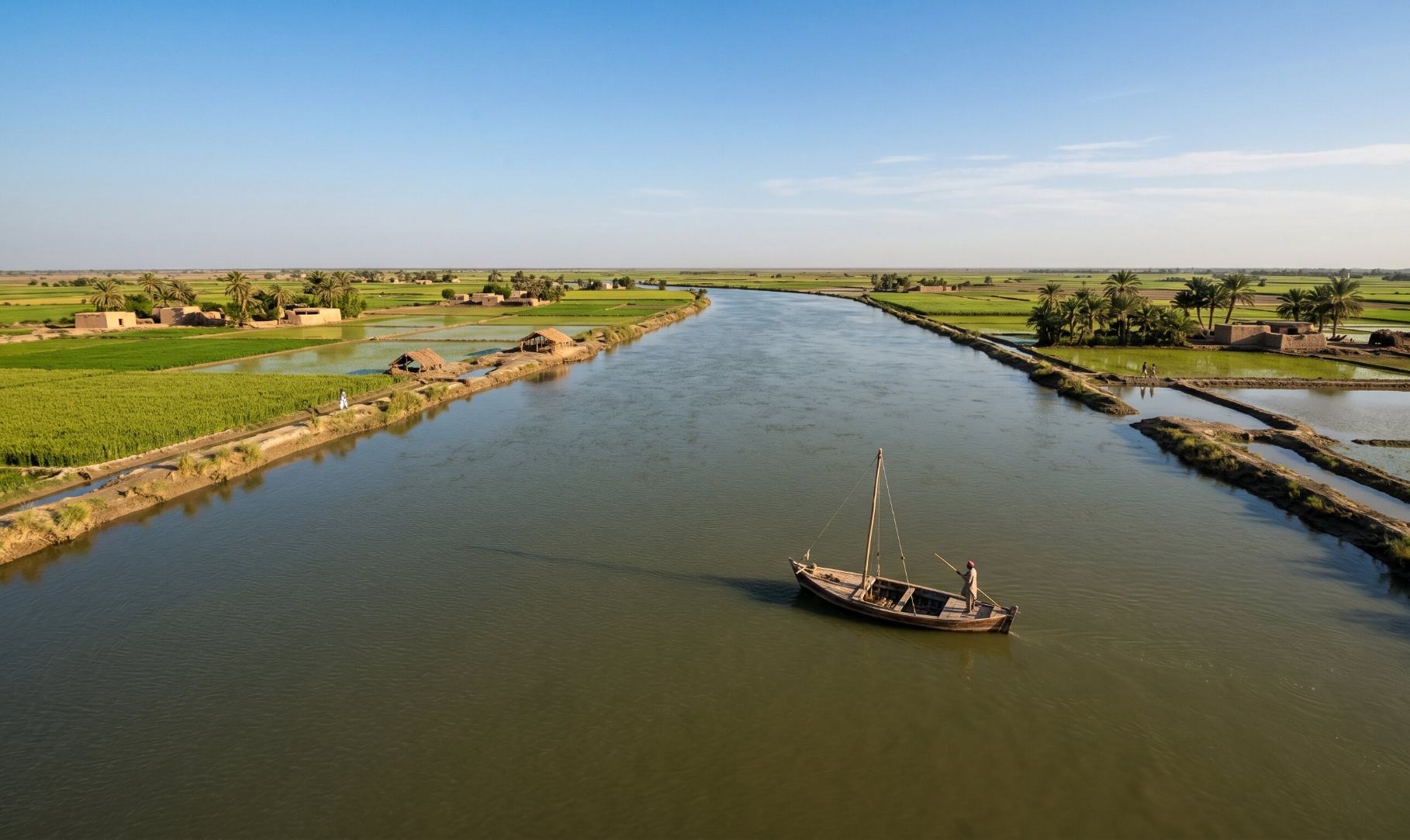
The story of Pakistani culture does not begin with the Mughals or with Islam. It begins on the banks of the Indus River around 3300 BC, when the Indus Valley Civilisation built the first major urban settlements in South Asian history. Mohenjo-daro in Sindh and Harappa in Punjab were planned cities with straight streets, standardised brick sizes, covered sewage systems, and public gathering spaces that would not look out of place in a modern urban planning textbook. This was a sophisticated, organised society of an estimated one million people at its peak, trading with Mesopotamia and the Persian Gulf.
The Indus Valley people left behind a writing system that has not yet been fully deciphered, a tradition of beautifully crafted seals and figurines, and an urban sensibility that demonstrates a cultural confidence and organisational capacity still remarkable by any era’s standards. Crossroads Adventure’s Indus Valley Civilisation expedition takes guests to these extraordinary sites with expert archaeological guidance that brings this ancient world back to life.
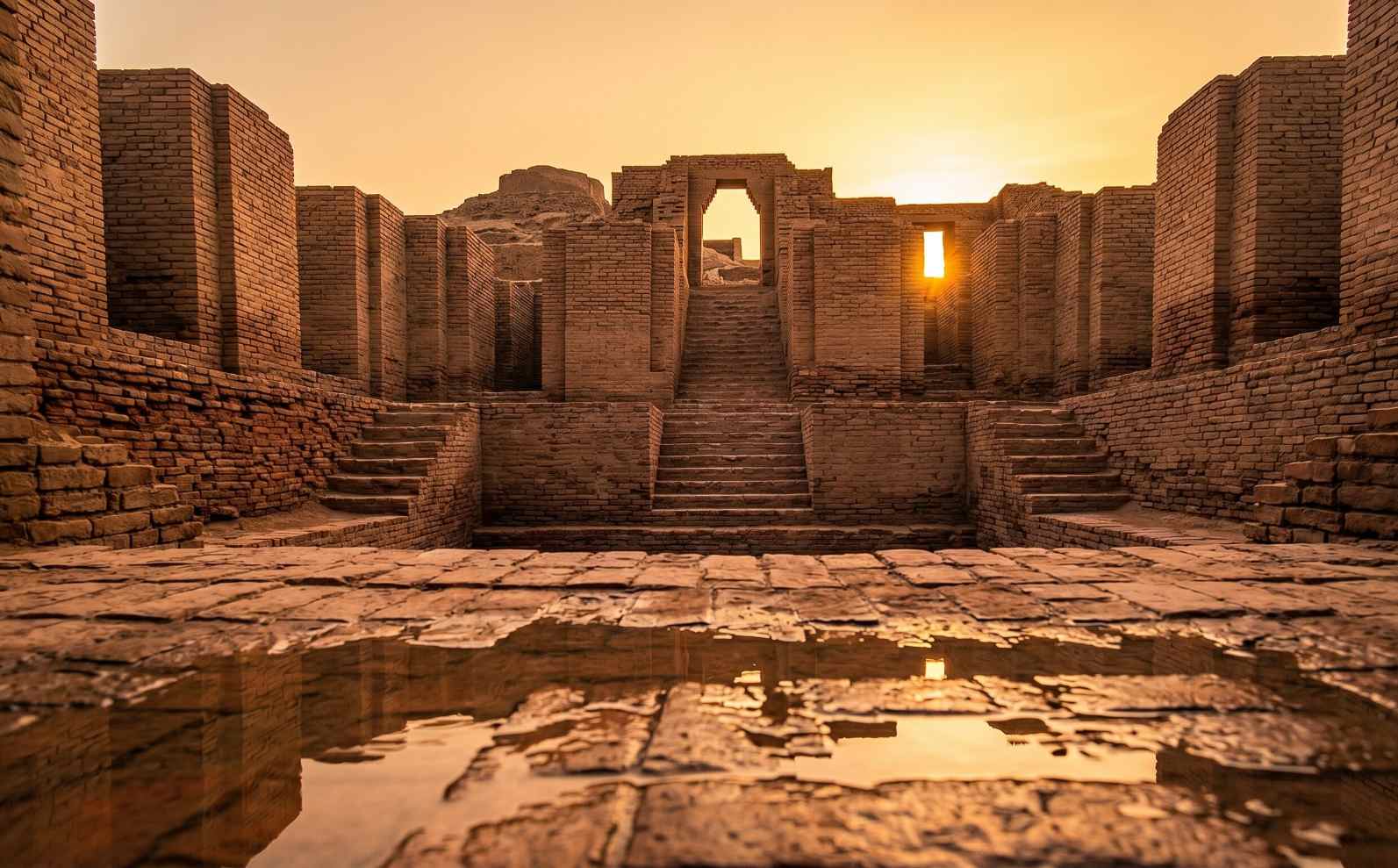
The Great Bath of Mohenjo-daro, built around 2500 BC in Sindh, one of the world’s earliest examples of public ritual architecture
Gandhara: The Ancient Cultural Crossroads
Between the 6th century BC and the 7th century AD, the region of Gandhara, covering modern-day Khyber Pakhtunkhwa and parts of Punjab and Afghanistan, became one of the most remarkable cultural fusion zones in history. When Alexander the Great passed through in 326 BC, the Greek artistic tradition collided with the Buddhist religious world to produce something entirely new: Gandhara art, a style of sculpture that depicted the Buddha with unmistakably Hellenistic facial features, draped in Greco-Roman robes, standing in contrapposto poses drawn from Greek statuary.
The results are the finest early Buddhist sculptures ever created. Taxila, 32 kilometres from modern Islamabad, was Gandhara’s greatest city and one of the ancient world’s leading centres of learning. Its ruins hold three distinct urban settlements spanning a thousand years of continuous habitation. The Taxila Museum contains a Gandhara sculpture collection of international significance. Takht-i-Bahi in Mardan, a 1st century monastery perched on a ridge above the Mardan plains, remains one of the best-preserved early Buddhist complexes anywhere in Asia. Crossroads Adventure covers all of these in the Taxila, Gandhara, and Peshawar heritage trail and the comprehensive Buddhist heritage expedition.
The Mughal Empire’s Greatest Legacy
Pakistan holds more significant Mughal architecture than any country other than India, and in Lahore it holds what many scholars consider the finest concentration of Mughal monuments anywhere. The Lahore Fort, covering 20 hectares in the heart of the city, was built, expanded, and refined by successive emperors from Akbar to Aurangzeb over more than a century. Its Sheesh Mahal, the Palace of Mirrors, was built by Shah Jahan with interior walls covered in thousands of small convex mirrors that transformed candlelight into a simulation of stars. The Naulakha Pavilion is an exquisite small structure of marble inlaid with semi-precious stones that remains one of the most refined pieces of decorative architecture in South Asia.
The Badshahi Mosque, built beside the fort by Aurangzeb in 1673, can accommodate 100,000 worshippers in its courtyard and is one of the architectural wonders of the Islamic world. The Shalimar Gardens, laid out by Shah Jahan in 1641, demonstrate the Mughal concept of paradise made physical: three terraced levels of water channels, fountains, and shade trees arranged with geometric precision. All three are UNESCO World Heritage Sites. Crossroads Adventure’s Mughal heritage trail covers these monuments in depth with specialist historical guides.
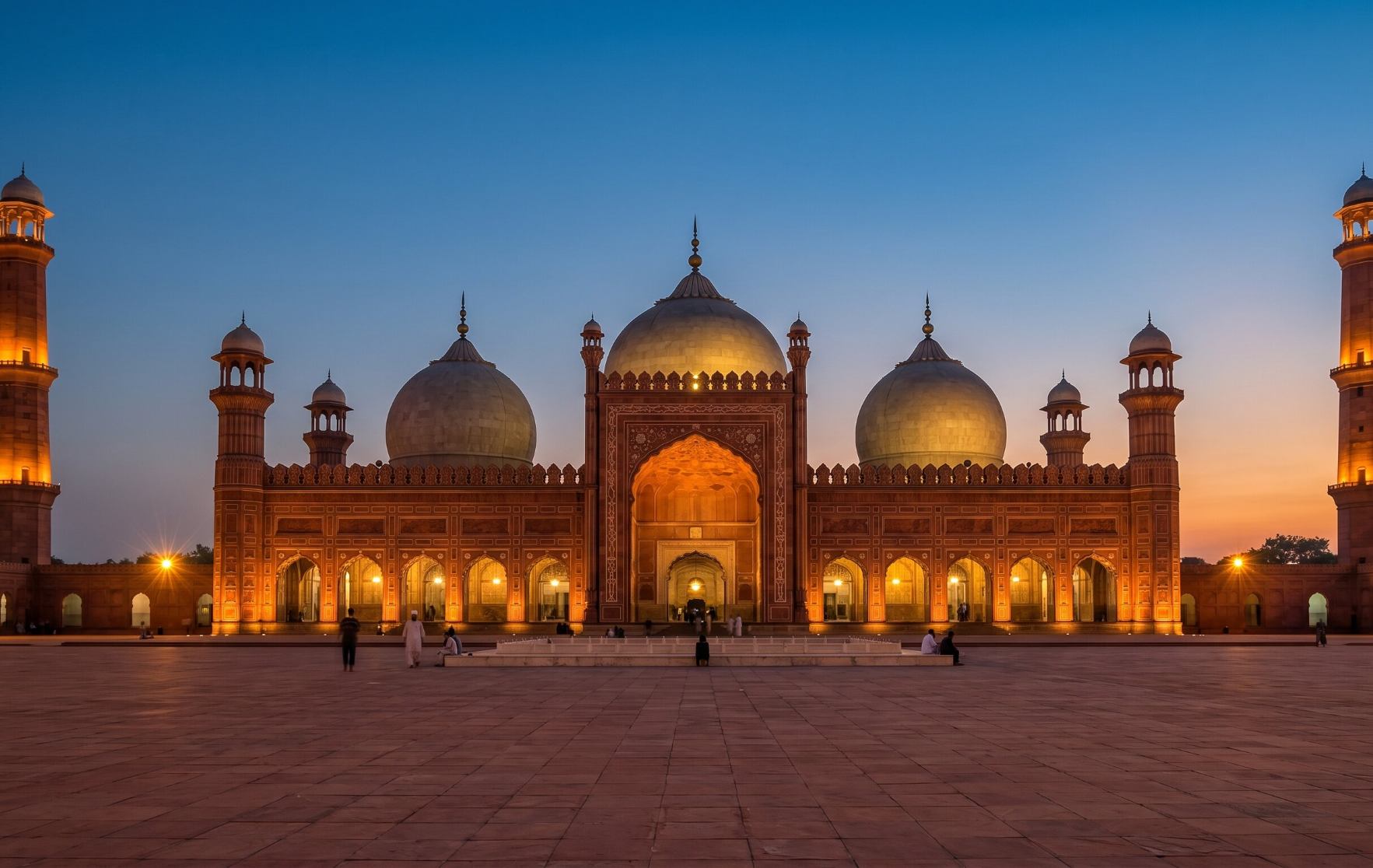
The Badshahi Mosque, Lahore, built in 1673 by Emperor Aurangzeb, one of the largest and most magnificent mosques in the world
The Living Cultures of Pakistan’s North
Pakistan’s cultural richness is not only in the ruins of past civilisations. The living communities of the north, particularly in Gilgit-Baltistan, Chitral, and Hunza, maintain cultural traditions of extraordinary depth and distinctiveness that have no parallel elsewhere in South Asia.
The Kalash People of Chitral
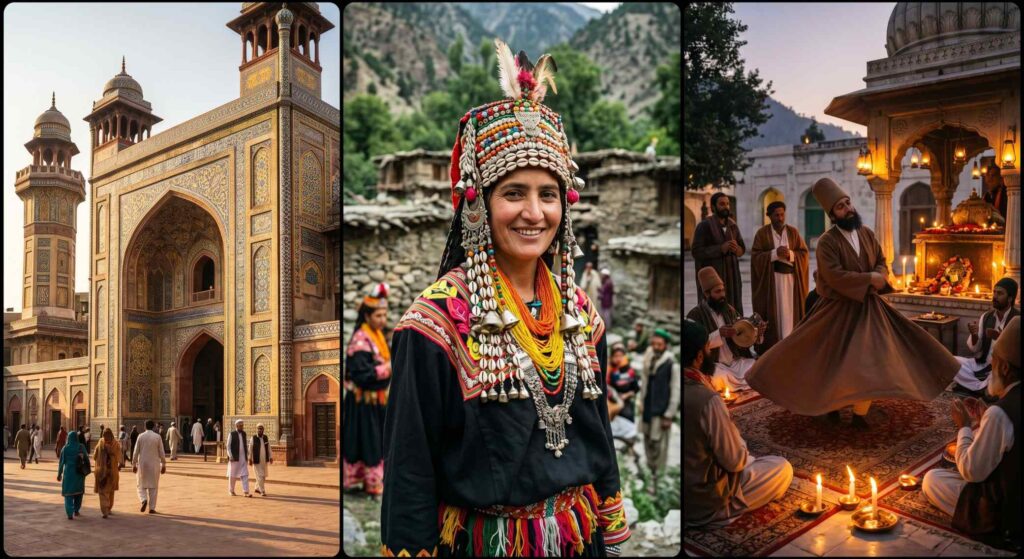
The Kalash people of the three valleys of Bumburet, Rumbur, and Birir in Chitral maintain a belief system, language, material culture, and festival tradition that predates Islam and has survived in these mountain valleys for at least three thousand years. Their pantheon of gods and spirits, their wooden carved architecture, their distinctive embroidered dress and elaborate headdresses of shells, beads, and feathers, and their tradition of communal singing and dancing at major seasonal festivals are all unique to the Kalash and have no close parallel anywhere in the region.
The Chilam Joshi festival in May, celebrating the arrival of spring, is the most accessible and visually extraordinary of the Kalash festivals, filling the village squares of the valleys with music, dance, and colour over several days. Crossroads Adventure’s Kalash and Chitral cultural tour and the dedicated Chilam Joshi festival experience offer a respectful, guided encounter with this remarkable living culture.
The Wakhi Culture of Hunza and Gojal
The Wakhi people of Upper Hunza and the Gojal Valley trace their ancestry to the ancient Silk Road communities of the Pamir and Wakhan Corridor. Their language, Wakhi, is an Eastern Iranian language related to Persian and Sogdian, and their seasonal migration traditions, musical forms, and oral literature all reflect a cultural heritage shaped by centuries of high-altitude life on the world’s great trade routes. The communities of Shimshal, Passu, Gulkin, and Gulmit maintain these traditions with genuine continuity.
Visiting a Wakhi family home in Upper Hunza, eating dried apricots and mulberries, drinking chai while looking out at the Karakoram, and hearing stories of seasonal migrations to pastures at 4,700 metres above sea level is an encounter with a living culture that very few travellers in the world ever have. Crossroads Adventure’s Hunza culture and cuisine expedition is built around exactly this kind of authentic, community-rooted cultural immersion.
The Baltis of Skardu and the Karakoram
The Balti people of Skardu and Baltistan have cultural and linguistic roots in Tibet, and their traditional architecture, music, polo tradition, and culinary culture all reflect that Central Asian heritage refracted through centuries of mountain isolation and Islamic faith. The polo ground at Skardu is one of the oldest in the region, and the traditional polo played at festivals across Gilgit-Baltistan, including the famous Shandur Polo Festival held at the world’s highest polo ground at 3,734 metres in Chitral, is a living continuation of a sport that originated in Central Asia over two thousand years ago.
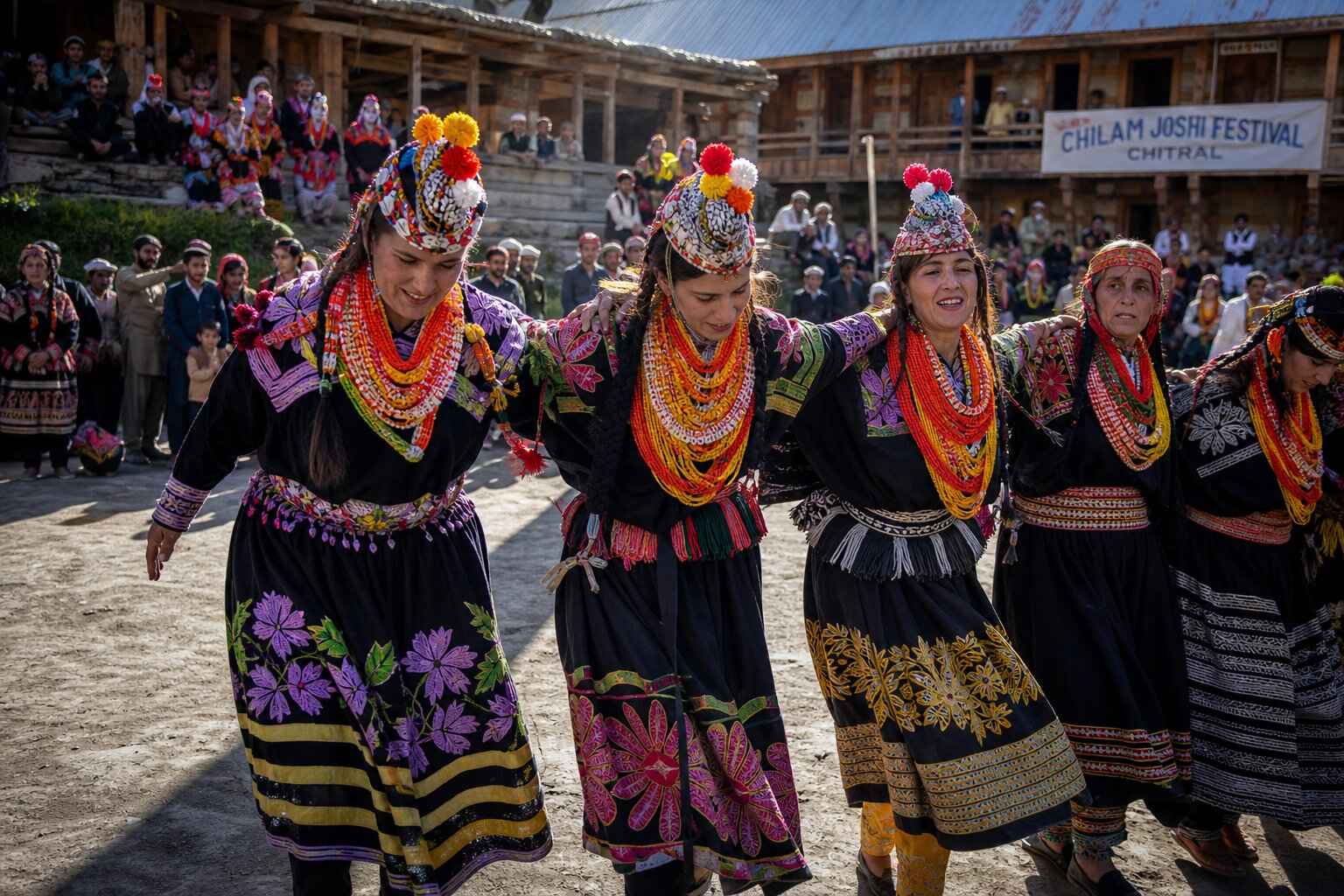
Kalash women at the Chilam Joshi festival, Chitral. The Kalash are one of the world’s most distinctive living cultures, maintaining traditions that predate Islam by millennia
Pakistan’s Multi-Faith Cultural Heritage
Pakistan is home to one of the most extraordinary concentrations of multi-faith heritage in South Asia. The Islamic tradition, dominant since the 8th century, built mosques, shrines, and madrassas of tremendous architectural quality across Sindh, Punjab, and the northwest. But alongside and beneath it, the Hindu, Buddhist, Sikh, and Zoroastrian traditions left monuments, sacred sites, and living communities that together make Pakistan’s religious landscape genuinely singular.
Sufi Islam and the Shrine Culture
Pakistan’s Islamic heritage is inseparable from its Sufi tradition. Sufi saints arrived in the subcontinent from Central Asia and Persia from the 10th century onward, and their shrines, scattered from Karachi to the Karakoram, became the spiritual centres of communities across every province. The Urs, the annual death anniversary celebration at each shrine, brings together devotees for qawwali music, zikr (devotional chanting), and communal prayer in ceremonies that blend deep spiritual practice with cultural expression of remarkable intensity. Data Ganj Baksh’s shrine in Lahore, Lal Shahbaz Qalandar’s dargah in Sehwan Sharif, and Shah Abdul Latif Bhittai’s mausoleum in Bhit Shah are among the most significant Sufi sacred sites in South Asia. Crossroads Adventure’s Islamic heritage expedition covers the full breadth of this tradition across Pakistan.
Hindu Heritage: Ancient and Still Living
Pakistan is home to a significant Hindu community, primarily in Sindh, and its territory contains some of the most ancient Hindu sacred sites in South Asia. The Katas Raj temple complex in Chakwal, Punjab, is one of the most sacred sites in Shaivite Hinduism, its sacred pond believed to have formed from the tears of Lord Shiva. The Mahabharata places events here. Temples dating from the 1st to 7th centuries AD ring the pond. Hindu pilgrims from both Pakistan and India continue to visit for major festivals, making it a genuinely living sacred site rather than a purely archaeological one. The Hindu heritage experience covers Katas Raj and the wider constellation of Hindu sacred sites across Punjab.
Sikh Heritage in Punjab
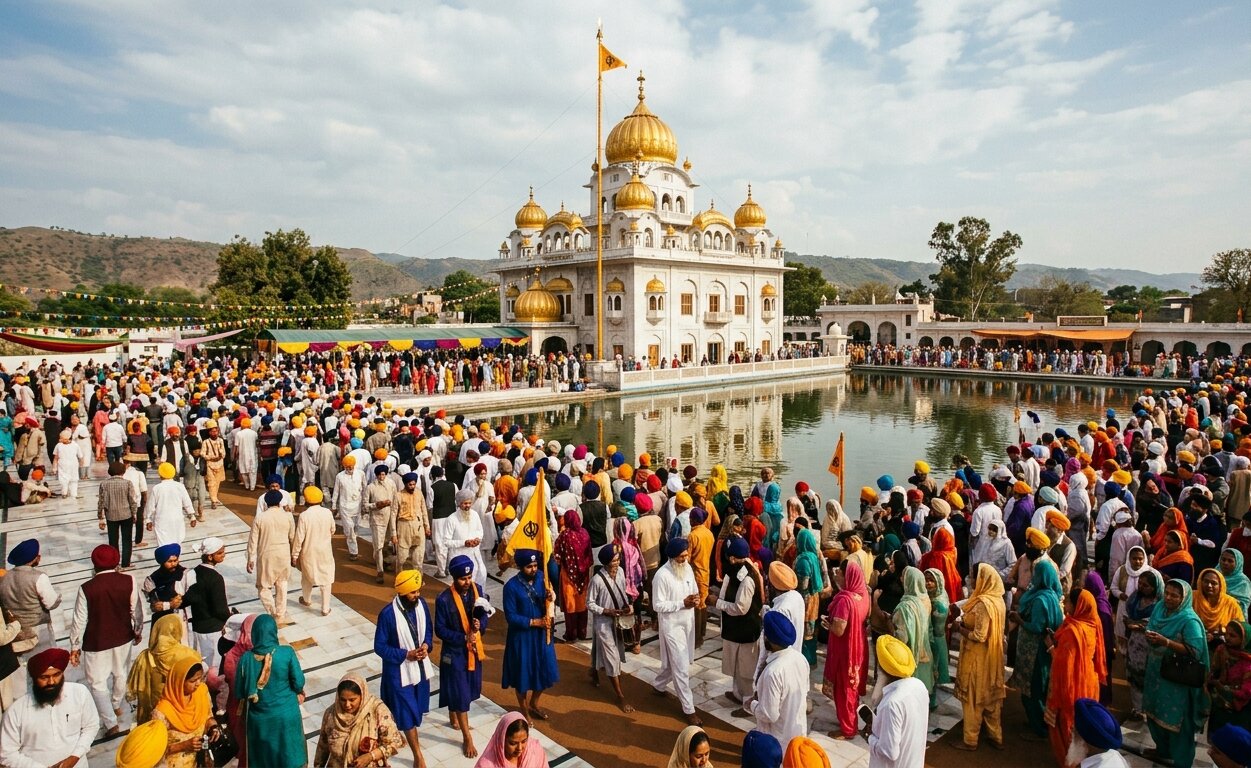
Punjab holds the heartland of Sikh sacred geography. The Gurdwara Darbar Sahib in Kartarpur, where Guru Nanak, the founder of Sikhism, spent the last 18 years of his life and is buried, is one of the holiest sites in the Sikh world and now accessible via the Kartarpur Corridor. Gurdwara Panja Sahib in Hasan Abdal, Gurdwara Sacha Sauda in Farooqabad, and dozens of other historically significant gurdwaras are scattered across Punjab, making Pakistan one of the most significant destinations in the world for Sikh heritage travel. Crossroads Adventure’s Sikh heritage and Baisakhi festival tour brings these extraordinary sites to life for international and diaspora visitors.
Pakistan’s Cultural Festivals: A Calendar Worth Travelling For
Pakistan’s festival calendar is one of the most diverse in Asia, drawing on Islamic, Hindu, Sikh, Kalash, and regional folk traditions to produce a year-round cycle of celebrations that offer genuine cultural encounters for international visitors.
Chilam Joshi Festival
May, Kalash Valleys, ChitralThe Kalash spring festival. Three days of music, traditional dance, and communal celebration welcoming the new season. One of the most extraordinary cultural events in South Asia.
Shandur Polo Festival
July, Shandur Pass, ChitralTraditional polo played at 3,734 metres above sea level between teams from Chitral and Gilgit. The world’s highest polo ground, with folk music and cultural performances throughout.
Baisakhi and Sikh Pilgrimage
April, PunjabThe Sikh harvest festival and one of the most important pilgrimage seasons for Sikh devotees visiting Pakistan’s gurdwaras. A rare opportunity to experience a living Sikh sacred tradition.
Lok Mela (Lok Virsa Festival)
October, IslamabadPakistan’s largest annual folk culture festival. Artisans, musicians, and performers from all provinces gather in Islamabad for ten days of craft, music, and traditional performance.
Nowruz
March, Gilgit-Baltistan and ChitralThe Persian New Year, celebrated across northern Pakistan’s Ismaili and Persian-heritage communities with coloured eggs, polo matches in Baltistan, and outdoor feasting in Balochistan.
Urs Festivals at Sufi Shrines
Year round, Sindh and PunjabAnnual death anniversary celebrations at major Sufi shrines, featuring qawwali, dhamaal, and spiritual devotion. Data Ganj Baksh in Lahore and Lal Shahbaz Qalandar in Sehwan are the most celebrated.
Pakistan’s Cultural Arts, Crafts, and Cuisine
Traditional Crafts
Pakistan’s traditional craft traditions are as geographically diverse as its cultures. Sindh is famous for Ajrak, a resist-printed cloth using natural dyes in geometric patterns that has been produced in the Indus Valley for over 4,000 years. Truck art, a distinctively Pakistani folk art tradition that covers commercial vehicles in extraordinarily detailed painted decoration, calligraphy, and mirror work, has become recognised internationally as a unique art form. Swat is famous for hand-embroidered fabric and carved wooden furniture. Hunza produces hand-woven woollen textiles in patterns passed down through generations. The blue-glazed pottery of Multan, the leather work of Peshawar, and the hand-knotted carpets of Balochistan each represent craft traditions of deep cultural significance.
Music and Poetry
Pakistan’s musical heritage is among the richest in South Asia. Qawwali, the devotional Sufi musical form, reached its global peak of recognition through the work of Nusrat Fateh Ali Khan, whose recordings brought the genre to audiences worldwide. Classical Hindustani music was shaped in part by musicians from what is now Pakistan. The folk music traditions of each province, Punjabi bhangra, Sindhi lok music, Balochi soaz, Pashtun rabab music, and the flute and drum traditions of the mountain communities, all constitute entirely distinct sonic worlds. Pakistan’s poetic tradition, from the classical Urdu ghazal to the vernacular verses of Shah Abdul Latif Bhittai in Sindhi, is one of the great literary heritages of South Asia.
Food Culture
Pakistani cuisine varies as dramatically by region as its landscapes. The grilled meat and bread culture of Peshawar’s Qissa Khwani Bazaar is entirely unlike the rice-based biryani traditions of Karachi or the slow-cooked meat dishes of Lahori cuisine. In Hunza, the traditional diet of dried apricots, mulberries, walnuts, buckwheat bread, and high-altitude dairy products reflects the specific ecology of the Karakoram in a way that connects food directly to landscape. The Wakhi hospitality tradition of offering tea and dried fruit to any visitor, regardless of circumstance, is one of the most direct cultural expressions of community values that Pakistan’s north has to offer.
A note from the Crossroads team: The most profound cultural experiences in Pakistan are never the ones scheduled in advance. They are the family in Gilgit who insists you come in for lunch. The old man in the bazaar in Peshawar who wants to tell you the history of every building in the walled city. The Kalash elder who explains what each part of the festival means and why it has been danced the same way for three thousand years. These moments cannot be manufactured. But they happen reliably when you travel with a team that is part of these communities rather than passing through them.
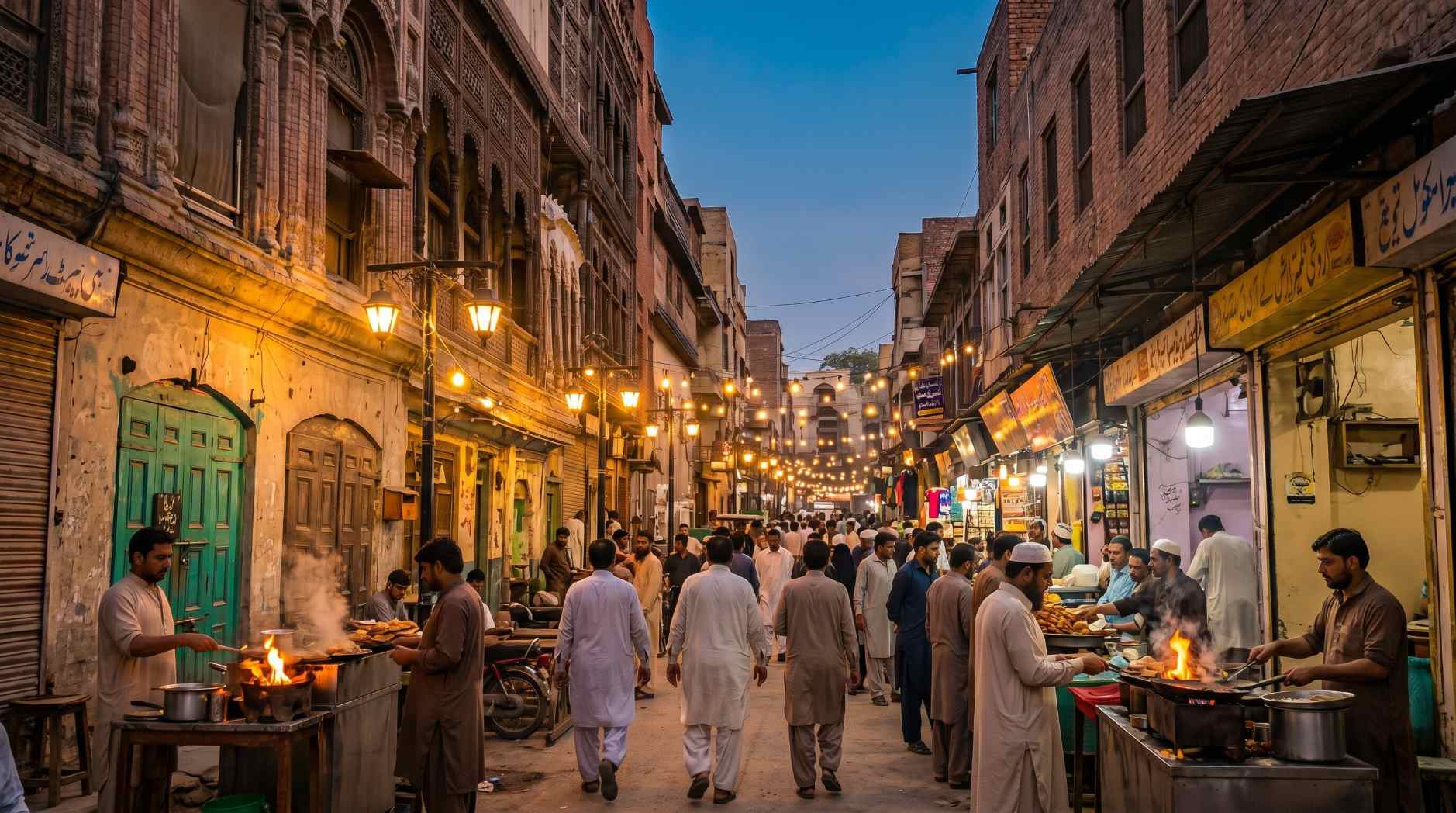
Qissa Khwani Bazaar, the Street of Storytellers in Peshawar’s ancient walled city, one of the great historic trading streets of Central Asia
Experiencing Pakistan’s Culture with Crossroads Adventure
Cultural travel in Pakistan rewards depth. A single day at Lahore Fort is valuable. A week that moves from the Indus Valley to Gandhara to the Mughal court and into the living cultural world of the Kalash and the Silk Road communities of Hunza tells a story of civilisation that changes how you understand human history. Crossroads Adventure designs every cultural expedition around that depth, with expert historians and cultural guides who connect the monuments you see to the broader narrative that gives them meaning.
Our full range of cultural and heritage expeditions spans the complete breadth of Pakistan’s civilisational record. The Southern Pakistan and Punjab heritage tour covers the Indus Valley, Makli Necropolis, and Lahore’s Mughal monuments in a single sweeping cultural journey. The Islamabad to Lahore cultural experience pairs the capital’s proximity to Taxila and Gandhara with the full richness of Mughal Lahore. And the Balochistan cultural expedition opens the least-visited yet culturally extraordinary province of Pakistan to international travellers for the first time.
Frequently Asked Questions
What is Pakistan’s culture known for?
Pakistan’s culture is known for extraordinary diversity, depth, and hospitality. It spans some of the world’s earliest urban civilisations at Mohenjo-daro and Harappa, the ancient Gandhara Buddhist and Greco-Buddhist art tradition, the finest surviving Mughal architecture in South Asia, a rich multi-faith heritage that includes Hindu, Sikh, Sufi Islamic, and pre-Islamic Kalash traditions, and the living cultural worlds of the mountain communities of Gilgit-Baltistan and Chitral. Pakistan’s food, music, poetry, crafts, and festival traditions each reflect this depth in different ways.
What are the most important cultural sites in Pakistan?
Pakistan has six UNESCO World Heritage Sites: Mohenjo-daro, Taxila, Takht-i-Bahi, Lahore Fort and Shalimar Gardens, Makli Necropolis, and Rohtas Fort. Beyond these, the Badshahi Mosque in Lahore, the Katas Raj temple complex in Punjab, the Kalash Valleys in Chitral, the Baltit and Altit forts in Hunza, and the gurdwaras of Punjab’s Sikh heritage circuit are all of major cultural significance for international visitors.
What are the main cultural festivals in Pakistan?
The most significant cultural festivals include the Chilam Joshi spring festival in the Kalash Valleys of Chitral (May), the Shandur Polo Festival at the world’s highest polo ground (July), Baisakhi and the Sikh pilgrimage season in Punjab (April), Nowruz in Gilgit-Baltistan (March), the Lok Mela folk culture festival in Islamabad (October), and the year-round Urs celebrations at major Sufi shrines in Sindh and Punjab. Religious festivals including Eid-ul-Fitr and Eid-ul-Adha bring additional cultural significance throughout the year.
How many ethnic groups and languages are there in Pakistan?
Pakistan is home to more than 70 languages and dozens of distinct ethnic groups. The major groups include Punjabis, Sindhis, Pashtuns, Baloch, Muhajirs, Hazaras, Brahuis, Wakhi, Burusho (Hunzakuts), Shina speakers, Kalash, and many others. Each group has its own language or dialect, its own oral literary tradition, its own craft and musical heritage, and its own festivals and customs. This diversity within a single country is one of Pakistan’s most remarkable cultural characteristics.
Is Pakistan a good destination for cultural travel?
Pakistan is one of the world’s great cultural travel destinations, and it remains genuinely undiscovered by the scale of tourism that has changed comparable destinations in Nepal, India, or Turkey. The sites are extraordinary, the hospitality is exceptional, and the depth of cultural encounter available, from Sufi shrines to Kalash festivals to Silk Road heritage in Hunza, is unlikely to be matched by any more heavily touristed country. Travelling with a professional operator like Crossroads Adventure opens cultural access and community encounters that independent travel cannot provide.
Explore Pakistan’s Culture at Its Greatest Depth
Five thousand years of civilisation. Dozens of living cultural traditions. Expert guides who are part of these communities. Crossroads Adventure designs cultural expeditions that go further than any tour Pakistan has offered before.
Start Planning Your Cultural Journey