Swat has been receiving visitors from across Pakistan and the world for decades, and the tourism infrastructure in the valley has grown substantially in recent years. Whether you are planning a short cultural visit from Islamabad, a multi-day nature escape into the upper valley, or a full week exploring everything from ancient ruins to alpine lakes, Swat delivers an experience that surprises most travellers with its sheer variety.
For visitors who want to combine Swat with the wider cultural and mountain heritage of Khyber Pakhtunkhwa and Pakistan’s north, Crossroads Adventure offers carefully designed culture and heritage expeditions that weave these landscapes and historical sites into a single cohesive journey.
A Quick Overview of Swat’s Best Places
| Place | Distance from Mingora | Best For | Best Season |
|---|---|---|---|
| Kalam Valley | 99 km north | Scenery, hiking, fishing, base for upper lakes | May to October |
| Mahodand Lake | 40 km beyond Kalam | Alpine lake, boating, trout fishing, photography | June to September |
| Malam Jabba | 40 km northwest | Skiing (winter), hiking and views (summer) | Dec to Feb (ski), May to Sep (hiking) |
| Bahrain | 60 km north | Riverside bazaar, crafts, gateway to upper valley | April to October |
| Ushu Forest | 8 km from Kalam | Forest walks, picnics, birdwatching, nature photography | May to September |
| Utror Valley | 16 km from Kalam | Wild meadows, glaciers, remote camping, trout | June to September |
| Marghazar Valley and White Palace | 13 km from Mingora | Royal architecture, orchards, gardens, birdwatching | April to October |
| Jahanabad Buddha | 8 km from Mingora | Buddhist heritage, rock carving, historical walk | Year round |
| Swat Museum, Saidu Sharif | 3 km from Mingora | Gandhara art, archaeological artefacts, history | Year round |
| Fizagat Park | 5 km from Mingora | Riverside relaxation, families, picnics | April to October |
| Miandam | 45 km from Mingora | Pine forests, waterfall, hiking, peaceful retreat | April to October |
| Shingrai Waterfall | Near Bahrain | 70-foot waterfall, scenic photography, short walk | May to September |
Kalam Valley: The Crown Jewel of Swat
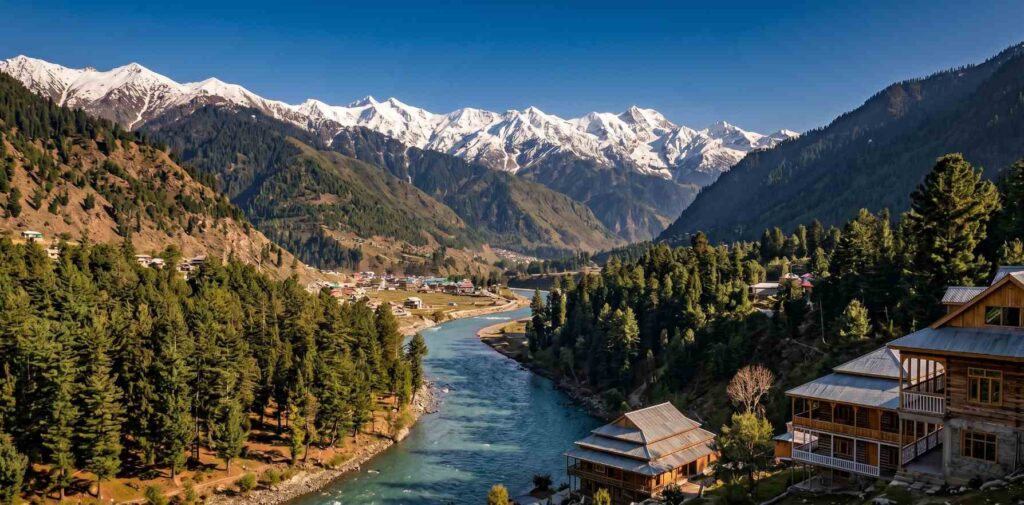
Kalam sits at the northern end of the main valley where the Swat River meets the Ushu and Utror rivers, and it is the single most celebrated destination in Swat for good reason. The town itself is a comfortable base with hotels, restaurants serving fresh river trout, and a lively market that feels authentically Pashtun rather than tourist-staged. Above the town, the landscape opens into a world of pine-covered hillsides, glacial streams, and peaks reaching over 5,000 metres in every direction.
The drive from Mingora to Kalam, along the Swat River gorge with forested cliffs rising on both sides, is one of the finest valley drives in Khyber Pakhtunkhwa. Plan a minimum of two nights in Kalam to do justice to the surrounding area, including the lakes and valleys accessible from the town. July and August are busiest with domestic tourists. May, June, and September offer the same scenery with considerably fewer crowds.
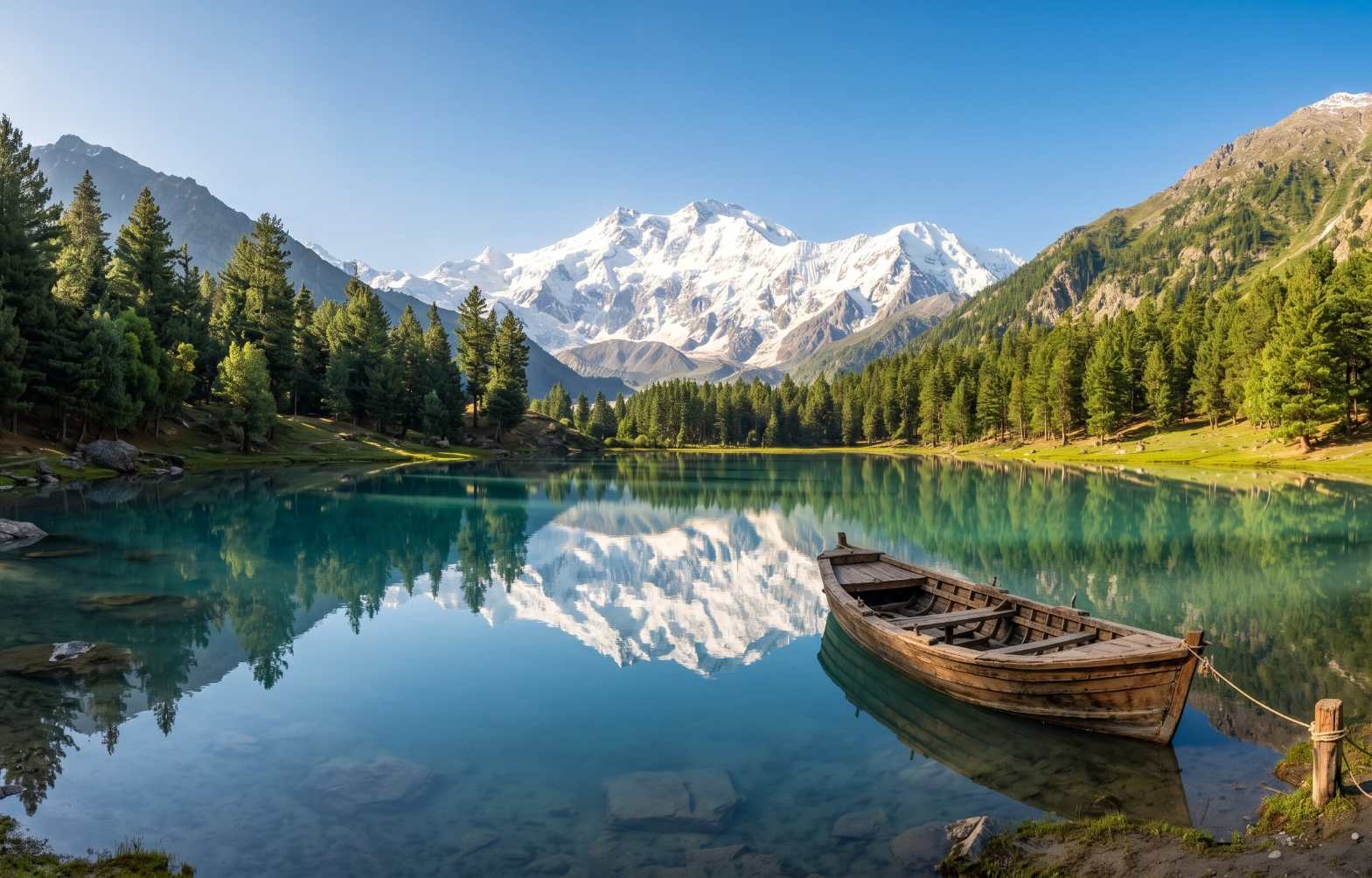
Mahodand Lake at 2,862 metres, one of the finest high-altitude lakes in Swat and the starting point for walks into the upper wilderness
Mahodand Lake: The Jewel of Upper Kalam
Mahodand Lake sits 40 kilometres above Kalam on a rough jeep track that passes through some of the most dramatic river valley scenery in Swat. The lake itself is broad, clear, and cold, ringed by pine and fir forest with high peaks rising directly from its far shore. Brown bears have been spotted in the surrounding wilderness. The lake is a productive trout fishery, and the combination of boating, fishing, camping beside the water, and the sheer visual beauty of the setting makes Mahodand one of the most memorable places in the entire valley.
Jeeps for hire in Kalam make the journey in around two hours each way on a good day. The track is rough and conditions vary significantly by season, so confirming access conditions locally before departure is worthwhile. Visit in June for the freshest snowmelt colours, or September for golden light and minimal visitors.
Malam Jabba: Pakistan’s Premier Mountain Ski Resort
Malam Jabba is Pakistan’s most developed ski resort and one of the highest in the country. Sitting at 2,804 metres in the Hindu Kush foothills northwest of Mingora, it receives reliable snowfall from December through February and transforms in summer into a high-altitude meadow with panoramic views of the surrounding ranges. The resort operates a chairlift and zip line throughout the year, making it accessible and visually spectacular even for visitors who have no interest in skiing.
In winter, the slopes host Pakistan’s annual ski championships, drawing competitors from across the country. In summer, the green meadows and cool air attract hikers, and the resort’s facilities include hotels, restaurants, and organised activities. The drive up to Malam Jabba through forested switchbacks is scenic in its own right and takes around 90 minutes from Mingora.
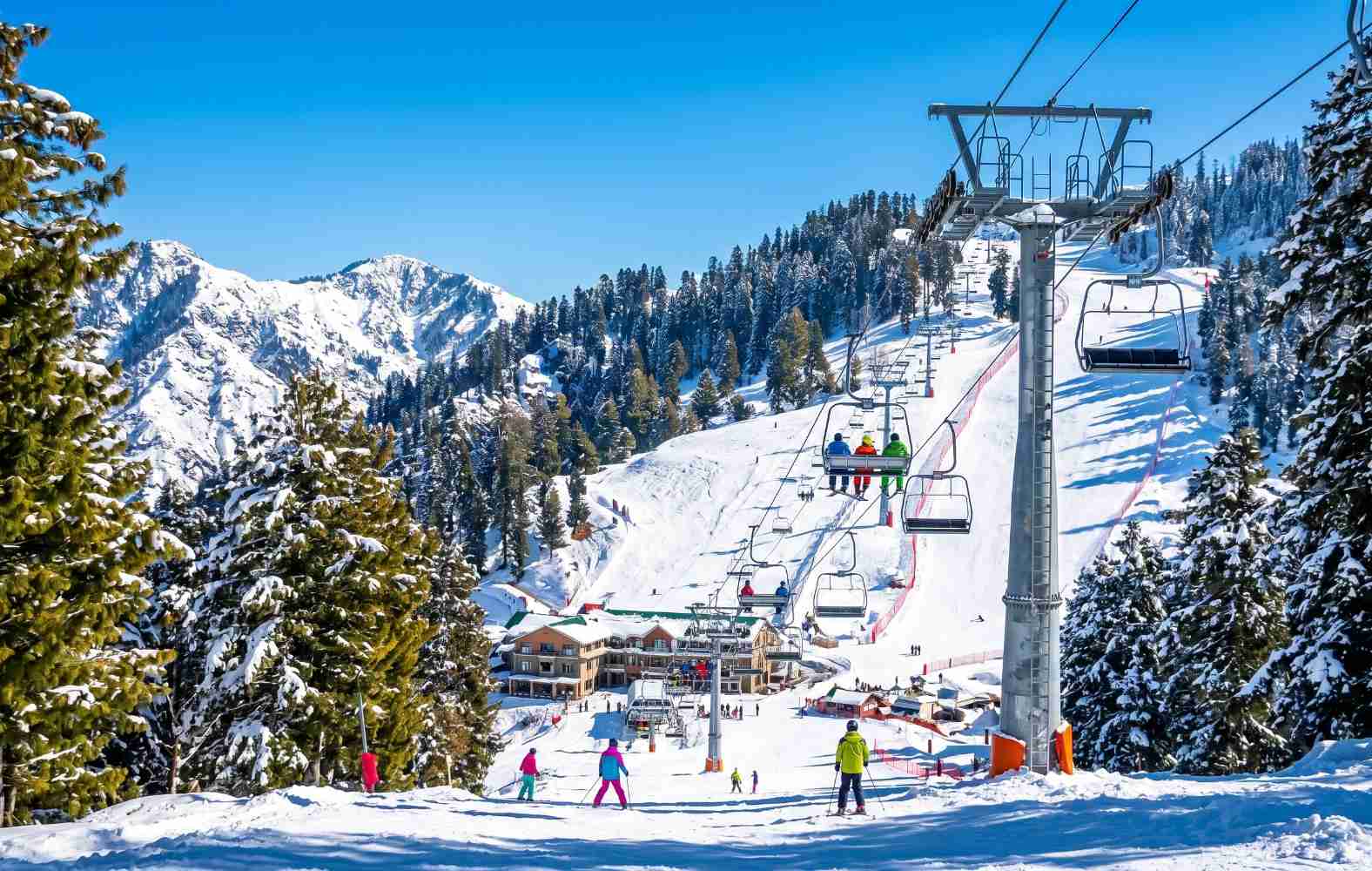
Malam Jabba, Pakistan’s premier ski resort, transforms into a lush alpine meadow each summer with views deep into the Hindu Kush
Ushu Forest and Utror Valley: Wild Upper Swat
Ushu Forest lies eight kilometres from Kalam up the Ushu River valley, a dense woodland of fir and pine with a network of trails, picnic clearings, and a fast-flowing river running through it. It is one of the finest natural forests in KPK and a haven for birdwatchers, nature photographers, and anyone wanting a few hours of unhurried walking through tall trees with mountain air and birdsong for company. The forest’s biodiversity is significant, and medicinal plants have been documented throughout the area by researchers.
Sixteen kilometres from Kalam in a separate side valley, Utror is wilder and less visited. Sitting at an elevation of around 2,350 metres, it features open alpine meadows, small glaciers, clear trout streams, and the kind of remote, untouched atmosphere that is increasingly rare in the more accessible parts of the valley. It is excellent for camping and extended hiking, and the absence of large tourist infrastructure is precisely its appeal.
The Buddhist Heritage of Swat: Gandhara at Its Finest
Swat Valley was one of the most significant centres of Buddhist civilisation in South Asia from the 2nd century BC through to the 7th century AD. The Greek and Indian cultural worlds merged here after Alexander the Great’s campaign through the region in 327 BC, producing the distinctive Gandhara art tradition that combined Hellenistic form with Buddhist iconography. The resulting sculptures and architectural remains are among the finest of their kind anywhere in Asia.
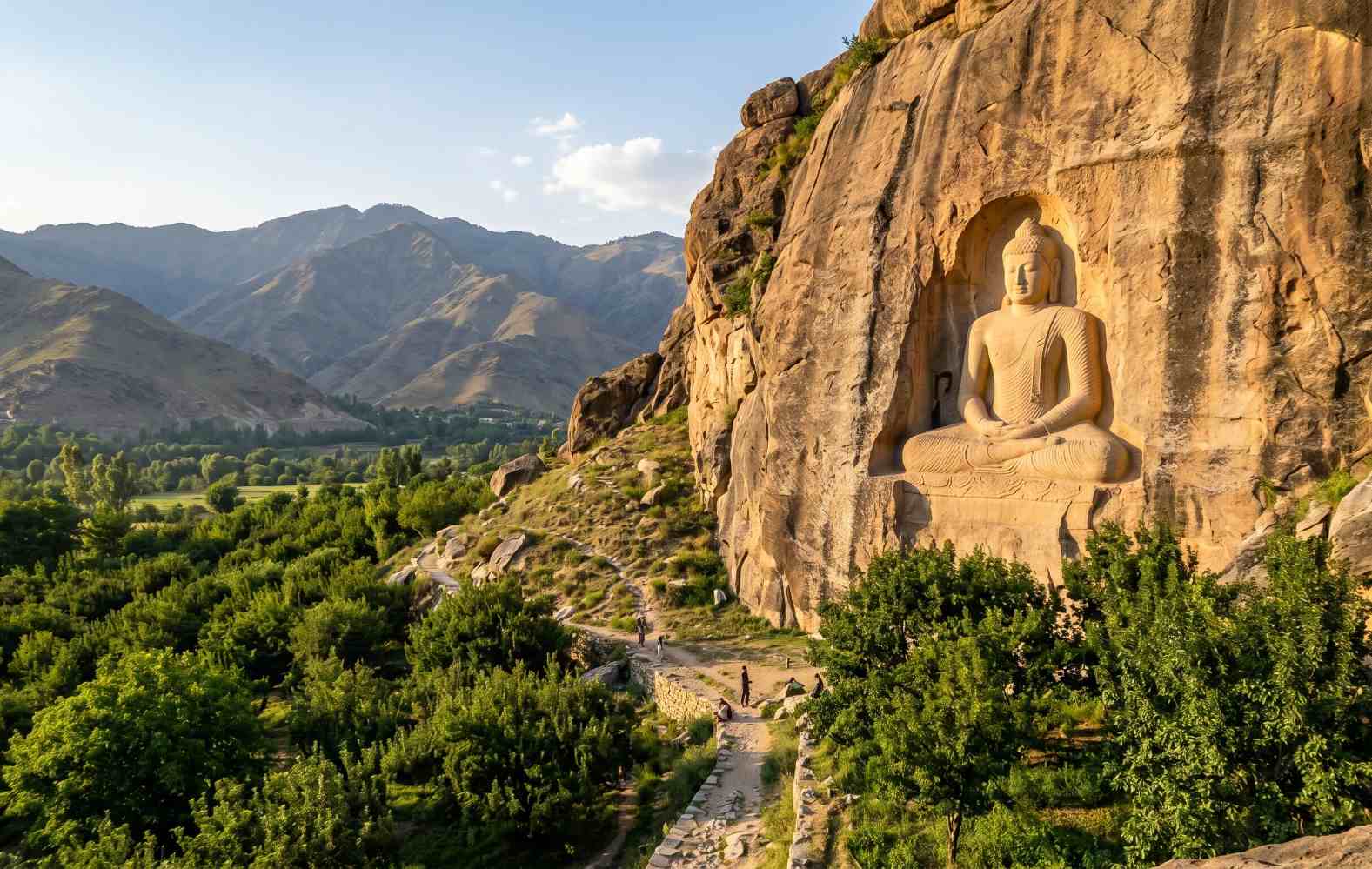
The Jahanabad Giant Buddha, one of the largest rock-carved Buddhas in South Asia, on a 40-minute walk from the main road near Mingora
The Jahanabad Giant Buddha
The Jahanabad Buddha is a seated figure approximately seven metres high carved directly into a cliff face in a narrow side valley off the main Swat River road. It is one of the largest carved Buddhas in Central and South Asia and was described by scholars as the most significant before the destruction of the Bamiyan Buddhas in Afghanistan. The face was damaged by extremists in 2007 but was subsequently restored through a joint Pakistani-Italian conservation effort. The walk up to the carving through orchard trees and quiet hillside paths is itself beautiful. It is not a heavily signposted or commercialised site, which adds to the sense of discovery when you arrive.
Swat Museum, Saidu Sharif
The Swat Museum in Saidu Sharif holds one of the most significant collections of Gandhara sculpture and Buddhist artefacts in Pakistan. The museum was rebuilt and expanded after suffering damage during the unrest of 2008 and now presents its collection in well-maintained, informative displays. The stone carvings, reliefs, and stucco figures in the collection span several centuries of Gandhara art and provide essential context for the outdoor sites scattered across the valley. Any serious visit to Swat’s Buddhist heritage should begin here.
For travellers whose interest in Gandhara heritage extends beyond Swat, Crossroads Adventure’s Buddhist heritage expedition and the Taxila, Gandhara, and Peshawar heritage trail cover this extraordinary civilisation in comprehensive depth across multiple sites.
Marghazar Valley and the White Palace
Marghazar Valley lies 13 kilometres from Mingora and offers a gentler, more intimate landscape of orchards, flowing streams, and gardens compared to the dramatic mountain scenery further north. The valley’s main attraction is the White Palace, Sufaid Mahal, built in the 1930s by the first ruler of Swat State, Miangul Abdul Wadud. The palace is constructed from white marble and set in gardens with mountain views on all sides. It served as the royal summer residence and now receives visitors as a heritage attraction. The white marble facade at sunset, when the light turns golden, is genuinely striking.
The valley itself is productive walnut country, and the quality of Marghazar walnuts is well known across Pakistan. The combination of the palace, the orchards, the birdlife, and the green valley setting makes Marghazar an excellent half-day excursion from Mingora, particularly earlier in the trip before heading further north.
Bahrain: The Gateway Town with Character
Bahrain sits at the confluence of the Daral and Swat rivers, 60 kilometres north of Mingora, and serves as a natural stopping point on the journey toward Kalam. It is a proper working town rather than a tourist staging post, with old wooden buildings lining the bazaar, traditional craftspeople selling embroidered fabric and carved woodwork, and restaurants serving river fish and local bread. The Swat River runs fast and clear below the town, and the surrounding hillsides are terraced and cultivated to every available ridge. It is an excellent place to stretch your legs, have a meal, and experience Swati market culture without the commercialisation found in more tourist-heavy spots.
Miandam and Shingrai Waterfall
Miandam is a forested hill station 45 kilometres from Mingora, known for its cool climate, pine-covered hillsides, and a beautiful waterfall that has been a picnic destination for generations of Swat visitors. A World Wide Fund for Nature initiative in Miandam focuses on the sustainable cultivation of medicinal herbs, a reminder of the ecological richness of the valley’s forests. The waterfall is a short walk from the main road and sits in a shaded ravine surrounded by ferns and moss, making it one of the most refreshing stops in lower Swat. Shingrai Waterfall near Bahrain, plunging approximately 21 metres through dark rocks into a green pool below, is a separate and equally photogenic waterfall worth including in any extended Swat itinerary.
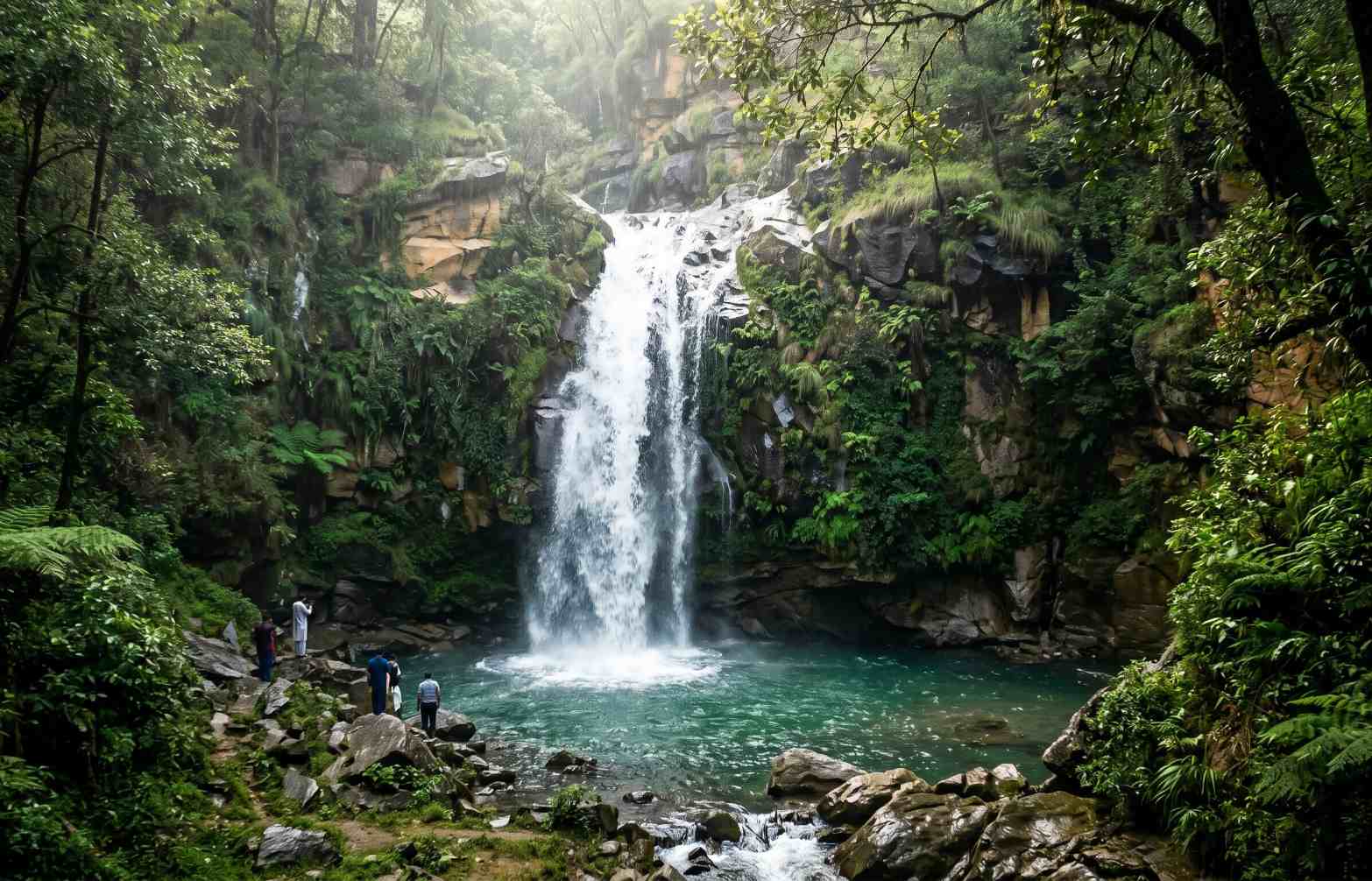
Shingrai Waterfall near Bahrain, one of Swat’s most beautiful natural features and a rewarding short walk from the main valley road
Fizagat Park and the Swat River
Fizagat Park sits on the banks of the Swat River a short drive from Mingora and is managed by the Pakistan Tourism Development Corporation. It offers a rare stretch of open riverside green in the valley with picnic lawns, playgrounds, and views across the wide, clear river to the forested hills beyond. For families, it is one of the most accessible and genuinely pleasant outdoor spaces in the valley. For independent travellers, it makes a good base for exploring the main valley attractions around Mingora before heading north.
Best Time to Visit Swat Valley
How to Get to Swat Valley
Swat Valley is reached from Islamabad via the M1 motorway to Nowshera, then onto the Swat Expressway which connects directly to Mingora in around four hours in good traffic conditions. The Swat Expressway has significantly improved journey times from Islamabad and Peshawar compared to the older road. Peshawar is approximately two hours from Mingora.
There is no airport in Swat. Travellers flying into Pakistan connect through Islamabad or Peshawar and travel onward by road. Within the valley, jeeps and local vehicles ply the road to Kalam and its surrounding areas. For Mahodand Lake, Utror, and other upper destinations, a privately hired jeep is essential. Your operator or hotel in Kalam can arrange this without difficulty.
Crossroads Adventure note: Swat Valley is most rewarding when visited as part of a wider cultural journey through Khyber Pakhtunkhwa and northern Pakistan. The combination of Swat’s Buddhist heritage and natural scenery with the living culture of Chitral’s Kalash valleys, the ancient Silk Road history of Peshawar, and the mountain grandeur of Gilgit-Baltistan creates an itinerary that covers Pakistan’s extraordinary range in a way no single destination can. Our Pakistan experiences are designed to bring these threads together seamlessly.
Things to Do in Swat Beyond Sightseeing
Trout Fishing
Swat River and the tributaries around Kalam are renowned for trout fishing. The cold, clear glacial water supports healthy fish populations, and fishing permits are available locally. It is one of the most relaxed and rewarding ways to spend a morning in the upper valley.
Skiing at Malam Jabba
The ski resort operates from December through February with chairlift, ski rental, and instructor services. Beginner and intermediate slopes are accessible to those with no previous experience, and the setting above the forested valleys of Swat is spectacular.
Hiking and Forest Walks
From Ushu Forest near Kalam to the hillsides above Miandam and Bahrain, Swat has excellent walking terrain at all levels of difficulty. Local guides can be hired in Kalam for routes to higher pastures and viewpoints that are not obvious from the road.
Swati Crafts and Bazaars
Swat is famous for hand-embroidered shawls, woollen fabric, carved wooden items, and gemstone jewellery. The bazaars of Mingora and Bahrain are the best places to find authentic pieces. The Islampur weaving village near Mingora gives visitors the chance to see traditional fabric production in practice.
Fruit Picking in Season
Swat peaches are celebrated throughout Pakistan for their flavour, and the valley also produces plums, apricots, and walnuts in season. Many rural families along the valley roads welcome visitors to taste and buy fruit directly from their orchards, making this one of the most authentic and unscripted experiences the valley offers.
Archaeological Site Visits
Beyond Jahanabad, Swat contains numerous Buddhist stupas and the ruins of ancient Udegram (ancient Ora) with connections to Alexander the Great’s campaign. The Italian Archaeological Mission has worked in Swat for decades and has documented and partially restored many sites. The Swat Museum provides essential context for all of them.
Frequently Asked Questions
Is Swat Valley safe to visit?
Yes. Swat Valley has been a safe and actively promoted tourism destination for well over a decade since the security situation stabilised. Local authorities maintain a visible and effective presence throughout the valley, and tourism infrastructure is well-developed. The valley hosts hundreds of thousands of domestic tourists every summer and a growing number of international visitors. Travelling with a registered operator and following standard travel common sense is all that is required.
How many days do you need in Swat?
A minimum of three days allows you to see Mingora, Saidu Sharif, Marghazar, and the Jahanabad Buddha before making one day trip north to Bahrain or Miandam. Five days allows for a proper visit to Kalam, including time for Ushu Forest and Utror Valley. Seven days or more allows for Mahodand Lake, a full exploration of the Buddhist heritage sites, and a relaxed pace throughout. Most travellers who plan three days end up wishing they had stayed longer.
What is Swat Valley famous for?
Swat is famous for three things: its natural landscape (the green valleys, forested hillsides, and alpine lakes that earned it the nickname “Switzerland of the East”), its Gandhara Buddhist heritage (the Jahanabad Buddha, the Swat Museum, and numerous stupas and ruins from the 2nd century BC onward), and its Malam Jabba ski resort, Pakistan’s premier winter sports destination. Swati embroidery, peaches, and the warmth of Pashtun hospitality are also part of the valley’s identity.
What is the best time to visit Swat Valley?
May through September is the primary visiting season for the full valley, including Kalam and Mahodand Lake. September is widely regarded by experienced travellers as the finest month, offering clear skies, emptier roads, and the beginning of autumn colour. December through February is the season for Malam Jabba skiing. April is pleasant in the lower valley but the upper roads may still be partially blocked by snow. Winter visits to the upper valley are not recommended without specific local knowledge and preparation.
Can Swat Valley be combined with other destinations in Pakistan?
Absolutely, and this is strongly recommended for anyone with more than a week available. Swat sits naturally on the route between Peshawar and Chitral, making a logical circuit: Islamabad to Peshawar, then north through Swat to Kalam, onward via the Lowari Tunnel or Shandur Pass to Chitral and the Kalash valleys, and return. For travellers also visiting Gilgit-Baltistan, Swat can be included either at the start or end of a broader northern Pakistan journey. Crossroads Adventure designs itineraries that combine all of these regions into a single seamless experience.
Plan Your Swat Valley Journey with Crossroads Adventure
From the Buddhist rock carvings of Jahanabad to the glacial silence of Mahodand Lake, Swat rewards unhurried exploration with the right guide alongside you. Let Crossroads Adventure build your perfect Swat and KPK itinerary.
Start Planning Your Swat Expedition