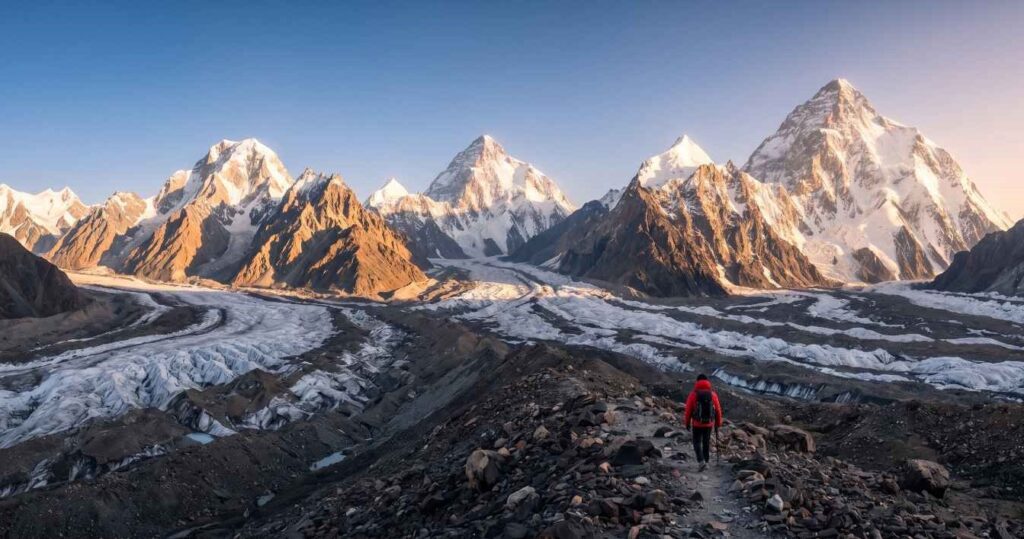
The trails across northern Pakistan are not simply long walks with altitude. They move through the Karakoram, the western Himalayas, and the Hindu Kush, three of the most dramatic mountain systems on Earth. They pass through villages where the Silk Road once ran, above glaciers that dwarf anything found in the Alps, and into valleys so remote that wildlife roams undisturbed. This guide covers the most essential hiking trails in Pakistan for serious bucket-list travellers, from approachable high-altitude treks to routes that demand full expedition preparation.
If you want expert guidance navigating any of these trails, Crossroads Adventure offers fully supported alpine adventure treks in Pakistan built around exactly these landscapes, with professional local guides and meticulous logistics.
Why Pakistan’s Hiking Trails Belong on Every Serious Bucket List
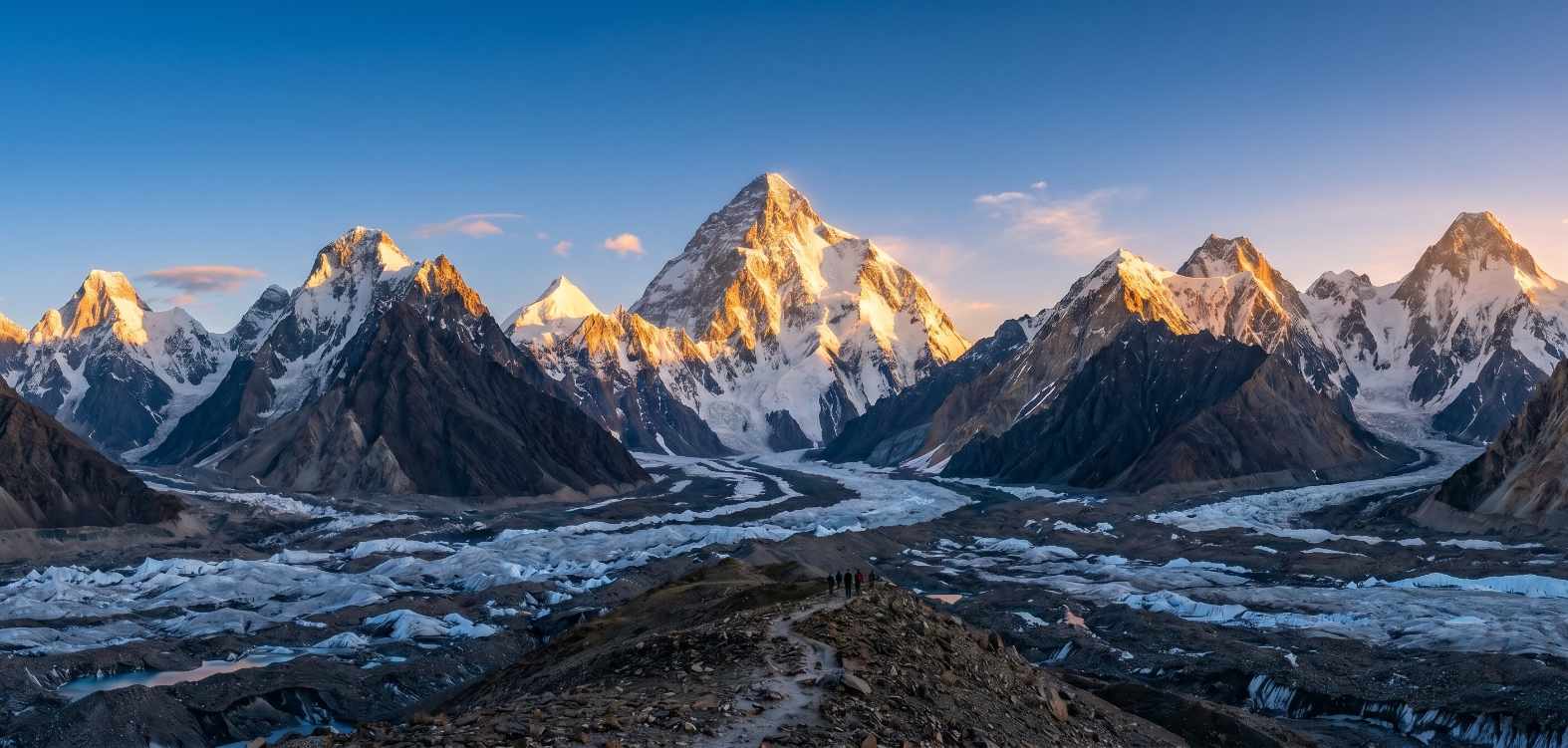
Pakistan is home to more peaks above 7,000 metres than any country outside of China and Nepal. The Karakoram alone contains the greatest concentration of high mountains anywhere on Earth. Yet despite this, its trails remain far less crowded than those in Nepal, offering a degree of solitude and raw wilderness that is increasingly hard to find.
The country’s three great mountain systems, the Karakoram in the north, the western Himalayas stretching into Gilgit-Baltistan and Azad Kashmir, and the Hindu Kush sweeping through Chitral and Dir, each offer distinct hiking terrain. Glaciers, high-altitude lakes, ancient caravan routes, and communities who have lived in these valleys for centuries all come together in a way that makes trekking here genuinely unlike anywhere else.
Access has also improved significantly over the past decade. The Karakoram Highway connects Islamabad to Gilgit and onward to Hunza, and domestic flights reduce travel times to Gilgit, Skardu, and Chitral considerably. The adventure tourism infrastructure, though still developing, is now capable of supporting well-organised expeditions with proper safety protocols.
The Essential Bucket List Hiking Trails in Pakistan
1. K2 Base Camp and the Baltoro Glacier
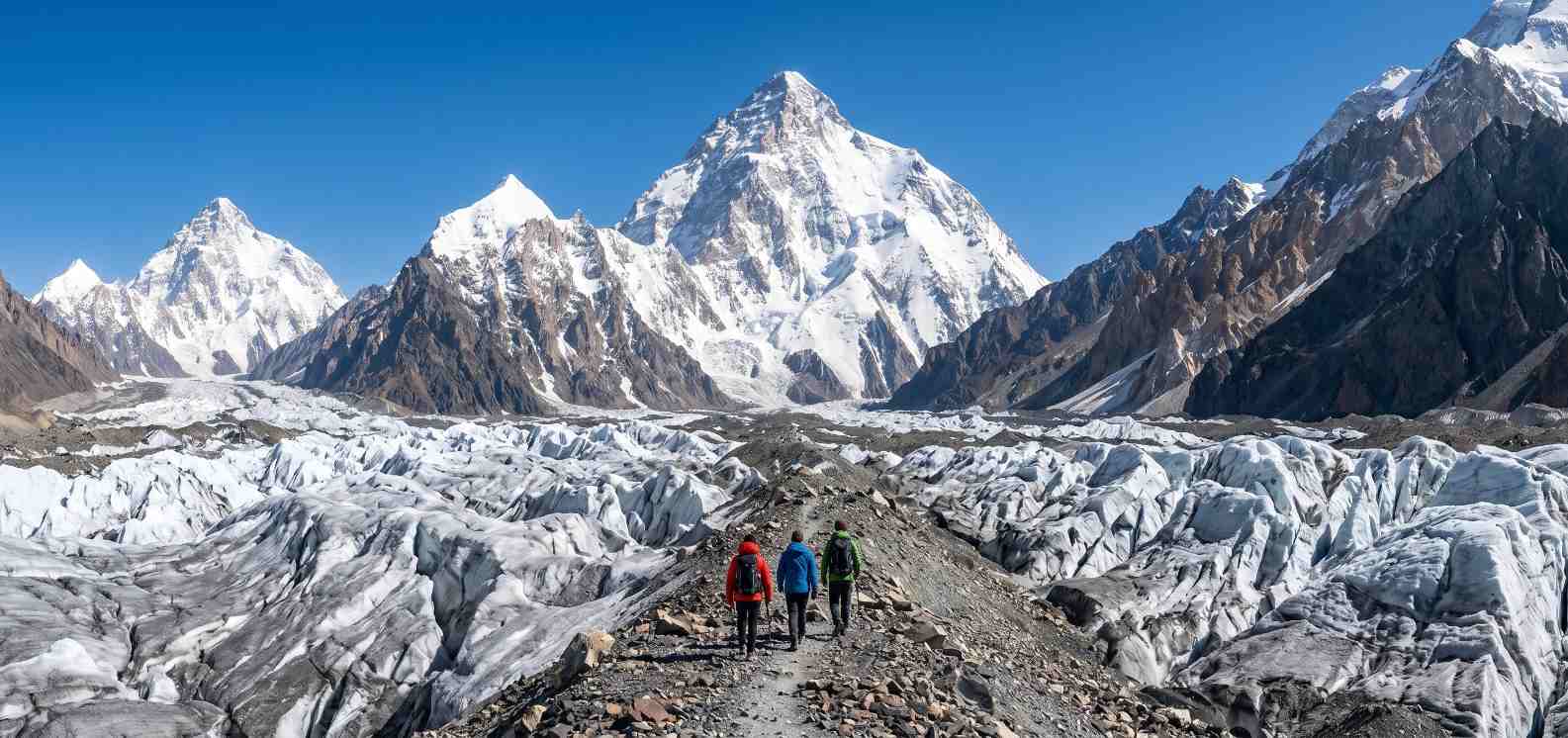
This is the most celebrated trekking route in Pakistan and arguably one of the finest on Earth. The trail from Askole follows the Braldu River and then the Baltoro Glacier for over 60 kilometres to Concordia, the confluence point surrounded by four eight-thousanders. K2 (8,611m), Broad Peak (8,051m), Gasherbrum I and II all rise from this amphitheatre simultaneously. The visual scale is genuinely disorienting.
From Concordia, a further two-day walk brings you to K2 Base Camp at the foot of the Godwin-Austen Glacier. The route requires solid physical fitness, acclimatisation days, and reliable guides given the glacial terrain and remoteness. Permits are required and should be arranged well in advance through a registered Pakistani tour operator. The best trekking season is June through August.
Crossroads Adventure runs a dedicated K2 Base Camp experience that handles all logistics, permits, and professional mountaineering guide support for this route.
2. Nanga Parbat Base Camp via Fairy Meadows
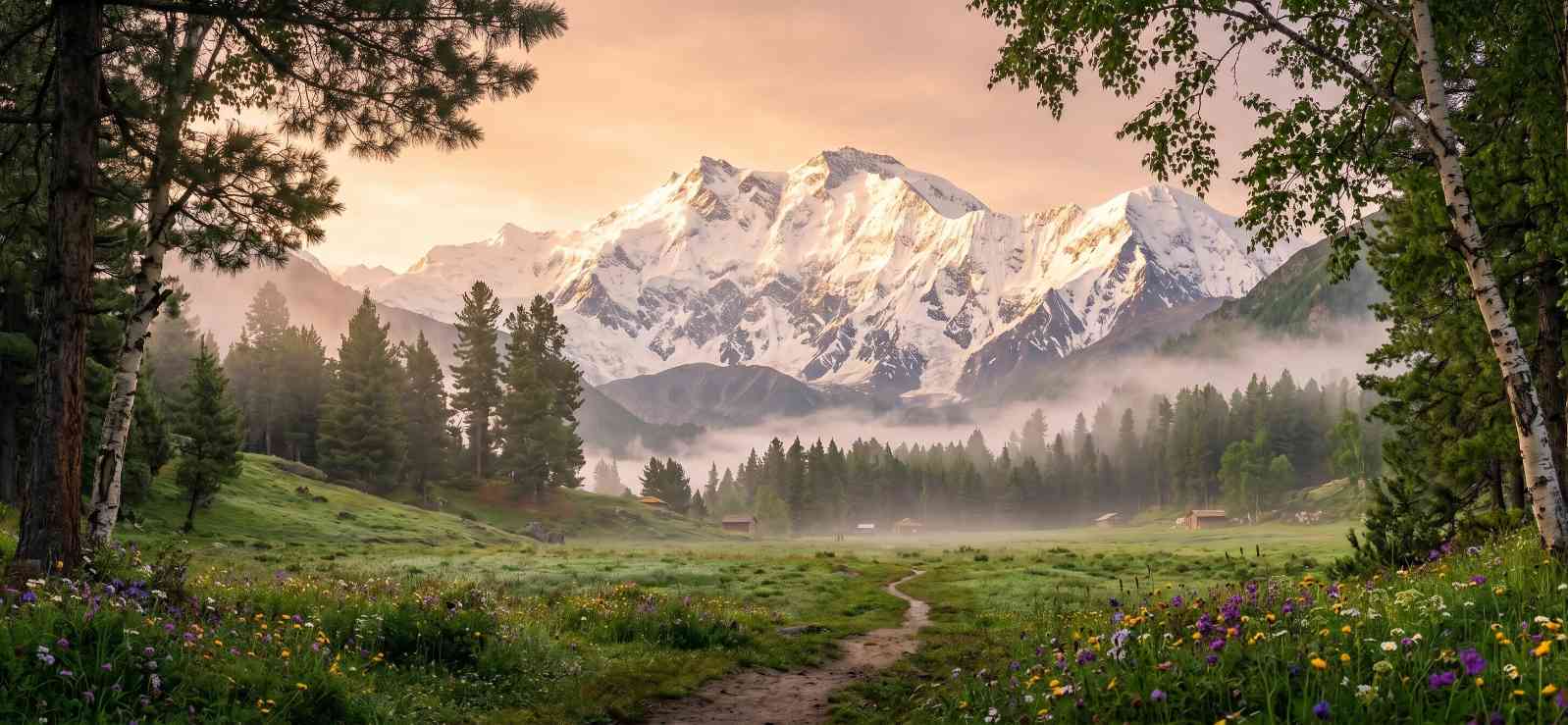
Nanga Parbat (8,126m) is the ninth-highest mountain in the world and its north face is one of the most visually dramatic sights in Pakistan. The approach through Fairy Meadows, a high plateau of green alpine grass ringed by pine forest with unobstructed views of the peak, is one of the most iconic viewpoints in the country and accessible enough for trekkers without extreme technical fitness.
The jeep track from the Karakoram Highway ends at Raikot Bridge. From there, a steep walk leads to Fairy Meadows (3,300m), with basic guesthouses and camping available. A further day’s hike climbs to Nanga Parbat Base Camp itself. The combination of relative accessibility, extraordinary views, and the ability to stay overnight in the meadows makes this one of the most rewarding short treks in Pakistan.
This route can be combined with a wider Hunza and Gilgit-Baltistan itinerary. Crossroads Adventure’s Nanga Parbat Base Camp experience integrates this trek within a fully supported expedition.
3. Rush Lake Trek, Nagar Valley
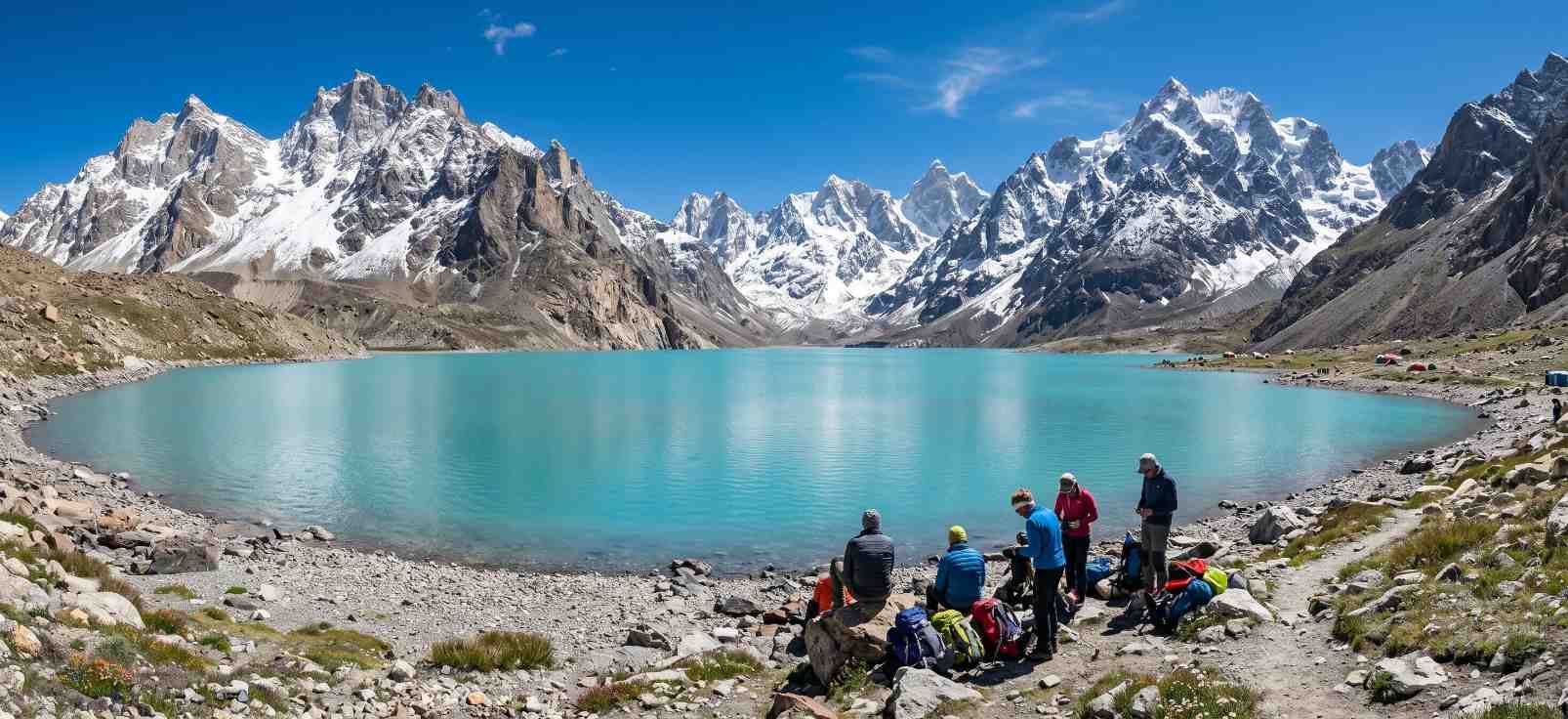
Rush Lake sits at 4,694 metres in the Nagar Valley, making it one of the highest lakes in Pakistan and among the highest accessible lakes in the world. The trek to reach it passes through terraced apricot orchards, traditional Nagar villages, and progressively wilder high-altitude terrain before arriving at a brilliantly coloured glacial lake surrounded by jagged peaks.
The summit views from above the lake take in Rakaposhi (7,788m), Diran Peak, and deep into the Karakoram. It is a technically straightforward but genuinely demanding ascent that rewards fitness and preparation. Crossroads Adventure offers a supported Rush Lake trekking expedition from their base in Hunza.
4. Shimshal Valley and High Passes
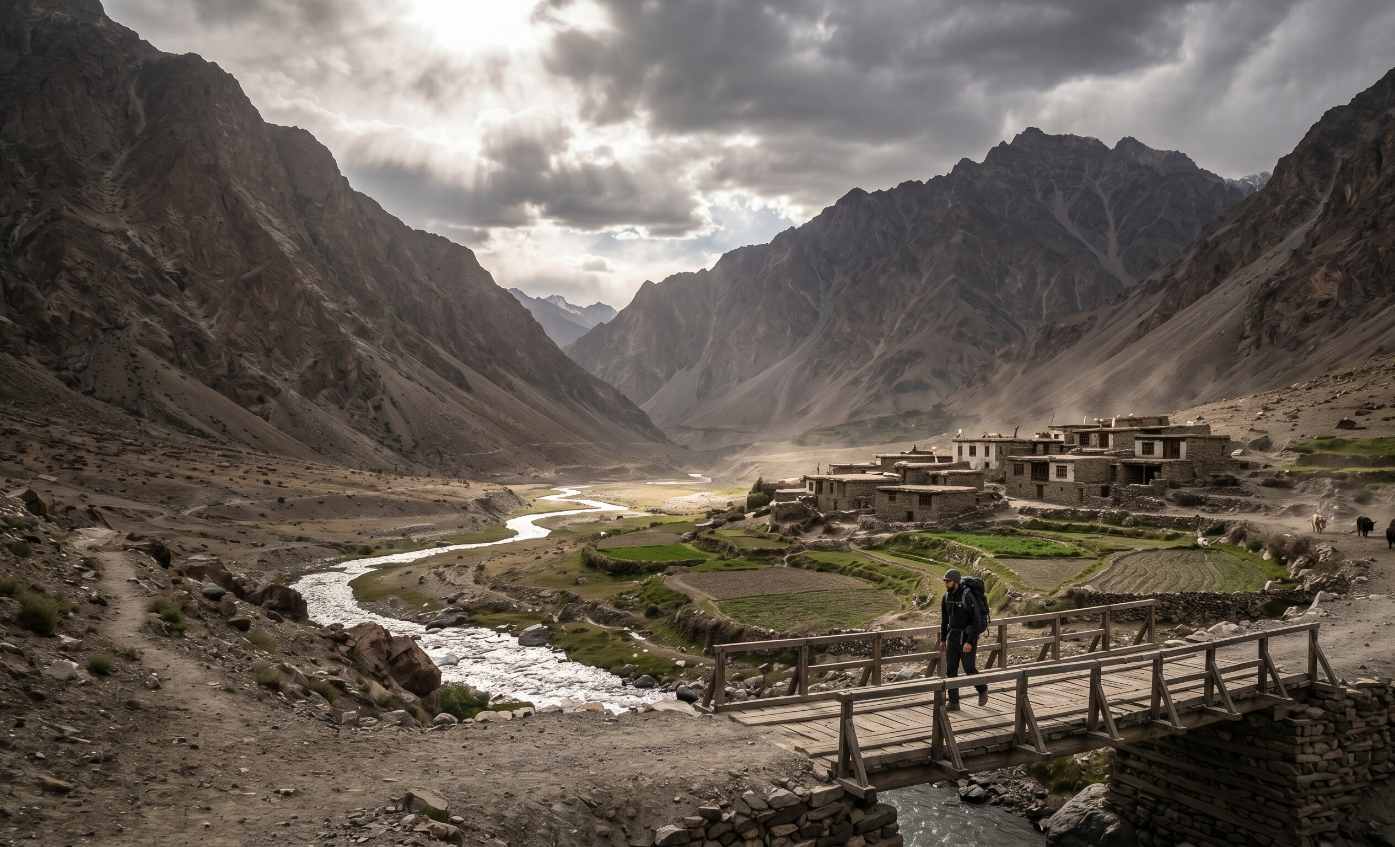
Shimshal is one of the most isolated inhabited valleys in Pakistan. Early 2000s it was accessible only by a three-day walk along a cliff-hugging path above the Hunza River. Today a rough jeep track connects it to the Karakoram Highway, but the valley retains an extraordinary sense of remoteness and cultural continuity. The Wakhi community here has maintained traditional seasonal migration routes for centuries, driving yaks up to high summer pastures at 4,700 metres.
The extended trekking routes from Shimshal cross multiple high passes, including Shimshal Pass (5,100m) and routes that push toward Snow Lake and the Biafo Glacier. This is serious wilderness trekking requiring full expedition support. Crossroads Adventure’s Shimshal Valley expedition covers both the cultural and high-altitude dimensions of this remarkable area, with guides who have deep roots in the region.
5. Deosai Plateau Traverse
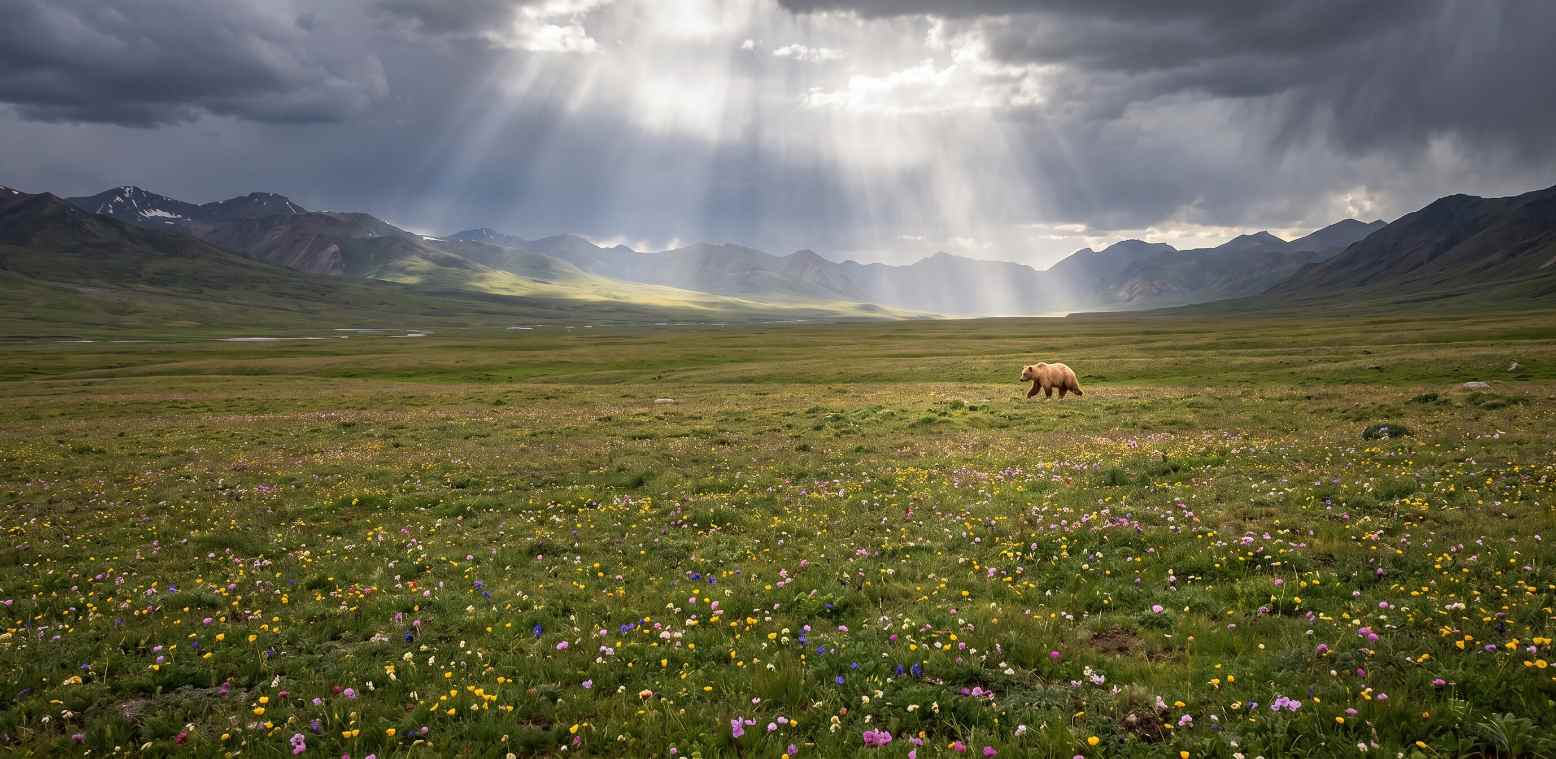
Deosai National Park is one of the highest plateaus in the world, sitting at an average elevation of 4,114 metres between Skardu and Astore. The landscape is completely unlike anything else in Pakistan: a vast, rolling expanse of meadow, glacial streams, and wildflower fields that blooms spectacularly from June to August. It is also one of the last strongholds of the Himalayan brown bear.
A traverse of the plateau from Skardu, crossing to Chilam or continuing toward Astore, passes Sheosar Lake (one of the most beautiful high-altitude lakes in the country) and offers consistent high-altitude views in all directions. It is one of the most accessible multi-day highland treks in Pakistan, suitable for travellers with good fitness but without the need for technical mountaineering skills.
6. Tirich Mir Trekking Expedition, Chitral
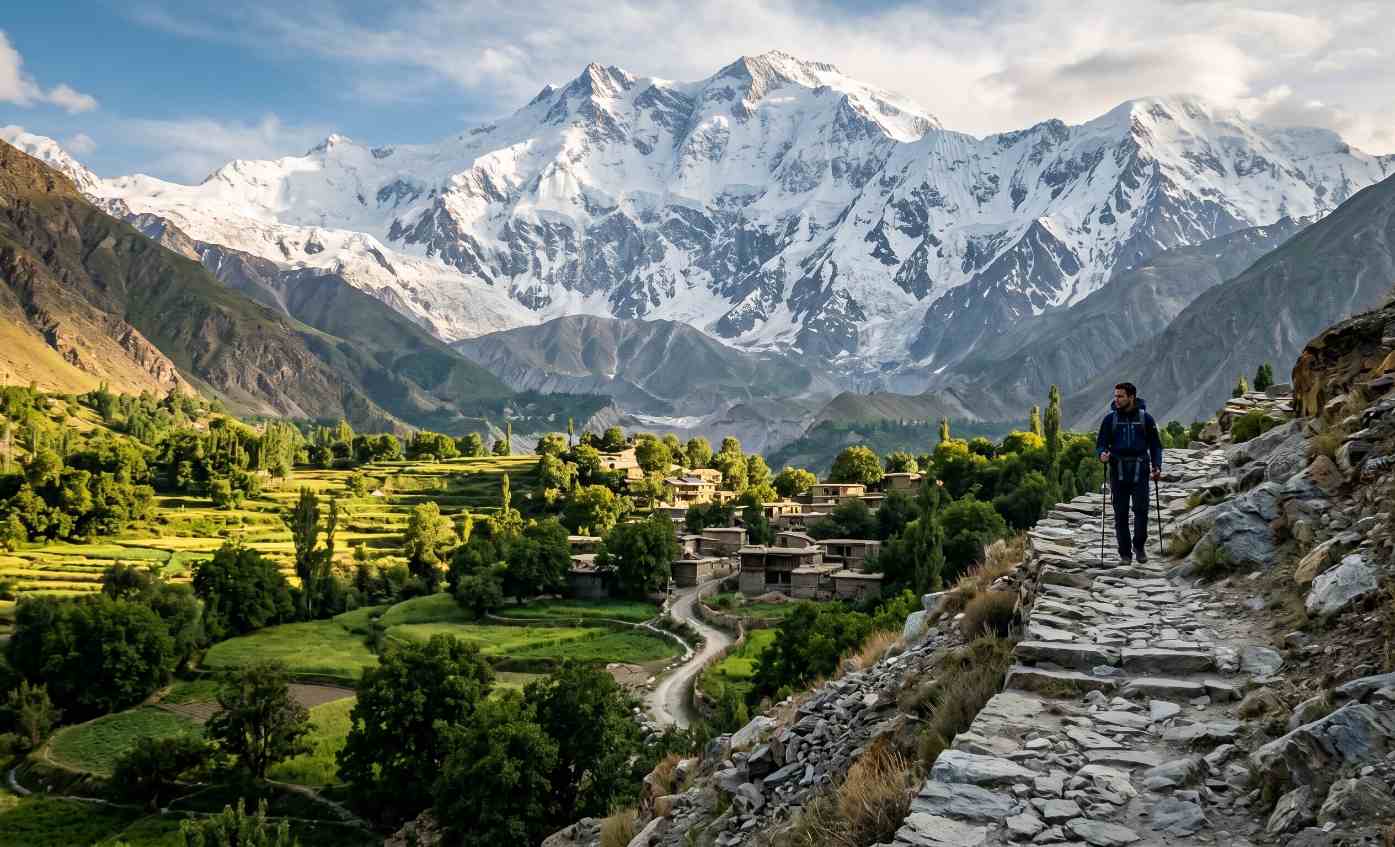
Tirich Mir (7,708m) is the highest peak in the Hindu Kush range and one of the most striking mountains in Pakistan. The trekking routes approaching it from the Chitral valley pass through landscapes that feel distinctly different from the Karakoram, with lower, greener valleys, dense walnut and mulberry orchards, and the unique cultural world of the Khowar-speaking Chitrali people.
The approach treks move through side valleys of immense beauty and progressively into high moraines and glacial terrain with panoramic views of the peak. Crossroads Adventure offers a Tirich Mir trekking expedition that combines cultural immersion in Chitral with the high-altitude approach. For travellers interested in the broader culture of this region, it pairs well with a visit to the Kalash valleys nearby.
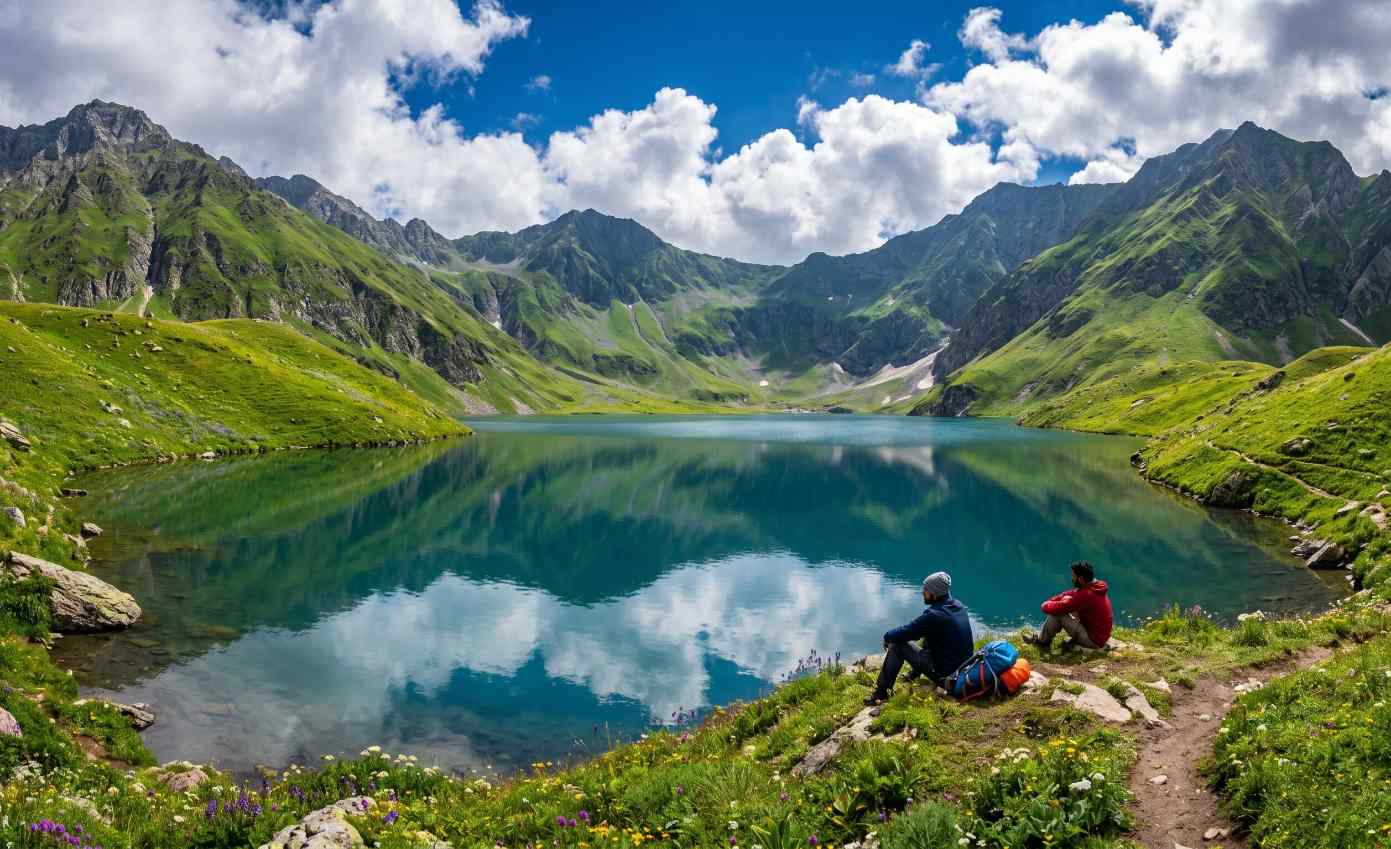
7. Ratti Gali Lake, Azad Kashmir
Ratti Gali is one of the most beautiful high-altitude lakes in Pakistan and perhaps the most visually lush. Set in the Neelum Valley above Dowarian, the lake sits in a green, treeless alpine bowl at 3,700 metres with a colour and clarity to its water that photographs almost look artificial. Unlike many famous Pakistan hikes, this one is accessible in a short trek and requires no technical preparation, making it ideal for travellers who want high-altitude beauty without a demanding multi-week commitment.
The route is typically two days return from base, with camping at the lake shore. The best months are July to September, after the snow has cleared the upper slopes. Crossroads Adventure includes this route within their Kashmir alpine meadows expedition.
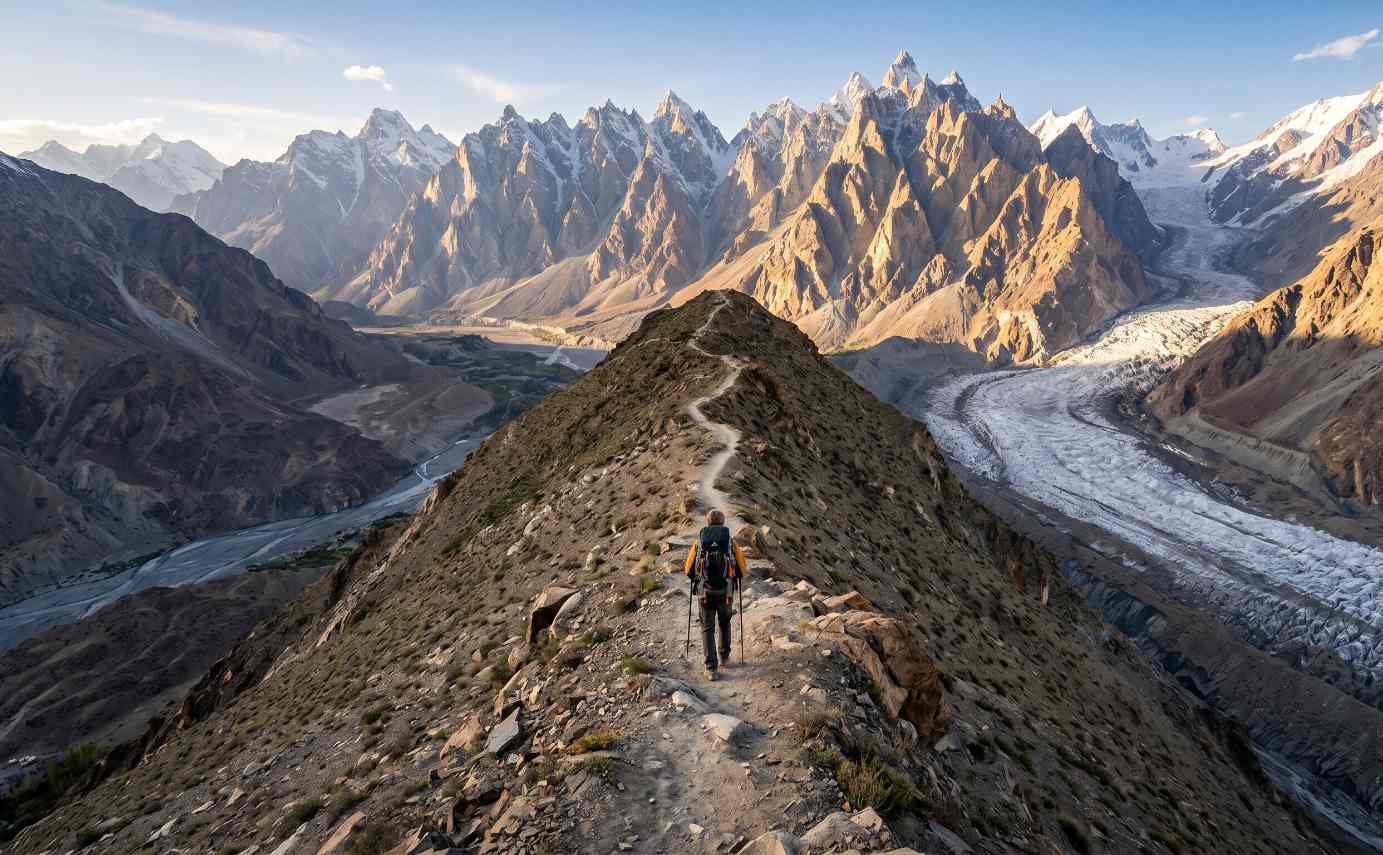
8. Patundas Ridge, Upper Hunza (Gojal)
Patundas Ridge in Gojal offers one of the most sweeping panoramic views of any accessible trek in the Karakoram. The route climbs above the Karakoram Highway near Passu and gains a high ridge where views extend over the Passu Glacier, the Batura Glacier, and the extraordinary spire formations of the Passu Cones (Tupopdan). On a exceptionally clear days, the Pamirs are visible to the north across the Afghan border.
This is a wonderful trekking option for travellers already in Hunza who want a substantial high-altitude walk without committing to a full multi-week expedition. Crossroads Adventure offers this as part of their Patundas Ridge experience, guided by a team rooted in the Gojal community.
At a Glance: Pakistan’s Bucket List Hikes Compared
| Trail | Region | Duration | Max Elevation | Difficulty | Best Season |
|---|---|---|---|---|---|
| K2 Base Camp / Baltoro | Skardu, G-B | 18–22 days | 5,100m | Demanding | June–Aug |
| Nanga Parbat Base Camp | Diamer, G-B | 5–8 days | ~4,200m | Moderate | June–Sep |
| Rush Lake | Nagar, G-B | 4–5 days | 4,694m | Moderate–Hard | June–Sep |
| Shimshal Valley & Passes | Upper Hunza | 13–16 days | 5,100m | Demanding | June–Aug |
| Deosai Plateau Traverse | Skardu, G-B | 3–5 days | 4,114m | Moderate | June–Sep |
| Tirich Mir Trek | Chitral, KPK | 12–14 days | ~4,800m | Challenging | May–Sep |
| Ratti Gali Lake | Neelum, AJK | 2–3 days | 3,700m | Moderate | Jul–Sep |
| Patundas Ridge | Gojal, Hunza | 2–4 days | 4,050m | Moderate | Jun–Oct |
Planning Your Pakistan Hiking Trip: What You Need to Know
Permits and Documentation
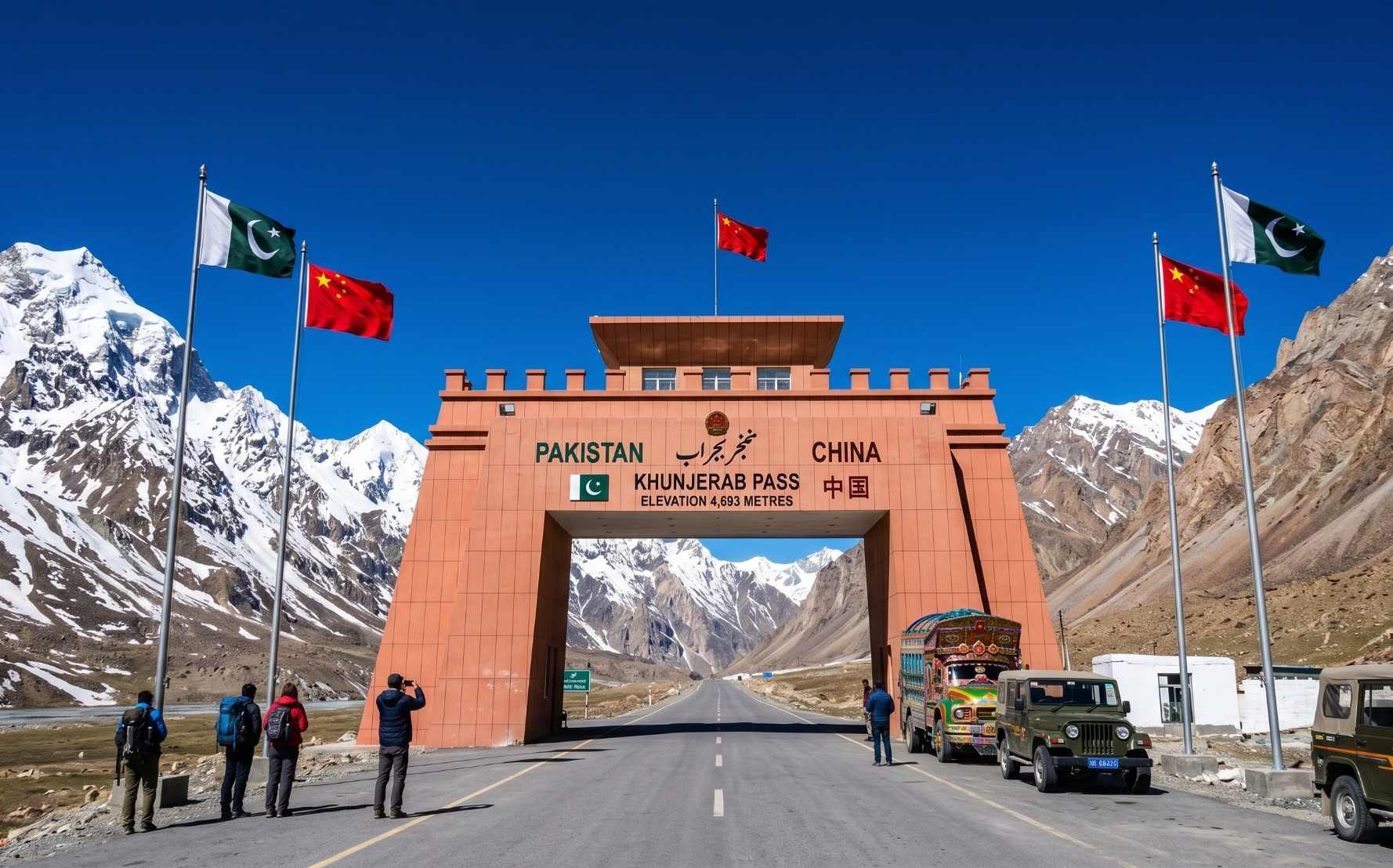
Most major trekking areas in northern Pakistan, particularly those in Gilgit-Baltistan and above certain altitudes, require trekking permits. K2 and the Baltoro Glacier require a Restricted Zone permit obtained through a licensed Pakistani tour operator. The Khunjerab and Deosai national parks require entry fees. Ensure your operator handles all permit paperwork well before departure, as processing can take time and some permits are quota-limited during peak season.
Best Time to Trek in Pakistan
The main trekking season runs from late May through September. June to August is optimal for most high-altitude routes, with the passes clear of snow and temperatures manageable. May and September can be excellent for lower and mid-altitude treks but carry greater risk of unpredictable weather at height. Autumn in Hunza (late September to October) is spectacular for colour and clear skies, though high passes begin closing.
Physical Preparation
Pakistan’s bucket list hikes are genuine high-altitude endeavours. Even moderate routes like Nanga Parbat Base Camp and Ratti Gali involve significant daily elevation gain and nights at over 3,000 metres. For the K2 Base Camp and Shimshal routes, consistent training covering cardiovascular endurance and load-bearing hiking over several months is advisable. Altitude sickness is a real risk and proper acclimatisation days must be built into any itinerary.
Getting There: Domestic Connections
Islamabad is the main international gateway. Pakistan International Airlines (PIA) and private carriers operate regular flights to Gilgit, Skardu, and Chitral, cutting overland travel from days to under an hour in good weather. However, these flights are highly weather-dependent and cancellations are frequent. Overland via the Karakoram Highway is the reliable backup and is itself a remarkable journey.
A note on hiring guides in Pakistan: Hiring a knowledgeable, professional local guide is not optional on the major routes, it is essential. Beyond safety on glacial terrain and in remote valleys, local guides open access to hospitality, language, cultural context, and route knowledge that no map can replicate. The best operators, like Crossroads Adventure, are rooted in these communities and bring guides with decades of experience in these specific ranges.
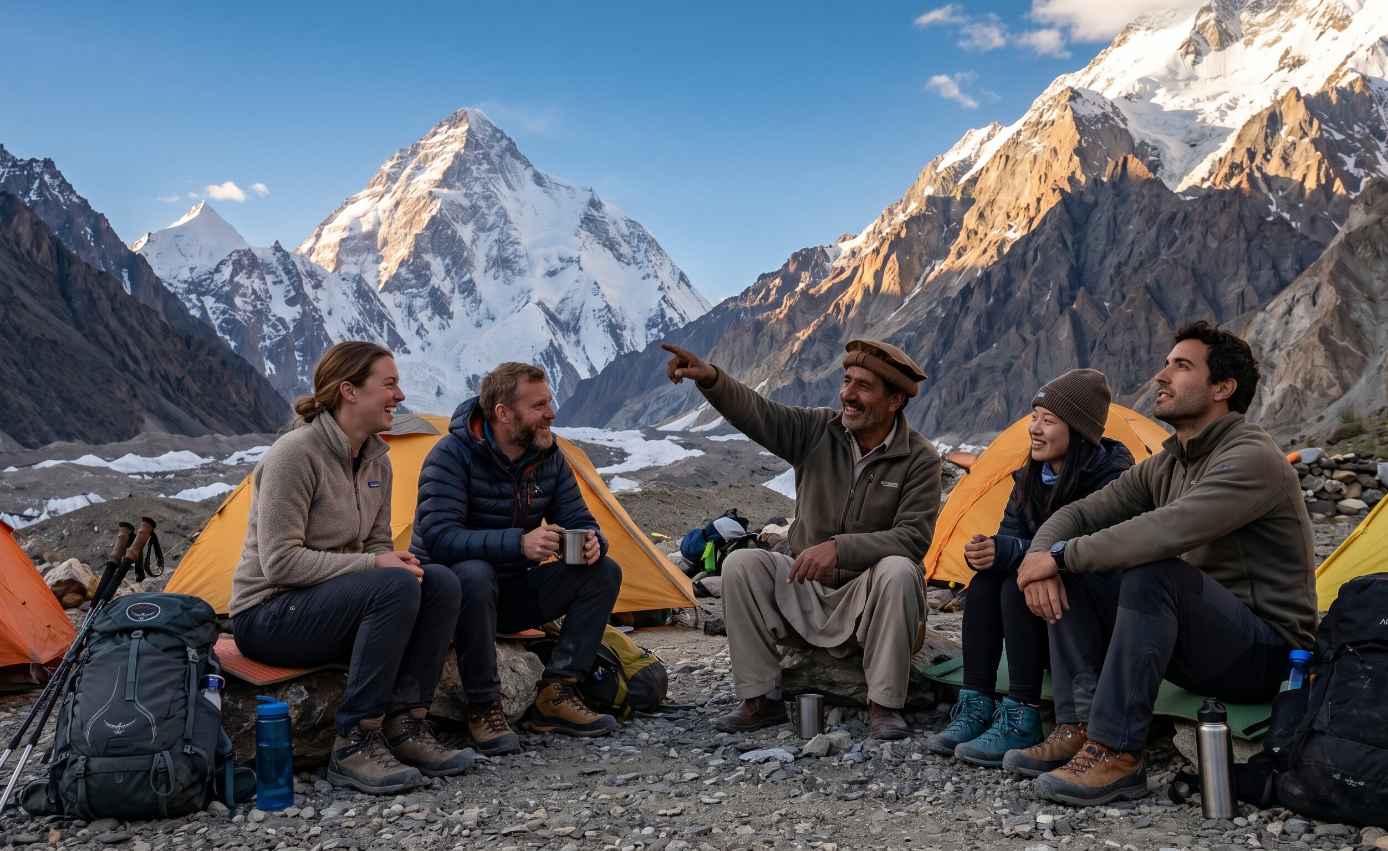
How to Trek Pakistan’s Mountains with Crossroads Adventure
Crossroads Adventure is Pakistan’s specialist for premium, professionally guided mountain expeditions. Founded in Upper Hunza by CEO Sultan Uddin, the company brings deep local knowledge, certified guides, and international operational standards to every trek. All major alpine adventures in Pakistan offered by Crossroads include permit handling, professional guiding, logistical coordination, and emergency protocols built into each itinerary.
For travellers who want to combine trekking with Pakistan’s extraordinary cultural heritage, including ancient Silk Road sites, Gandhara Buddhist ruins, and living Wakhi and Chitrali traditions, Crossroads also offers culture and heritage expeditions that can be woven together with hiking itineraries for a complete picture of the country. Explore the full range of Pakistan expeditions and experiences to find the journey that matches your ambitions.
Frequently Asked Questions
Is Pakistan safe for hiking and trekking?
Northern Pakistan, which covers Gilgit-Baltistan, Hunza, Skardu, and Chitral, has an excellent safety record for trekking and tourism. The communities in these mountain regions are welcoming and the adventure tourism infrastructure is mature. Trekking with a registered, professional operator significantly reduces any residual risks related to terrain, weather, and remoteness. The UK, US, and EU have updated their travel advice on Pakistan in recent years to reflect the improved situation in the north.
Do I need a guide for trekking in Pakistan?
For most of the major routes listed here, particularly K2 Base Camp, Shimshal, and the Hindu Kush approaches, a registered guide is both legally required for restricted zones and practically essential. For shorter routes like Ratti Gali or Patundas, an experienced local guide is strongly recommended even if not mandatory. Beyond safety, a good local guide transforms a hike into a cultural experience.
What is the best month to hike in Pakistan?
July and August are the safest months for high-altitude routes like K2 Base Camp and Shimshal, with the most stable weather windows. June and September extend the season for many routes and offer fewer other trekkers on the trail. For Hunza and the Karakoram Highway corridor, May is also viable and spectacularly beautiful during cherry blossom season. October brings autumn colours to the lower valleys and is ideal for the Hunza region specifically.
How fit do I need to be to trek in Pakistan?
It depends entirely on the route. Ratti Gali, Patundas Ridge, and the Fairy Meadows approach are accessible to anyone with regular fitness and some hiking experience. Rush Lake, Tirich Mir approaches, and the Deosai traverse require solid cardiovascular fitness and the ability to carry a daypack at altitude for six to eight hours. K2 Base Camp and Shimshal demand sustained multi-week endurance and should be preceded by several months of dedicated training.
Can I combine hiking with cultural sightseeing in Pakistan?
Absolutely, and this is one of Pakistan’s great strengths as a destination. The Hunza Valley sits directly on the ancient Silk Road and is surrounded by historical forts, apricot orchards, and Wakhi cultural heritage. Chitral pairs high-altitude trekking near Tirich Mir with the unique Kalash culture, which has no equivalent anywhere else in the world. Crossroads Adventure specialises in creating itineraries that weave mountain trekking and cultural depth into a single cohesive journey.
What permits are needed for trekking in Pakistan?
The K2 Base Camp trek via the Baltoro Glacier requires a Restricted Zone permit, arranged through a licensed operator. National parks including Deosai and Khunjerab require entry permits and fees. Most other treks in Gilgit-Baltistan require a No Objection Certificate (NOC) from the district administration, which your operator will arrange. Pakistani tour operators registered with the Pakistan Tourism Development Corporation (PTDC) are authorised to manage this paperwork on your behalf.
Ready to Put Pakistan on Your Bucket List?
Crossroads Adventure handles every detail, from permits and professional guides to logistics and cultural immersion, so you can focus entirely on the experience ahead of you.
Start Planning Your Pakistan Trek