Crossroads field guides · Destination guides
Skardu is the main gateway to Baltistan, but a rewarding visit extends beyond a collection of lakes and mountain photographs. This is a region of irrigated villages, Balti language and architecture, historic palaces, working bazaars and valleys leading toward some of the highest mountains on Earth. A carefully paced Skardu and Baltistan journey can combine heritage, gentle walking and dramatic landscapes without requiring an expedition.
This guide explains where to stay, how to arrange the main valleys, which places need a full day, and how access changes through the year. Travel times below are broad planning allowances for private transport in reasonable conditions, rather than promises. Roadworks, weather, photography stops and village access can substantially lengthen a day. Confirm the actual route shortly before travelling.
Crossroads Adventure · Editorial review: 6 October 2026
Where is Skardu, and what does Baltistan include?
Skardu lies in Gilgit-Baltistan in northern Pakistan, in a broad mountain basin along the Indus. The town is commonly described as approximately 2,200 metres above sea level; individual hotels and viewpoints sit at different elevations. Baltistan is the larger region, including the Shigar, Khaplu, Kharmang and other valleys. Saying that you are visiting Skardu does not mean that every attraction lies within a short drive of the town.
The landscape becomes easier to understand when you organise it by valley. Kachura lies west of the town. Shigar opens to the north and leads toward the approaches used by major Karakoram expeditions. The eastern road connects with Khaplu and the Shyok landscape, while the road past Satpara climbs south toward Deosai. A map showing these separate directions is more useful than a long list of attractions without their geographical relationships.
Baltistan’s cultural character is also distinct from Hunza. Balti belongs to the Tibetic language group, and local buildings, food and agricultural practices reflect a layered mountain history. Present-day life includes education, commerce, hospitality and migration as well as long-established traditions. Villages are inhabited communities, not open-air displays. A local guide can explain how a place works today rather than presenting it only through its historic rulers. Read our guide to the people and cultures of Gilgit-Baltistan for the wider language and community context.
| Base | Best suited to | Planning consideration |
|---|---|---|
| Skardu town | Airport access, bazaar, Kharpocho, Manthal and onward transport | Convenient for logistics; hotel surroundings vary considerably |
| Kachura | Lakes, village walks and a quieter first or final stay | Allow additional travel to eastern valleys |
| Shigar | Palace heritage, orchards and village time | An overnight stay offers more than a quick palace stop |
| Khaplu | Balti architecture, palace, mosques and eastern valley exploration | Prefer at least one night when combining several local visits |
| Hushe | Mountain walking and expedition approaches | Arrange local support and suitable transport before leaving Khaplu |
How to get to Skardu
Flying from Islamabad
A flight from Islamabad is the most practical arrival for many travellers with limited time. Scheduled flying time is generally around an hour, but the whole transfer involves airport check-in, baggage collection and the onward road journey. Routes, frequencies and airlines can change, so use the booking airline’s current timetable rather than an old itinerary. The official PIA website provides its own booking and flight information.
Mountain flights require flexibility. A confirmed ticket does not remove the possibility of a delay or cancellation. Keep the first afternoon light: a relaxed village walk or lakeside visit can be adjusted more easily than an ambitious drive to Khaplu. Tell your organiser in advance whether a cancelled flight should trigger a road transfer, another flight attempt or a revised programme. Establish how any additional transport and accommodation would be charged.
Return to Islamabad at least the day before your international departure. For a journey where a missed international connection would have serious consequences, allow a larger buffer. A same-day Skardu–Islamabad flight followed by an international departure leaves little room to absorb disruption. The spare day can include Islamabad sightseeing, rest or a contingency road arrival, depending on the actual situation.
Travelling by road
The overland approach is part of the mountain experience, but it is a substantial journey. From Islamabad, a comfortable private programme normally divides the route into stages instead of assuming a short driving day. The exact route depends on road conditions and season. The Naran–Babusar option is seasonal; its appearance on a map does not establish that it is open on your travel date. The Karakoram Highway approach is the alternative to discuss when the high pass is unavailable.
From the Gilgit region, the road toward Skardu follows a separate mountain corridor. Treat a Gilgit–Skardu transfer as a full travel day with stops and contingency time. Do not schedule a detailed heritage visit at the far end on the assumption that the vehicle will arrive at a precise hour. Your driver should check the latest local road information, carry water and allow for delays where maintenance or rockfall affects passage.
For visitors combining Skardu and Hunza, neither place is a quick excursion from the other. Allocate a transfer day and choose the overnight bases so that you do not repeatedly retrace the same road. Flying into Skardu and returning through Gilgit or by road can work, but the transport plan should be checked against the actual available flights rather than designed around an assumed connection.
Skardu town: heritage, river views and everyday life
Kharpocho Fort
Kharpocho, also called Skardu Fort, occupies a steep hillside above the town. Its setting explains its defensive function: from the upper ground you can read the relationship between the settlement, the Indus and the surrounding basin. The GB Tourism description of Kharpocho confirms its prominent position above Skardu.
This is a walking visit, not a roadside viewpoint. Ask about the current path, opening arrangements and footing before starting. Plan a flexible visit of roughly one to two hours for the ascent, time above and descent; this is an allowance, not a fixed trail duration. The route can be demanding for someone who is comfortable only with flat walking. Shoes with grip, drinking water and a measured pace matter more than rushing to meet a timetable.
Visit in suitable daylight and avoid an exposed descent after dark. If somebody in your party prefers not to climb, arrange an alternative town activity rather than treating the ascent as compulsory. A guide can connect the fort with the region’s ruling history while separating established information from stories whose dates are uncertain. The view itself also offers a useful geographical introduction on a first full day.
Manthal Buddha Rock
Manthal Buddha Rock preserves a carved Buddhist composition near Skardu. It provides an important reminder that Baltistan’s history extends beyond its later Muslim palaces and mosques. The visit is compact and can be combined with other nearby stops without reducing it to a photograph taken through a vehicle window. See the official Manthal entry for destination context.
Keep off the carved surface, avoid touching or tracing the figures, and do not add markings. Weathering can make a carving harder to read, so explanation and careful observation help more than physical contact. Ask your guide to distinguish the site from Gandhara’s major archaeological centres: both relate to Buddhist heritage, but this mountain monument belongs to its own regional setting and history.
Bazaar and village walking
Skardu’s bazaar is best approached as a working commercial area. Allow time for shops selling everyday supplies as well as locally produced food or crafts. Ask permission before close portraits, particularly inside shops. If you wish to purchase dried apricots, walnuts or other produce, ask where it was grown and how it was prepared rather than assuming everything offered is locally sourced.
Village walking gives a different perspective from the bazaar. Irrigation channels, terraced fields and household gardens explain how people cultivate land in an otherwise dry landscape. Stay on permitted paths, avoid trampling crops and do not enter courtyards without an invitation. A locally arranged visit can include a conversation about farming or architecture while respecting the household’s time and privacy.
Kachura lakes, Satpara and nearby landscapes
Upper Kachura and Lower Kachura are different visits
Upper Kachura is a lake reached through the surrounding settlement and local access paths. The official destination information places it approximately 35–40 kilometres from Skardu and describes it as suitable for a half-day excursion. That estimate is useful for orientation, but the actual hotel starting point and the chosen walking access determine your day. See GB Tourism’s Upper Kachura guide.
Allow unhurried time at the shore. A village approach, a viewpoint and a boat ride are separate activities, and not all need to be included. Confirm that any boat operator provides suitable life jackets for every passenger, including children. Mountain water is cold; a calm-looking lake should not be interpreted as an invitation to swim without an informed assessment of conditions and support.
Lower Kachura is associated with the Shangrila resort setting. It is not another name for Upper Kachura. Access to managed grounds may involve a charge and specific visitor arrangements, so confirm these directly rather than publishing an evergreen price. The official Lower Kachura entry identifies the destination. Choose the visit for its setting and your interests, rather than assuming that every Skardu journey must include both lakes.
Satpara Lake
Satpara, also written Sadpara, lies on the approach toward Deosai. It can be a shorter excursion from Skardu or a stop on a properly planned plateau day. Water levels, shoreline access and the visual appearance vary, so photographs from a different month are not a reliable promise of what you will find. Stay clear of restricted infrastructure and follow local instructions around the reservoir.
A short lakeside visit is useful when you want an easy afternoon after a flight. It should not become a reason to continue onto a high, uncertain road without the vehicle, daylight and current access information that Deosai requires. Keep the distinction between a nearby lake excursion and a high-altitude national-park day clear when discussing the programme.
Chunda, Basho and sand landscapes
Chunda is particularly relevant for orchard scenery and village views. Basho offers a different landscape, including forest and mountain pastures, but the final access should be checked carefully and suitable local transport arranged. These places deserve their own time. Combining both with the lakes and Shigar in a single day generally creates more time in a vehicle than at the places themselves.
The sand landscapes near Skardu and on the Shigar approach are often described as cold deserts. Katpana and Sarfaranga should not be confused with one another. They are mountain-basin sand settings, not hot lowland deserts. Visit for landscape and light, respect any restricted land and avoid driving across vegetation or farming margins. Wind can lift sand quickly; protect camera equipment and keep a jacket available even when the afternoon began warm.
Shigar Valley: palace heritage and lived landscape
Shigar is close enough to Skardu for a day visit, but an overnight stay changes the experience. The official Shigar Fort entry places the palace approximately 32 kilometres from Skardu. Allow roughly an hour or more each way as a planning margin when starting in town, with extra time for stops, traffic and your particular accommodation location.
The restored Shigar palace is central to understanding the valley’s architectural heritage. Timber, stone and the building’s relationship to its surroundings deserve attention alongside the rooms used to interpret its history. The Aga Khan Development Network documents the conservation programme that restored important buildings and settlements across Gilgit-Baltistan.
Restoration and hospitality now share the site, so ask which areas are open to day visitors and which are reserved for resident guests. A museum visit, a meal and a room booking have different arrangements. Do not assume that paying one charge gives unrestricted access to every part of a working heritage property. A considered visit also makes time for the village beyond the palace.
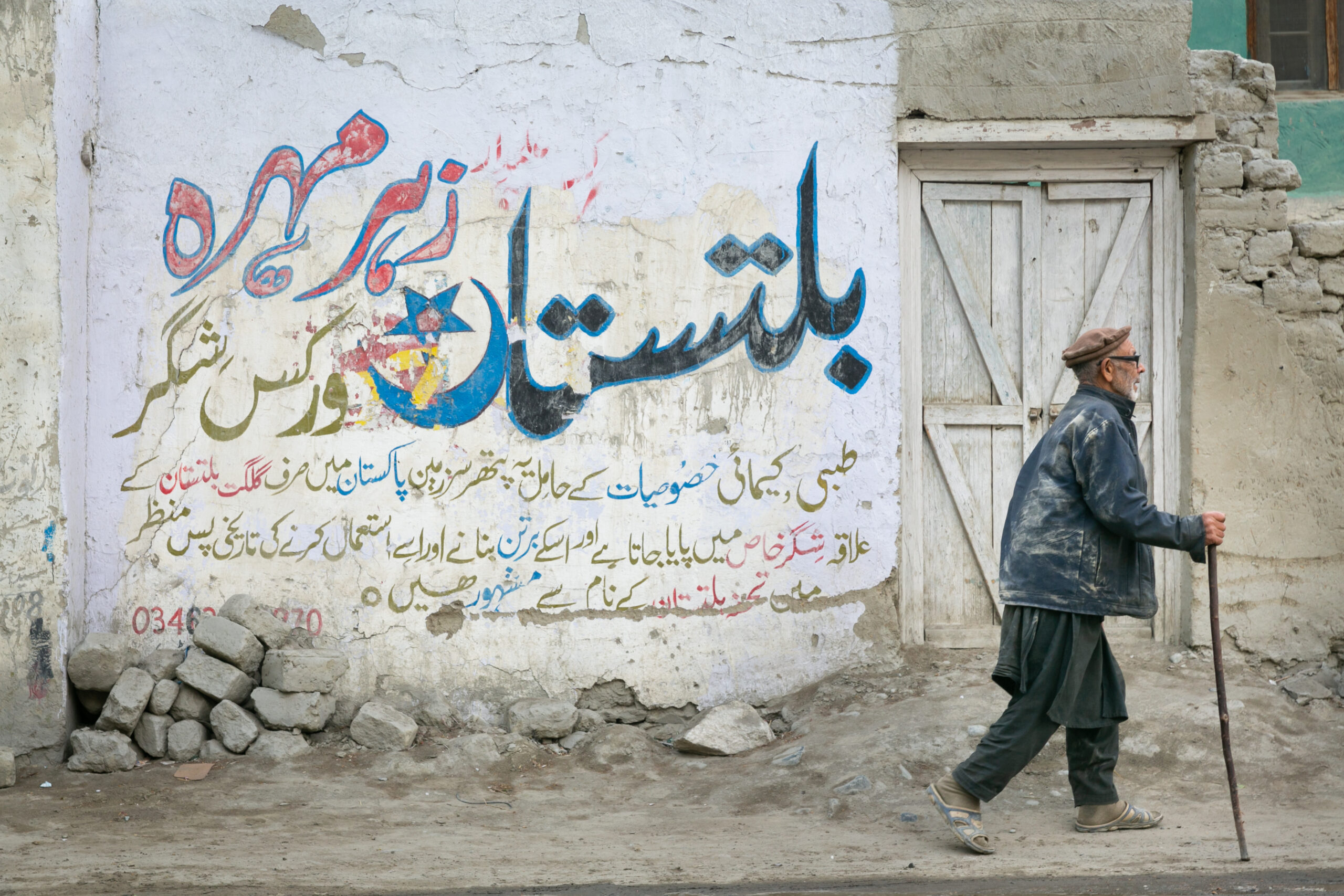
Walk through permitted lanes, observe carved wood and traditional construction, and ask about irrigation and orchard management. Mosques remain religious places: enter only where welcomed, follow dress and footwear instructions, and avoid disrupting prayer. Orchard access requires permission, even during blossom or harvest. Buying produce or commissioning a local explanation can contribute more meaningfully than photographing private spaces without asking.
For photographers, Shigar rewards repeat observation. Morning light across fields differs from late light on walls and trees. One overnight allows the programme to respond to weather instead of forcing every image into a short midday stop. For families or travellers who prefer gentle activity, a palace visit followed by a short village walk can make a balanced day without an additional long transfer.
Khaplu, Hushe and eastern Baltistan
Khaplu Palace and the settlement
Khaplu is a strong choice for visitors interested in Balti heritage. The road from Skardu follows the eastern valley system, with river landscapes and villages along the way. Budget approximately three hours or more in each direction for a private transfer with sensible stops, rather than organising a rushed return around an exact arrival time. A day excursion is possible, but an overnight usually gives the palace and surrounding settlement a better share of attention.
Khaplu Palace, associated with the Yabgo rulers, is a restored heritage property. It is part of the wider conservation story described by AKDN. Examine the building’s timber work, spatial arrangement and adaptation to its mountain setting, while allowing the local interpretation to explain its successive uses. Avoid reducing the building to a claim about its age without considering how it developed and was later conserved.
The wider settlement includes important religious architecture, including Chaqchan Mosque. Ask before entry and arrange an explanation suited to the site. Comfortable shoes matter because some approaches involve slopes and steps. A viewpoint walk can be added for walkers with suitable fitness, but should be planned separately from a brief palace visit. The official Khaplu Valley information provides a regional introduction.
Hushe Valley
Hushe is a gateway to mountain walking and expedition approaches, including the landscape around Masherbrum. It is not a shortcut to K2 Base Camp. Roads and local access conditions influence travel, and transport arrangements should be confirmed in Khaplu or through your organiser. A visit focused on village life and valley scenery has different requirements from a multi-day trek leaving the settlement.
For an overnight or walking extension, ask about the actual accommodation, heating, bathroom facilities and food provision. Arrange a guide who knows the intended route and current conditions. A nearby-looking mountain meadow can involve substantial ascent and uneven terrain. The benefit of spending additional days here is the chance to experience a valley beyond the main sightseeing circuit, provided the journey allows enough time for transport and rest.
Kharmang and Manthokha
Kharmang is another eastern valley direction and should be identified separately from Khaplu when planning. Manthokha Waterfall is a popular excursion within that landscape. Decide whether you want a focused waterfall visit or a wider valley day; the latter needs more time and should not be inserted casually into an already full transfer. Wet surfaces near falling water demand care, especially with children or camera equipment.
Distances on an online map can obscure the practical cost of repeated backtracking. A clear route sheet should name the starting hotel, planned stops, approximate driving allowance and overnight location. If the programme includes Khaplu, Hushe and Kharmang, ask your organiser to explain the route order. More destinations are useful only when they still leave enough time to experience each place.
Deosai National Park: a separate high-altitude day
Deosai is a high alpine plateau between the Skardu and Astore regions, with much of its landscape above 4,000 metres. It is a major contrast to Skardu’s dry basin: open grasslands, streams and broad horizons replace tightly enclosed valley scenery. The official Deosai destination page provides the park’s geographical context.
Access is seasonal. Snow cover, thaw, road conditions and new snowfall determine when the plateau can be reached; a fixed calendar date cannot guarantee opening. Summer is the usual planning period, while early and late season require especially careful confirmation. Deosai should not be promised automatically within an autumn or spring blossom journey. Ask the local park or district contacts and the driver about the current situation before departure.
A day from Skardu to selected plateau stops and back can be long. Different itineraries reach different places; crossing toward Astore is a separate route arrangement. Confirm whether Sheosar Lake is actually included, which vehicle is being used and how much time will be spent driving. Carry lunch, water, windproof layers and warm clothing rather than relying on facilities being open at every stop.
Wildlife observation should follow park rules. Deosai is associated with conservation of the Himalayan brown bear, but a visit does not guarantee a sighting. Never feed or approach wildlife, leave food exposed or ask a driver to chase an animal for a photograph. Stay on permitted vehicle tracks and treat streams and grassland as habitat rather than obstacles to cross anywhere convenient.
The altitude deserves respect even when no major walk is planned. People respond differently, and a vehicle ascent still changes elevation quickly. Anyone with a relevant medical condition should seek individual advice before the journey. Arrange a programme that allows the group to return to lower ground if someone becomes unwell; the day’s attraction list should never override a person’s condition.
When to visit Skardu and Baltistan
| Period | Main appeal | Important limitation |
|---|---|---|
| Spring | Orchard blossom, village life and snow-covered mountain backdrops | Flowering differs by valley and elevation; Deosai is usually outside the dependable programme |
| Summer | Wider valley access, longer days and the usual Deosai travel season | Confirm road conditions, book ahead and retain weather buffers |
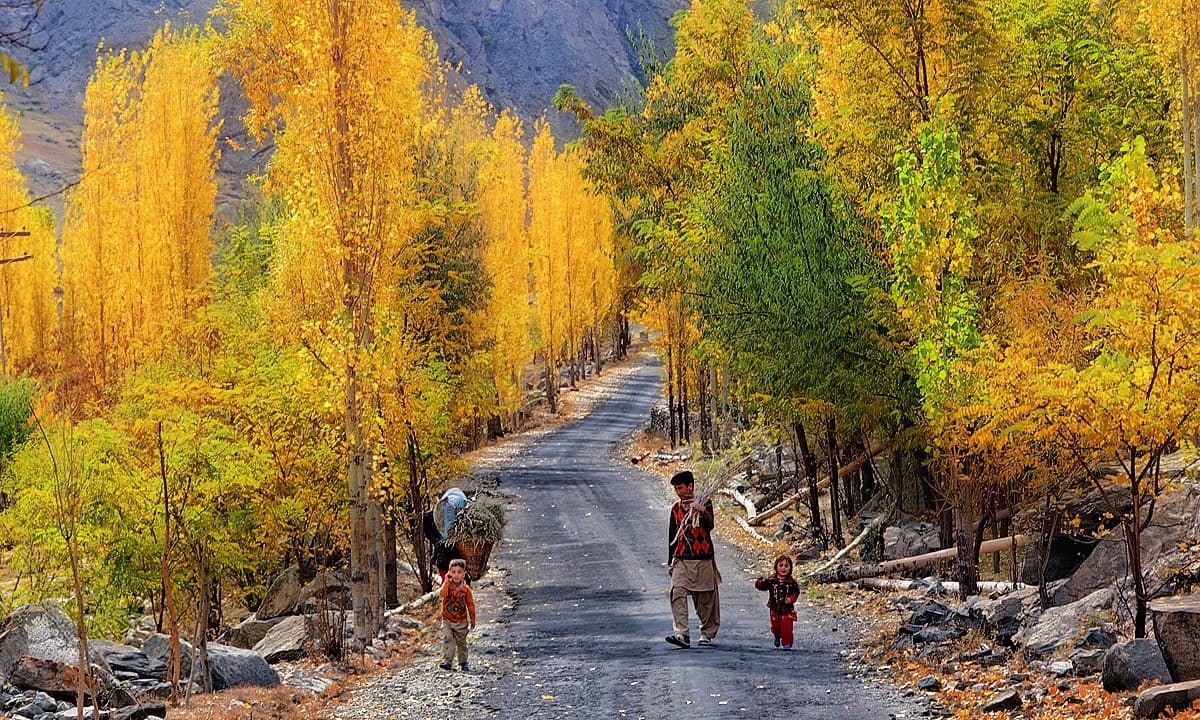
| Autumn | Poplar and orchard colours, village photography and heritage | Colour timing varies; colder nights and changing high-road access |
| Winter | Quiet lower-valley visits and winter landscapes where accessible | Reduced services, heating requirements, snow and transport uncertainty |
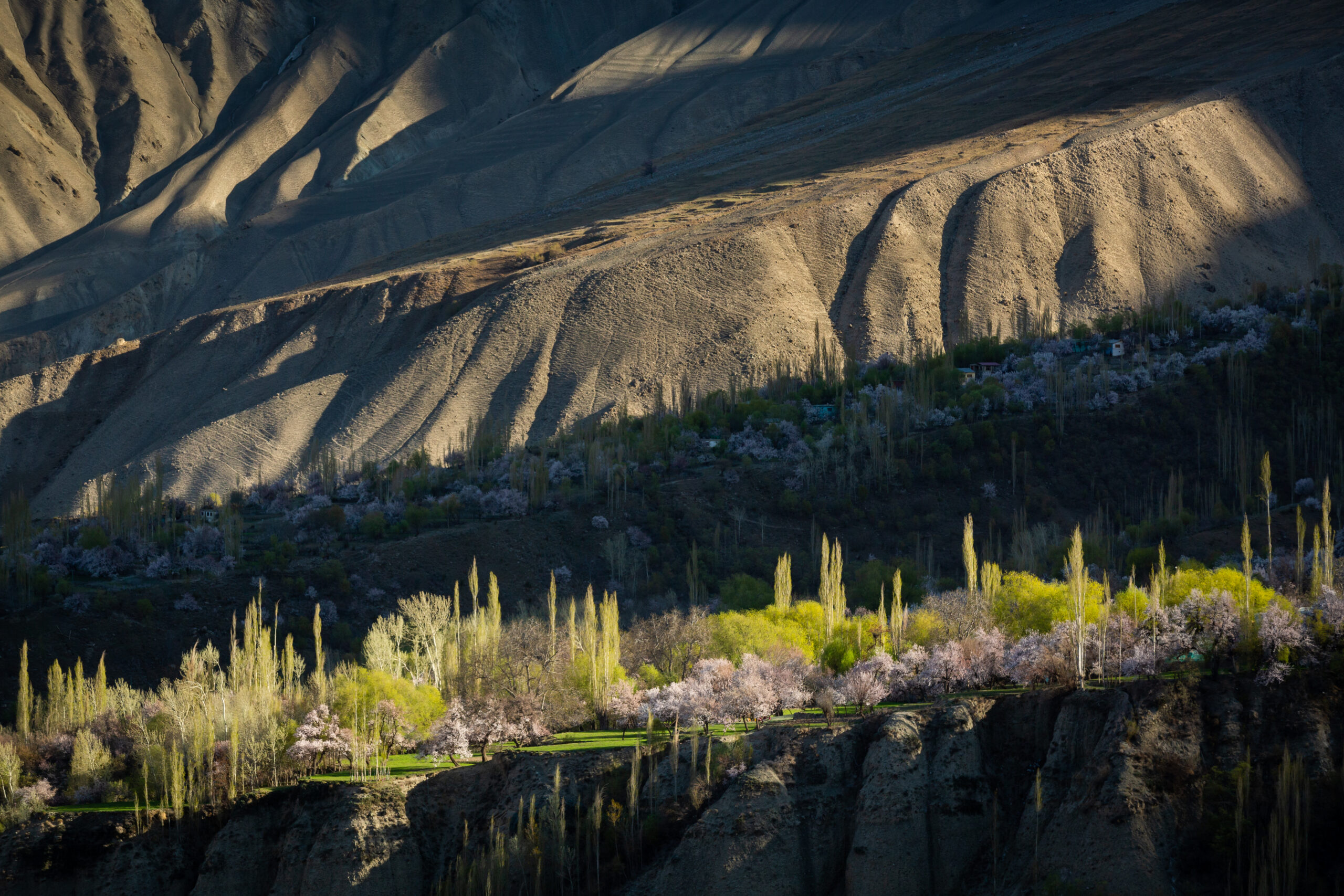
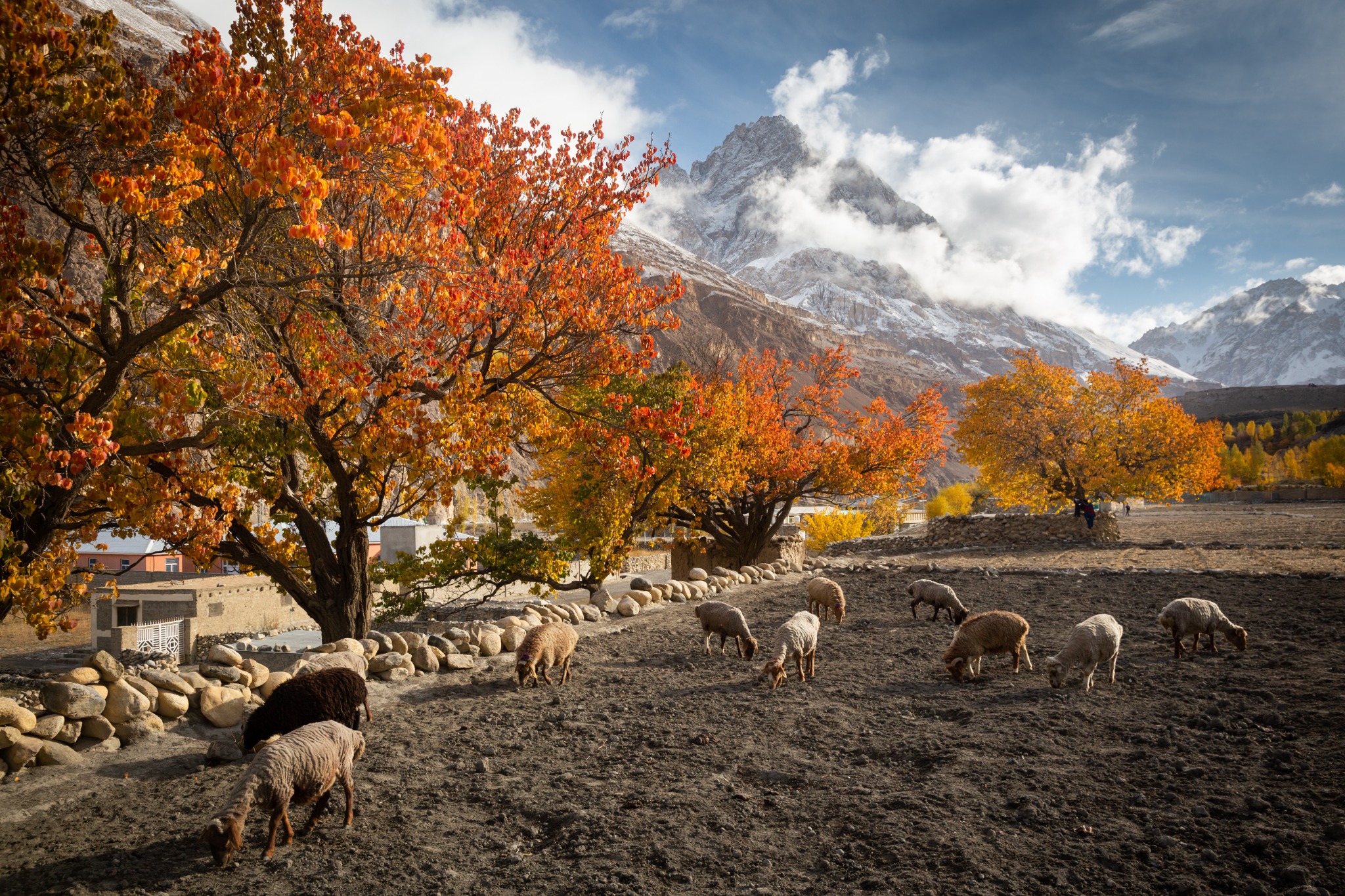
Spring and autumn are excellent themes for a culturally focused programme, but neither is a single guaranteed week across Baltistan. A warm spell can advance blossom; wind can shorten its appearance. Autumn colour changes through different species, slopes and elevations. Give yourself several days in the region and allow the guide to select the most promising villages using current observation. Compare our detailed guides to spring blossom in northern Pakistan and autumn in Hunza and Skardu before choosing your travel period.
Temperature depends on the date, altitude, cloud, wind and accommodation. A comfortable afternoon in Skardu does not describe the conditions on Deosai or in Hushe after sunset. Use a forecast for the actual place and departure period when packing. Bring layered clothing, sun protection and a warm outer layer even on a summer sightseeing journey, and ask whether your room has reliable heating in colder months.
How many days do you need?
A five-day stay within Baltistan can cover a careful introduction if arrival and departure operate as planned: settle in; explore town heritage and nearby landscapes; spend a day in Shigar; visit Kachura; and use the remaining day for a seasonal priority. This is a regional stay, not a complete international itinerary. Islamabad nights and transport contingency must be added around it.
Seven to nine regional days allow a fuller journey. Combine Skardu or Kachura with a Shigar overnight, then spend one or two nights in Khaplu. Add Deosai only when access and traveller suitability support it, or use the time for village walking, Hushe or another valley. A photograph-focused programme benefits from repeating a location in better light rather than increasing the number of stops every day.
If you combine Hunza and Baltistan, allow enough time for both regions and the transfer between them. A rushed programme can spend its most valuable daylight moving between distant hotels. Decide whether your priority is heritage, autumn photography, gentle walking or a specific mountain trek, then let that priority determine the distribution of nights. A balanced journey does not require every well-known attraction.
Accommodation, food and practical preparation
Choose accommodation for the experience and practical facilities you need. Town hotels support logistics; lake-area properties may offer quieter surroundings; heritage stays bring you closer to architectural settings. Check the specific room category, heating, hot water, stairs, lift access where relevant and distance from planned visits. Premium accommodation is available in selected places, but facilities are not uniform across every valley.
Discuss meals clearly. A private sightseeing journey may include breakfast while lunch and dinner remain separate. Trekking or remote stays may need a different arrangement. Ask whether a packed lunch is provided on a long valley or Deosai day and whether dietary needs can be met. Order thoughtfully, especially with groups, to reduce food waste and avoid assuming that every kitchen can produce a large menu immediately.
Carry some cash for small purchases and locally managed visits, but do not rely on a published entrance-fee list that may be outdated. Confirm charges and payment arrangements before the activity. Mobile coverage and internet quality vary, particularly beyond the principal settlements; download essential booking information and keep the organiser’s contact details available offline.
Travel respectfully: obtain permission for portraits, dress appropriately at religious sites, carry litter out and buy local products when their origin is clear. Drone operation needs applicable permission and respect for restrictions and privacy; owning a drone does not authorise flying over homes, airports or sensitive locations. For hikes and expedition extensions, confirm insurance, route support and any applicable permit requirements with a qualified organiser.
Crossroads Adventure can shape a Baltistan journey around heritage, photography and an appropriate level of walking. The most useful enquiry states your dates, arrival route, available nights, walking ability and whether Hunza is also included. Those details make it possible to propose a realistic route instead of assembling an overloaded list of stops.
Skardu and Baltistan: frequently asked questions
Is Skardu the same as Baltistan?
No. Skardu is a town, district and principal travel gateway within the larger Baltistan region. Shigar, Khaplu and Kharmang require their own route planning and travel time.
Can you see K2 from Skardu town?
Do not plan a Skardu town visit on that expectation. K2 is deep in the Karakoram, and the established base-camp approach is a substantial expedition journey requiring many days, local logistics and suitable preparation.
Is Deosai open throughout the year?
No. Access depends on snow and road conditions. Confirm the current position locally; summer planning is more realistic than promising a plateau excursion in a blossom itinerary.
Is Khaplu suitable as a day excursion?
It can be, but the return drive takes a significant part of the day. An overnight gives more time for the palace, religious architecture, settlement and surrounding landscape.
Do I need to trek to enjoy Baltistan?
No. Heritage visits, village walks, lakes and scenic drives offer a rich journey. Make sure any fort ascent or viewpoint walk is described accurately for your mobility and fitness.
Should my return flight connect directly with an international departure?
Plan to reach Islamabad at least the previous day, and consider a larger buffer where necessary. Agree on the contingency arrangements before travelling.
Sources and planning notes
Destination context has been checked against Gilgit-Baltistan Tourism and heritage conservation information from AKDN. Driving allowances and suggested night distributions are editorial planning guidance, not official timetables. Obtain fresh transport, site-opening and road information for your actual dates.
Continue exploring northern Pakistan
Plan your northern Pakistan journey
Share your dates, interests, walking ability and preferred pace. Crossroads Adventure can shape a private journey around the places and experiences that matter to you.
Start planning your journey