Crossroads field guides · Culture & heritage
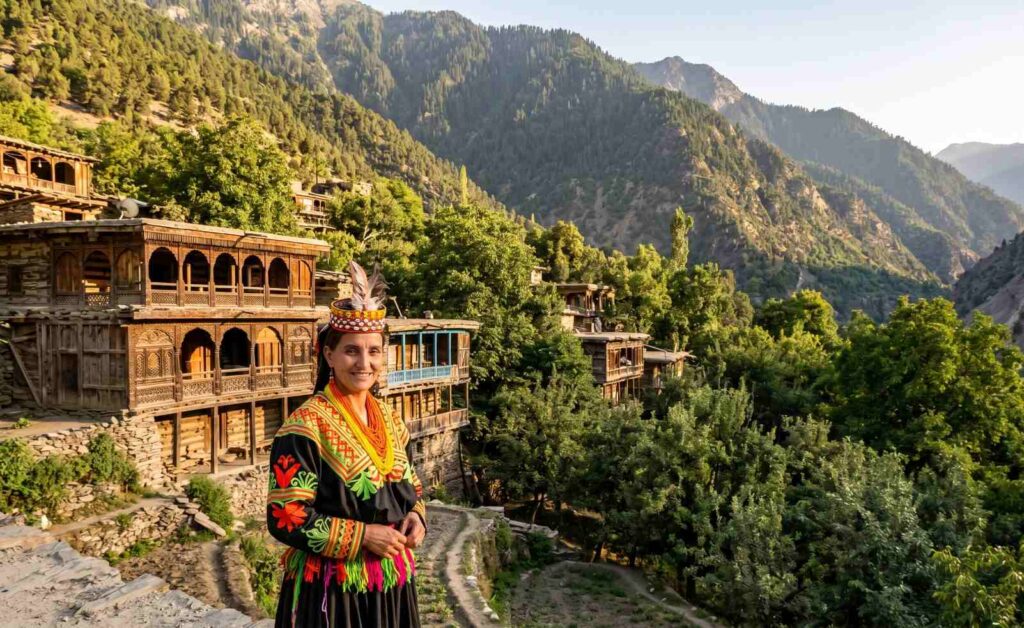
The Kalash community lives in the Hindu Kush of northwestern Pakistan, with its best-known settlements in Bumburet, Rumbur and Birir, three separate valleys in Lower Chitral. A worthwhile visit connects the community’s language, beliefs, farming landscape and seasonal celebrations. The Kalash festivals are religious and social occasions with meaning for their participants; the dancing and distinctive clothing that attract photographers form only part of that wider life.
For a first journey, decide whether your priority is a particular festival or a quieter introduction to village life. Chilam Joshi is associated with spring, Uchal with the late-summer harvest season, Phool with autumn harvesting, and Choimus with the winter ceremonial cycle. Their programmes differ, and visiting one does not provide access to every ceremony or every valley.
This guide explains the cultural background, the main festivals, practical routes from Chitral and the planning choices that affect a visit. Historical and cultural references are linked. Distances, driving ranges, walking durations and packing guidance are editorial estimates for planning, rather than transport schedules or assurances of current access.
Current access note — reviewed 6 October 2026: the UK FCDO currently advises against all travel on the N45 approach to Chitral, including Kalash valley. Other governments may define their advice differently. Foreign visitors should check the advice relevant to their nationality, insurance and the exact route before making commitments. The sample journeys below describe route structure and remain conditional on current permissions, road conditions and suitable arrangements. 1
Crossroads Adventure · Editorial review: 6 October 2026
Who are the Kalash?
The Kalash, also called Kalasha, are an Indigenous community whose living cultural heritage is rooted in the Chitral region. Their traditional religion, language and ceremonial life distinguish them within Pakistan’s cultural landscape. Use the community’s name when discussing its people; reductive descriptions such as “a lost tribe” obscure contemporary lives, education, livelihoods and personal choices.
There is no single population figure that accurately answers every question about Kalash identity. Counts of religious practitioners, people of Kalash ancestry, residents of the valleys and Kalasha-language speakers describe different groups. Older reports should not be presented as an exact present-day census. For travel planning, the meaningful point is that a relatively small community hosts visitors within working villages and limited shared spaces.
The three valleys contain people of different religious and cultural backgrounds. Do not assume that every resident is a practitioner of the traditional Kalash religion, or identify someone’s beliefs solely from clothing. A guide should explain local distinctions without turning individual residents into examples to be inspected.
The National Commission for Human Rights’ Kalash report addresses cultural protection, land, religious freedom and the pressures surrounding tourism. It provides a useful corrective to travel writing that discusses only festivals and photographs. A respectful journey acknowledges that the community has rights, interests and responsibilities beyond providing visitor experiences. 2
Religion, landscape and daily life
Kalash religious life includes sacred places, ceremonial spaces and seasonal observances. Agriculture and livestock husbandry connect village settlements with fields, forests and higher grazing areas. These relationships help explain why a festival follows a seasonal cycle and why access to a place can have rules unfamiliar to an outsider.
Pakistan’s Kalasha Valley Cultural Landscape submission describes active ritual structures, communal dancing grounds and the connections between settlement and productive landscapes. It treats the area as living heritage rather than an abandoned archaeological site. 3
Ask a knowledgeable local guide to explain the role of a space before entering. A public path, a household courtyard, a ceremonial hall and an altar are different places. Permission to walk around a village does not establish permission to enter each one.
History, language and the Alexander story
Kalash history is often reduced to the claim that the community descends directly from soldiers of Alexander the Great. That claim should be presented as a popular origin narrative, not established historical fact. Physical appearance, eye colour and festival dress cannot demonstrate a particular ancient ancestry.
Genetic research has produced differing interpretations of population isolation and historical mixture. Ayub and colleagues’ 2015 study and a subsequent response by Hellenthal and colleagues illustrate that debate. Neither justifies a travel brochure announcing proven descent from Alexander’s army. Genetic affinities with broad regional populations do not identify named soldiers, establish a migration story or define a person’s cultural identity. 4 5
The Kalasha language of Chitral belongs to the Indo-Aryan linguistic landscape; it is not Greek. Linguistic references also distinguish Chitral Kalasha from the similarly named language of Nuristan. This matters when researching the community: identical or similar names in older literature do not necessarily refer to the same language or population. 6
For visitors, a better historical conversation asks how oral traditions, language, architecture and customary practices continue across generations. Leave space for a community member to describe their own understanding of the past. An academic interpretation and a remembered story can be discussed together without pretending they are the same kind of evidence.
UNESCO status: two separate designations
Suri Jagek, the Kalasha practice of observing celestial bodies and shadows in relation to the landscape, was inscribed in 2018 on UNESCO’s List of Intangible Cultural Heritage in Need of Urgent Safeguarding. This recognition concerns knowledge and practice. 7
Separately, Pakistan submitted the Kalasha Valley Cultural Landscape to its World Heritage Tentative List on 9 March 2026. As checked for this guide, that is a tentative listing, not inscription on the World Heritage List. Do not describe the entire Kalash region as an inscribed UNESCO World Heritage Site. 3
Bumburet, Rumbur and Birir
“Kalash Valley” is commonly used as a collective travel term, but the main destinations are three valleys. Your accommodation address and the village hosting an event matter more than the collective label. Transfers between them take time, and their festival activities should not be treated as interchangeable.
| Valley | Main planning role | Suggested first allocation | What to confirm |
|---|---|---|---|
| Bumburet, also written Bumburate or Bumboret | Practical first base with a wider choice of visitor accommodation | Two nights or more for an unhurried introduction | Exact village, room facilities, museum access and festival venue |
| Rumbur, also written Rumboor or Rambur | A separate valley visit that adds local context | A full day, or an overnight if suitable accommodation is confirmed | Road condition, host availability and the day’s ceremonial access |
| Birir | A distinct valley especially relevant to autumn cultural interests | A full day with a local guide | Local festival timing, final approach and permission for particular spaces |
These allocations are route recommendations, not a ranking of cultural importance. Smaller visitor infrastructure does not make a community more “authentic,” and increased access does not make another community less worthy of attention.
Bumburet: a useful first base
Bumburet generally gives a first-time visitor more options for accommodation and arranging a vehicle-supported programme. Use a village walk to understand the layout: houses and working spaces, cultivation, the stream, public gathering places and routes between settlements. Allow around two to three hours at a relaxed pace, with the route shortened for mobility or weather.
The Kalasha Dur cultural centre and museum can be a useful introduction if open. Confirm opening, admission and the availability of someone who can explain the displays. Do not promise that a museum visit or guided interior access will be available simply because a building appears in an older itinerary.
Rumbur: allow time for a separate visit
Rumbur adds another geographical and community setting. A worthwhile day should include time with a local guide and a measured village walk, rather than a vehicle turnaround after a few photographs. Ask where guests are welcome, which pathways are public and whether the day’s activities affect access.
From a Bumburet base, reserve a substantial part of the day for Rumbur. A planning allowance of roughly one to two hours each way can be appropriate depending on the starting village, roads and stops. Have the local driver confirm the actual transfer before finalising the schedule.
Birir: plan around its own calendar
Birir should be considered in its own right, particularly when researching autumn observances. Include it deliberately in a programme rather than adding it to a crowded day that already contains Bumburet and Rumbur. Ask a Birir-based contact about local timing and whether visitors can attend the intended gathering.
Avoid cross-valley walking shortcuts unless a qualified local guide confirms the route, permissions and conditions. A line on a map may cross steep ground, cultivated land or an unsuitable mountain trail. Ordinary cultural visits can be arranged around road transfers without turning the experience into a demanding trek.
Kalash festival calendar
The following windows help you choose a season. They are not confirmed dates for every valley or a final calendar for 2027. Names vary in transliteration, and some published calendars are outdated or inconsistent. Community confirmation takes priority over an undated event list.
| Festival | Other common spellings | Broad planning window | Main association | Planning implication |
|---|---|---|---|---|
| Chilam Joshi | Chilim Joshi, Chilimjusht, Joshi | Mid-May | Spring renewal and seasonal community celebrations | Book accommodation early and allow several local days |
| Uchal | Uchaw, Uchau, Utchal | Late August in recent public reporting | Harvest and summer produce | Verify the valley programme and weather-related road conditions |
| Phool | Pul, Phoo | Autumn, often researched around September | Grapes, walnuts and seasonal celebration; particularly relevant to Birir | Obtain a local date and location before committing flights |
| Choimus | Chaumos, Chawmos, Chomos | December, around the winter ceremonial cycle | Winter renewal and the community’s seasonal religious observances | Prepare for cold, shorter daylight and restricted ritual access |
Recent Radio Pakistan reporting places Uchal celebrations in August, while some older government tourism lists give other dates. Similarly, APP reporting describes December Chomos activities beginning before the dates often advertised for the public climax. These differences are a reason to verify an event, not to average the dates into a new invented calendar. 8 9 10
For a festival booking, request the festival name, valley, village, expected public event days and latest local confirmation date in writing. Ask what happens if timing shifts. Build enough time in Chitral and the valleys to absorb a change without immediately losing the purpose of the journey.
Chilam Joshi: spring celebrations
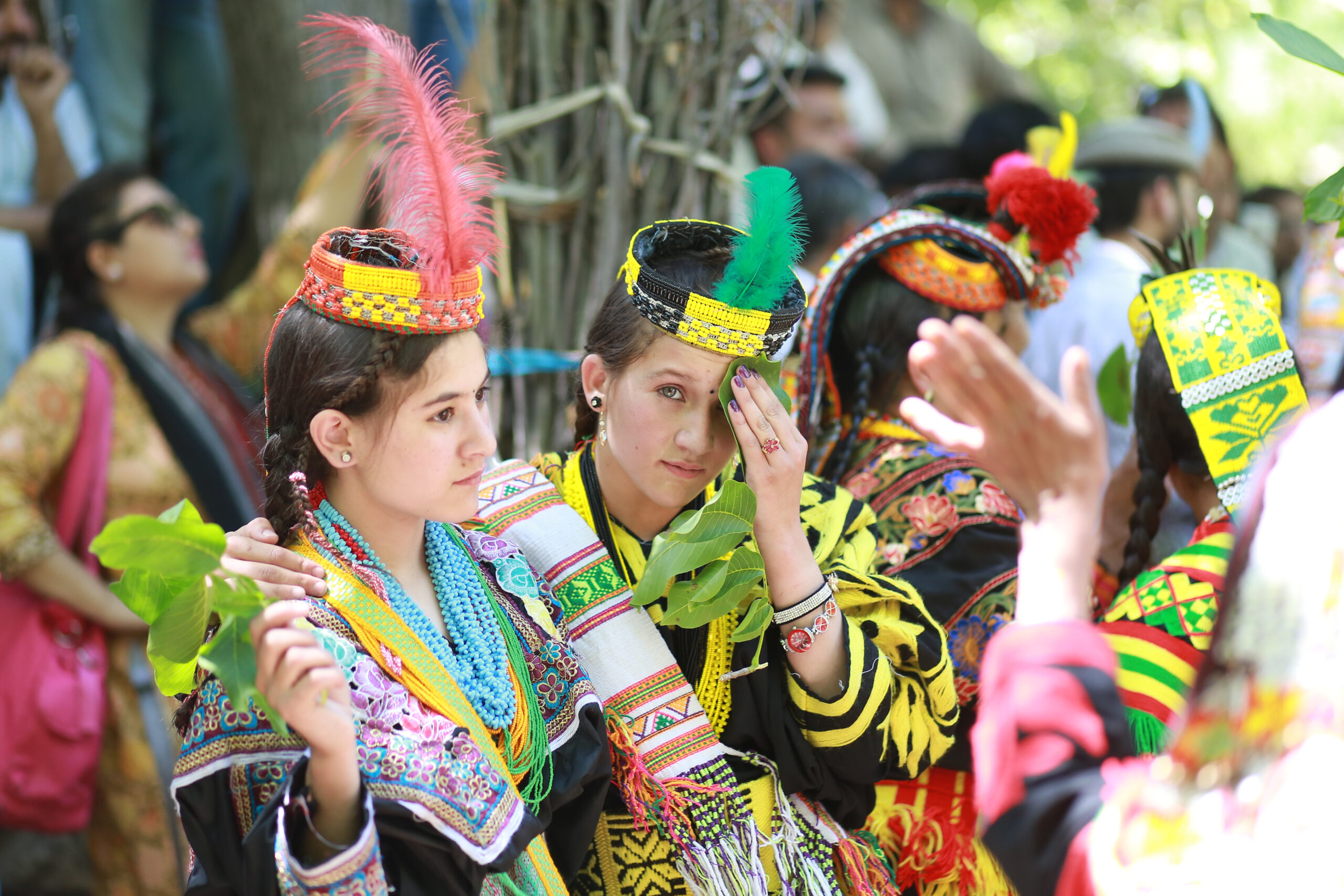
Chilam Joshi is the most widely recognised spring festival in the Kalash valleys. Mid-May is the useful starting window for research. It brings together seasonal religious observances, communal gatherings, music, dance and traditional dress. APP’s reporting describes both the public celebrations and their religious dimension. 11
A visitor may see groups gathering at designated dancing grounds, drumming and singing. What is visible depends on the day, village and permissions. Preparation, household responsibilities and less public rituals are also part of the occasion. Do not describe the festival as a continuous dance performance available throughout every daylight hour.
How to plan a Joshi visit
Arrive in the region before your intended main celebration day. A road delay on the morning of an event can eliminate the experience even when the advertised dates are correct. For most visitors, three nights in or near the valleys provide more flexibility than a single-night dash from Islamabad.
Use the first local day for orientation, a guide’s explanation and a walk away from the busiest gathering. On the event day, agree a viewing point, a way to find your driver and a sensible meeting time. Keep meals and rest breaks flexible. Crowd levels can make an itinerary of exact hourly appointments unrealistic.
Do not interpret reports of relationships or engagements announced during festivals as an invitation for visitors to intrude into people’s private lives. Avoid the misleading marketing label “a matchmaking festival.” A community celebration has meaning far beyond the element that generates the easiest headline.
Photography during Joshi
Agree expectations before approaching individuals. A wide photograph of a public gathering and a close portrait of a child require different judgments. Obtain permission for identifiable portraits; for children, seek a parent’s or guardian’s consent as well. Do not block the movement of participants or ask them to repeat a religious action for your camera.
Uchal: the summer harvest festival
Uchal is associated with harvesting and the season’s produce. Radio Pakistan’s August 2024 report describes celebrations in Rumbur and Bumburet, including rituals at designated places. It reports an August 20–23 window for that festival context; use this as background, not a guaranteed timetable for a future year. 8
For planning, late August is a sensible window to investigate with local contacts. Confirm the day and valley where guests are welcome. An itinerary promising the same spectacle in all three valleys on the same evening is too precise unless it is based on a current local programme.
August can offer comfortable evenings and green valley scenery, but road access deserves particular attention during rain and flood disruptions. Check conditions on the entire approach, including Dir, the Lowari corridor and the final valley roads. Clear weather at your hotel does not prove that every preceding road section is open.
Make the harvest context visible
Alongside permitted festival attendance, arrange a short interpretive walk that helps explain cultivation and the relationship between settlements and seasonal work. Keep it on authorised paths and avoid entering fields or orchards without permission. Fruit hanging beside a public walkway is still someone’s produce.
A two- or three-hour cultural walk, a rest period and an evening gathering can make a more useful day than constant driving. Let the guide explain what they know, and acknowledge where ritual detail belongs to a practitioner rather than a visitor-facing explanation.
Phool and Birir’s autumn traditions
Phool deserves inclusion in a complete Kalash festivals guide. Radio Pakistan associates it with grape and walnut harvesting, singing, dancing and floral adornment. UNESCO’s nomination material also identifies the Pul festival of Birir among observances connected to the traditional astronomical system. 10 12
September is commonly used as a broad research window, but published dates and reports should be read carefully. A report about a cultural presentation away from the valleys does not establish the timing of Birir’s local religious celebration. Obtain confirmation from the community where you intend to visit.
Autumn may suit travellers who prefer a smaller cultural programme and cooler walking conditions. That preference should not become a promise of empty villages or exclusive access. If an event is taking place, residents may be occupied with their own preparations and family responsibilities.
A practical Birir day
Leave your base with sufficient daylight for both transfers. Allow a guided village introduction, lunch and the confirmed public gathering, with time to wait if activities begin later than expected. For an overnight, verify the actual room, bathroom, bedding and food arrangements rather than assuming a comfortable hotel is available at every location.
If the festival cannot be confirmed, decide whether a quiet Birir visit still meets your interests. Cultural learning can remain worthwhile without a public performance, but a booking sold specifically around Phool should state that distinction clearly.
Choimus: the winter ceremonial cycle
Choimus, also written Chaumos or Chawmos, is a winter religious cycle rather than a single evening show. It is associated with December and seasonal renewal. APP has reported activities extending over approximately two weeks, which explains why a short list of “festival dates” may cover only part of the full observance. 9
This is the festival for which boundaries around visitor participation deserve the clearest discussion. Some gatherings may welcome observers while particular rituals, spaces or stages remain restricted. Ask locally each day. Being accepted at one gathering does not establish permission for another.
Avoid a package description that guarantees entry to every ceremony, participation in purification rituals or unrestricted photography. A local guide should help guests understand the conditions of attendance and accept changes. The community controls its observance; an operator cannot sell that authority.
Winter preparation
Choose accommodation on its winter operation and heating arrangements, not summer photographs. Ask whether the room has adequate bedding, how hot water is provided, whether electricity is reliable and which dining facilities remain open. A heated communal room does not necessarily mean a heated bedroom.
Pack thermal layers, a warm insulated jacket, gloves, a hat, warm socks and footwear with grip. A headlamp is useful for uneven paths after dark, but avoid shining it into ceremonies or people’s faces. Keep spare camera batteries warm and protect equipment from condensation when moving between cold outdoors and warm interiors.
Snow, ice and short daylight can affect the approach roads and local walking. The Lowari Tunnel removes the need for the old pass crossing on the normal approach, but it does not remove winter conditions from the access roads. Include contingency time and be willing to postpone travel if conditions require it.
Other observances and Suri Jagek
The four named festivals do not exhaust Kalash ceremonial life. Household, agricultural, life-cycle and valley-specific occasions sit within a much broader calendar. These are not automatically public events, and a responsible guide should not turn weddings, funerals or family rituals into promised attractions.
UNESCO’s Suri Jagek nomination documentation mentions the Kilasaras spring feasts, Kagayak, Dau tatu and Birir’s Pul in discussing calendar-related practice. This establishes a wider ceremonial context; it does not provide a complete visitor schedule or permission to attend. Some observances depend on local observation rather than a fixed date in a travel calendar. 12
Suri Jagek uses observation of the sun, moon, stars and shadows in relation to topography to inform seasonal knowledge. UNESCO’s safeguarding work highlights the transmission of that knowledge between generations. The practice should be explained as a body of expertise, not simply described as a colourful festival. 7
If a willing practitioner or cultural educator is available, arrange a paid explanation of the seasonal landscape. Ask whether a particular observation point can be visited. Do not climb, occupy or alter a sacred or functional site to obtain a better photograph.
Keeping different Chitral events separate
Shandur polo and other regional gatherings can complement a longer Chitral journey, but they are not Kalash religious festivals. They have different locations, organisers and schedules. A combination requires extra road days and independent confirmation; a Kalash festival booking does not automatically include a Shandur event.
How to reach the Kalash valleys
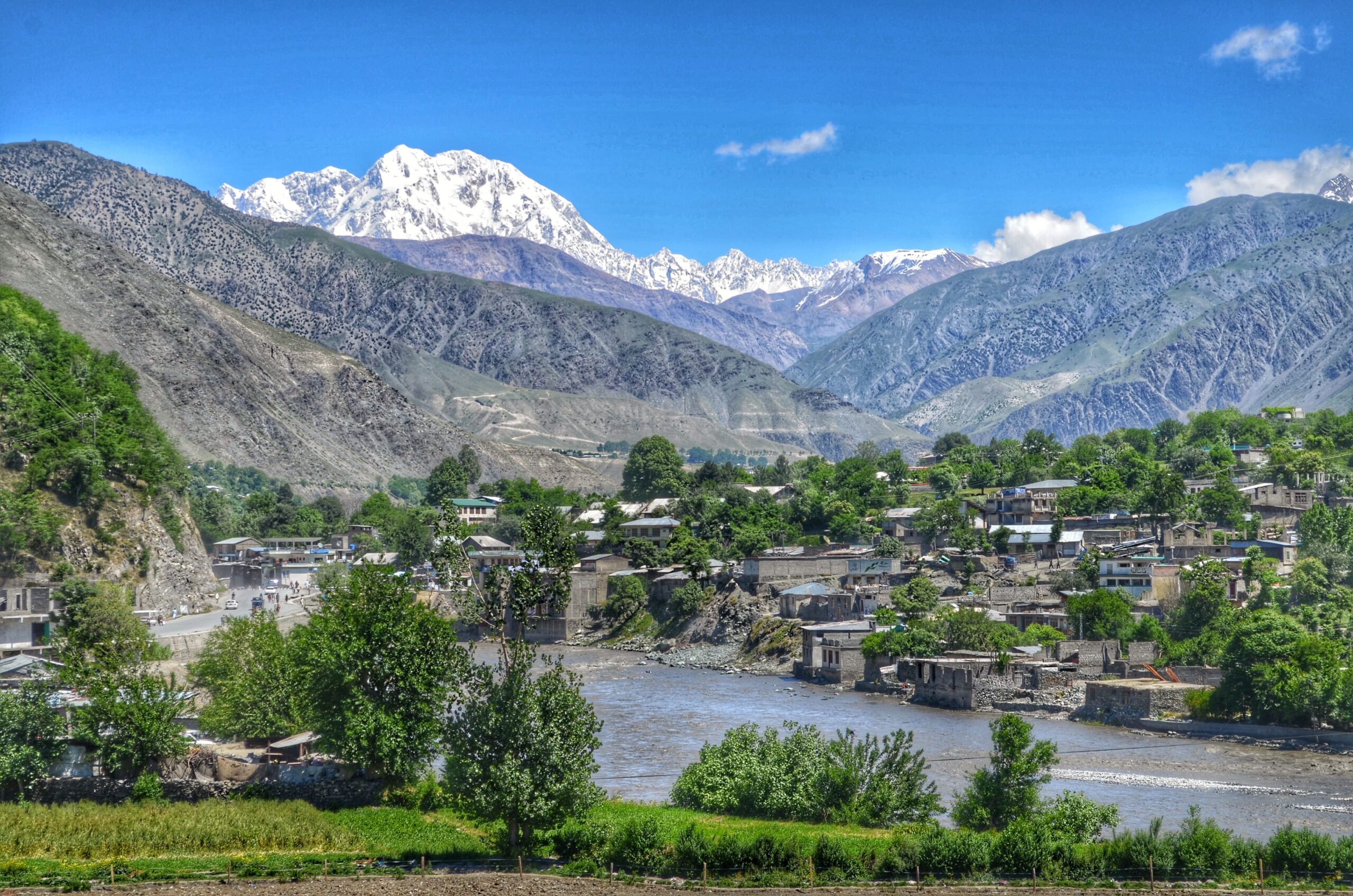
Chitral town is the main regional gateway. The usual road approach from Islamabad follows the motorway and road network towards Chakdara and Dir, then crosses the Lowari corridor to Lower Chitral. From the Chitral area, valley access is arranged through Ayun and the appropriate branch road.
Islamabad to Chitral by road
For planning, expect roughly 400–450 kilometres and a long travel day of around 10–13 hours including reasonable stops, depending on the selected route, traffic, construction, weather and checks. These are estimates, not a promise. A driver’s update shortly before departure is more useful than a fixed time copied from an old brochure.
Consider breaking the journey around Dir if the verified conditions, accommodation and permissions make that appropriate. For older guests or travellers arriving from a long international flight, a rest night in Islamabad before the road journey is preferable to immediately starting another full day in a vehicle.
Do not schedule a major valley celebration as a guaranteed arrival-day activity after driving from Islamabad. Arrive, rest and use the following day for the final approach and cultural orientation.
Chitral to the valleys
Budget approximately two to three hours one way from Chitral town to a principal Bumburet or Rumbur village in workable conditions. The final destination matters: the valley entrance, your guesthouse and the gathering place may be some distance apart. For Birir, obtain a separate driver estimate rather than borrowing Bumburet’s timing.
A suitable vehicle and an experienced local driver are important on narrow or damaged sections. Ask whether the current route requires a jeep or other high-clearance vehicle. Avoid a blanket claim that every road is permanently a rough jeep track or, conversely, that improvement works have made every approach straightforward.
NHA documentation records road projects involving Chitral, Ayun and Bumburet. A project listing is evidence of infrastructure work, not proof that all sections are complete or unaffected by later damage. 13
Flights and onward combinations
Do not build a festival itinerary around an assumed daily Islamabad–Chitral flight. Verify whether a service is operating, its actual dates and seats with the airline for the intended journey. If a flight is confirmed, discuss the contingency if it is cancelled and who covers additional road transport or accommodation.
An onward road journey through Upper Chitral and Shandur towards Gilgit is a separate seasonal extension. It requires additional days and confirmation of road opening, weather, vehicle suitability and accommodation. In winter, it should not be treated as a routine shortcut from Choimus to Hunza.
Documents and local arrangements
Foreign visitors should use Pakistan’s official visa system and check the appropriate entry category. A visa does not automatically replace district-level access arrangements. Ask the operator to confirm registration, current permission requirements and any escort arrangements with the relevant authorities before departure. Carry identification and allow time for checks. 14 15
Festival attendance, cultural preservation fees and museum charges may be handled differently. Request current costs and payment arrangements in the quotation. There is no useful basis for publishing one permanent ticket price for every visitor and every festival.
Weather, altitude and walking
The Kalash valleys are mountain environments with different elevations along their length. Ask for the elevation of the actual guesthouse and walk, rather than using one altitude for the whole region. Most ordinary cultural programmes involve villages and valley paths, not high-altitude trekking camps.
| Season | Useful clothing plan | Practical constraint |
|---|---|---|
| May | Light daytime layers, a warmer evening layer and rain protection | Cool shaded periods, changing spring weather and festival crowds |
| Late August | Breathable walking clothes, rain layer and light insulation | Rain-related road or stream disruption; exposed daytime sun |
| September–October | Layers for mild afternoons and colder mornings | Shortening daylight and colder nights as autumn advances |
| December | Thermal layers, substantial insulation, gloves and warm bedding | Sub-zero nights are possible; ice, snow and heating limitations |
These are packing recommendations rather than published climate normals. Obtain a forecast for both Chitral and the intended valley shortly before departure. A single advertised temperature does not describe the difference between a sunny afternoon, a shaded gathering and a cold bedroom.
Walking expectations and accessibility
An ordinary village introduction may involve one to three hours of gentle-to-moderate walking, broken by stops. Paths can include uneven stone, steps, slopes and streamside sections. A vehicle-supported cultural journey still requires discussion of walking ability.
For limited mobility, request a shortened route, nearby seating and vehicle access to the closest suitable point. Verify bathroom access and bedroom stairs. Avoid describing a traditional house or festival ground as wheelchair accessible without checking it specifically.
Longer forest walks and cross-valley hikes require separate planning. Establish distance, ascent, time, weather, permissions and the guide’s route knowledge. Do not add an unfamiliar mountain trail to a cultural programme merely because a guest has spare time.
Accommodation, food and facilities
Where to stay
Bumburet is often a practical first valley base; Chitral town can provide a wider range of services and a useful arrival or departure night. Staying in Chitral for every festival day means repeated transfers, so compare that arrangement with confirmed accommodation closer to the intended gathering.
In the valleys, expect variation between guesthouses, small hotels and hosted stays. “Premium” should describe the quality of the arrangements available, not imply that every valley offers international luxury-hotel facilities. Request recent room photographs, bathroom details, hot-water arrangements and the actual room allocation.
A hosted stay can support local households, provided it is genuinely agreed and the host is comfortable receiving guests. It does not entitle a visitor to unrestricted access to family spaces. Discuss meals, room privacy, shared facilities and appropriate behaviour before arrival.
Meals and dietary requirements
Ask what meals will be provided, where they are served and whether the kitchen can meet dietary needs. Vegetarian food, vegan food and allergy-safe preparation are separate requirements. Communicate them clearly instead of relying on a general request for “special meals.”
A festival feast belongs to its hosts and participants. Do not assume that every guest is invited to eat, or that a community kitchen operates as a restaurant. If an invitation is offered, ask the guide how to accept respectfully and whether a contribution is appropriate.
Money, communications and essentials
Carry enough cash for agreed local purchases and small payments; do not rely on card facilities at every property. Arrange major payments before entering the valleys when possible. Confirm the mobile network that works at the actual accommodation and keep offline copies of travel documents, contact numbers and the route.
Power, internet and hot water may be interrupted. Bring a power bank and carry drinking water on walks. Refill where a reliable source is available, and avoid leaving plastic waste with a small guesthouse to dispose of indefinitely.
For anyone with a medical condition, discuss the distance to appropriate care and the practical return route before booking. Carry necessary medication. Do not assume that a village shop or small clinic can supply a specific prescription or provide advanced emergency care.
Etiquette and photography
The most useful rule is specific consent. A local guide can introduce visitors, interpret customs and explain boundaries, but the individual or community concerned still decides whether to welcome a visit or photograph.
- Ask before entering a home, courtyard, ceremonial building or cultivated area.
- Keep clear of the space required for dancing, processions and ritual activity.
- Obtain permission for close portraits and commercial image use; consent to one photograph is not consent to every later use.
- Avoid photographing children without appropriate adult consent, or encouraging them to miss school to pose.
- Do not touch clothing, headdresses, sacred objects or offerings without invitation.
- Treat funeral and mourning spaces with particular care; never market them as guaranteed photography stops.
- Use a drone only when the required official permissions and community consent have been secured.
- Purchase contemporary craft directly and fairly; do not buy sacred objects or pressure someone to part with personal possessions.
Wear comfortable, modest clothing suitable for walking. The Kalash community’s dress does not remove the need to respect other residents and surrounding settlements. Avoid treating women’s clothing or social participation as proof that intrusive behaviour is acceptable.
Offer fair payment for guiding, interpretation, craft demonstrations or an agreed hosted activity. A good arrangement distinguishes those services from personal hospitality and from religious ceremonies. Paying an operator does not give the operator ownership of the community’s time.
Keep groups manageable. A small group can hear an explanation, navigate narrow paths and discuss consent more easily. At a crowded event, step back when your presence obstructs participants, even if it means missing a photograph.
Realistic journey outlines
These outlines show how to allocate time. They are conditional planning examples, not scheduled departures or assurances of current travel approval. Confirm festival days first, then place the arrival and departure days around them.
Three days from Chitral: a quiet cultural introduction
Day 1: transfer from Chitral to your confirmed valley accommodation, settle in and take a short orientation walk. Visit the museum or cultural centre if open and interpretation is available. Avoid a demanding walk after the transfer.
Day 2: spend a full day in Rumbur or Birir with a local guide, according to your interests and current access. Keep time for a conversation, a meal break and a relaxed return. Visiting both in one day reduces meaningful time in each.
Day 3: take a further Bumburet village walk or a confirmed cultural activity, then return to Chitral in daylight. This outline provides an introduction rather than claiming to cover the community’s entire religious and social life.
Eight days from Islamabad: festival journey structure
| Day | Suggested allocation | Overnight |
|---|---|---|
| 1 | Arrive Islamabad; rest and final route checks | Islamabad |
| 2 | Road transfer to Chitral, or a verified flight with contingency | Chitral |
| 3 | Transfer to the valleys; cultural orientation | Confirmed valley base |
| 4 | Festival attendance according to the locally confirmed programme | Valley base |
| 5 | Further festival time or a separate Rumbur visit | Valley base |
| 6 | Selected valley activity; return to Chitral | Chitral |
| 7 | Return journey to Islamabad | Islamabad |
| 8 | Departure, with flight timing matched to the preceding travel | — |
This is eight days and seven nights. It includes a night in Islamabad after the return road journey and avoids treating a long mountain transfer as a reliable same-day international-flight connection. It still needs additional contingency if weather or current conditions warrant it.
For Joshi or Uchal, align Days 4–5 with the intended public gatherings. For Phool, base the programme on Birir’s confirmation. For Choimus, allow more winter flexibility and select attendance days around permitted activities rather than promising the entire ceremonial cycle in two days.
A broader Chitral journey
Add extra nights if you want Chitral town, a confirmed local heritage visit, longer walks or an Upper Chitral extension. Do not squeeze those additions into the main festival day. The journey improves when each region receives its own time and explanation.
For a private cultural experience with Crossroads Adventure, share the festival you wish to attend, intended dates, nationality, walking ability, dietary requirements and photography interests. Request the exact route, accommodation standard, local guide arrangements and written inclusions. Ground transport, meals, entrance or cultural fees, flights and weather-related changes should all be stated clearly in the quotation.
For wider historical context, read our Pakistan cultural heritage guide and UNESCO World Heritage Sites guide. The Buddhist heritage and Gandhara guide explains a different regional heritage tradition; it should not be used to label Kalash religious life as Buddhist.
Frequently asked questions
Which Kalash festival is best for a first visit?
Chilam Joshi is a common starting point because of its spring timing and well-known public celebrations. Uchal suits a late-summer interest, Phool an autumn harvest focus, and Choimus a more demanding winter cultural programme. Choose by meaning, access and season rather than photographs alone.
Are the festival dates fixed every year?
Do not assume that one online date range establishes every valley’s programme. Seasonal windows are useful, but exact days and visitor access need community confirmation. An advertised climax and the full ceremonial period may be different.
Can I visit outside festival dates?
Yes, subject to current access. A quiet visit can provide more time for guided interpretation, village walks and agreed hosted activities. Dancing, ceremonies or particular household visits should not be promised on demand.
Can visitors join the dances?
Join only if invited and if your guide confirms that participation is appropriate at that gathering. Do not step into a group for a photograph or assume that observing means participating.
Are all three valleys the same?
No. They are separate places with their own settlements, access roads and local programmes. A complete introduction benefits from more than one valley, but an unhurried visit to two is usually preferable to rushed stops in all three.
Is the community descended from Alexander the Great?
That is a popular narrative, not a proven statement suitable for factual marketing. Historical, linguistic and genetic evidence needs careful interpretation. The community’s living identity does not depend on confirming an ancient Greek ancestry.
Are the Kalash valleys a UNESCO World Heritage Site?
The cultural landscape is on Pakistan’s World Heritage Tentative List as checked in October 2026. Suri Jagek has a separate UNESCO intangible-heritage inscription. These should not be combined into a claim of World Heritage inscription for the valleys.
How many nights should I spend in the valleys?
For a first cultural introduction, two to three nights can work with a Chitral arrival and departure night. A festival visit benefits from more flexibility around the confirmed days. Winter journeys may need extra contingency.
Can I combine Kalash with Hunza?
A combination is possible only with adequate time and a verified route. The seasonal road through Shandur and the longer southern alternatives have different requirements. Do not treat Hunza as a short onward drive or assume a December connection across Shandur.
Sources and further reading
Sources were checked on 6 October 2026. Cultural references support the historical and festival background. Sample itineraries, visit allocations, travel ranges and packing recommendations are editorial planning guidance. Confirm future festival dates, travel advice, local permissions, road conditions and accommodation directly for your journey.
- UK FCDO: Pakistan travel advice, warnings and insurance.
- National Commission for Human Rights: Saga of Survival — Kalash report.
- UNESCO World Heritage Centre: Kalasha Valley Cultural Landscape, Tentative List submission.
- Ayub and colleagues, 2015: The Kalash Genetic Isolate — Ancient Divergence, Drift, and Selection.
- Hellenthal and colleagues, 2016: The Kalash Genetic Isolate? The Evidence for Recent Admixture.
- Glottolog: Chitral Kalasha and linguistic references.
- UNESCO: safeguarding astronomical practices in Pakistan, with Kalash People’s Development Network participation.
- Radio Pakistan: Uchal festival report, 23 August 2024.
- Associated Press of Pakistan: two-week Chomos festival reporting.
- Radio Pakistan: Phool festival and harvest associations.
- Associated Press of Pakistan: Chilam Joshi celebrations and religious context.
- UNESCO: Suri Jagek nomination documentation.
- National Highway Authority: project documentation including Chitral–Ayun–Bumburet and Lowari access infrastructure.
- Pakistan Online Visa System.
- UK FCDO: Pakistan safety and security, including advance local travel arrangements.